Ac Repair Services North Richland Hills: Fast, Reliable Solutions
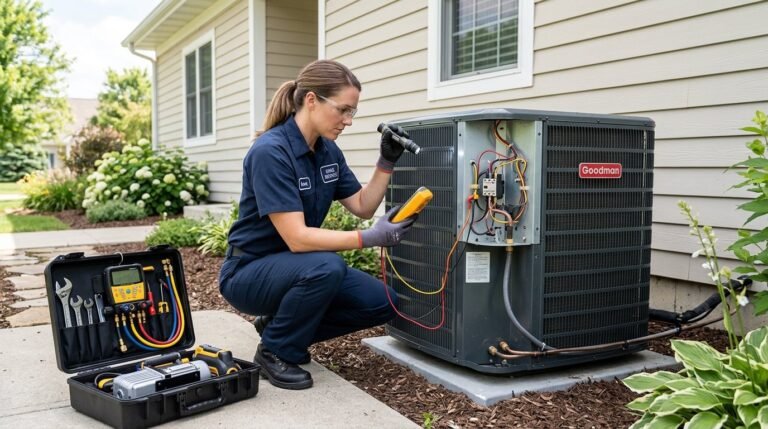
When an air conditioner blows warm air, cycles constantly, leaks water, or stops running, North Richland Hills homeowners need a clear path to reliable service. Professional AC repair identifies the underlying fault, restores safe cooling when practical, and helps prevent additional system damage.
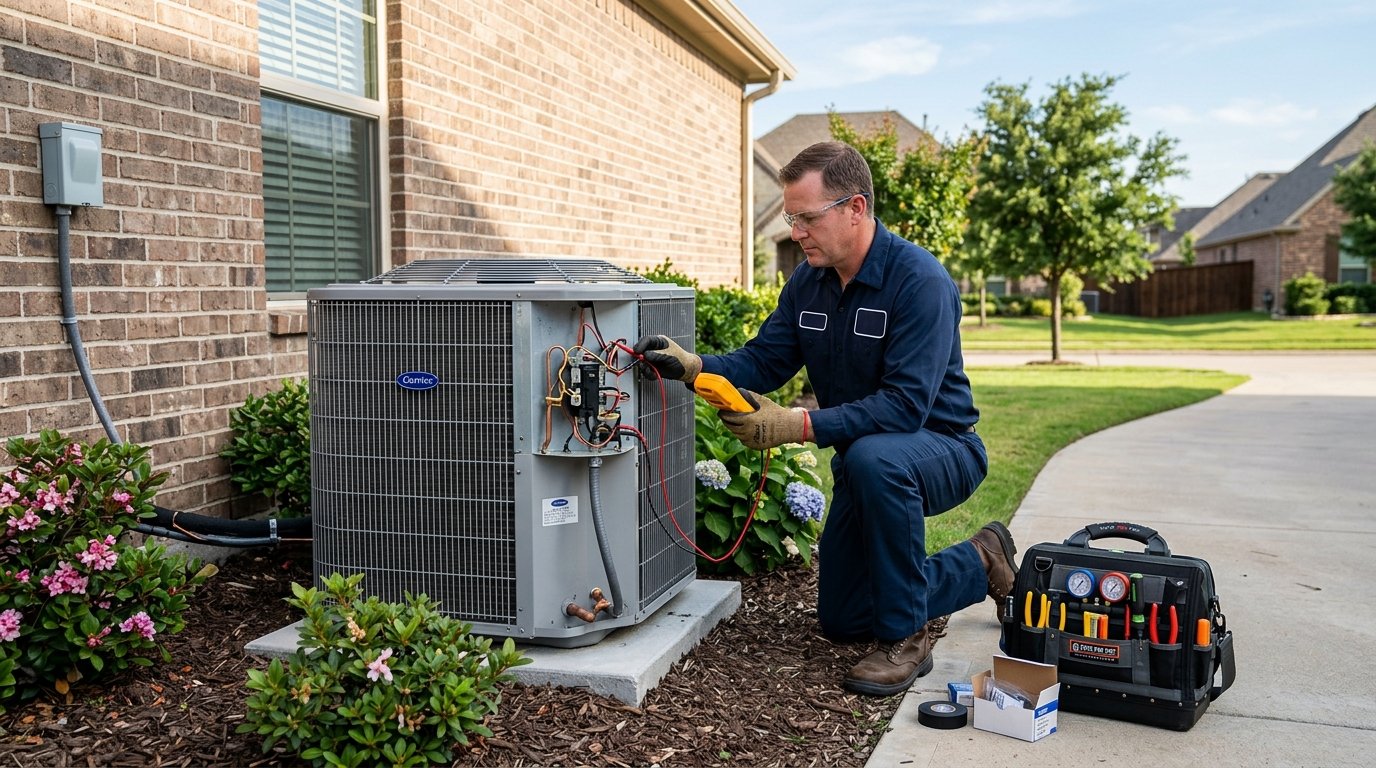
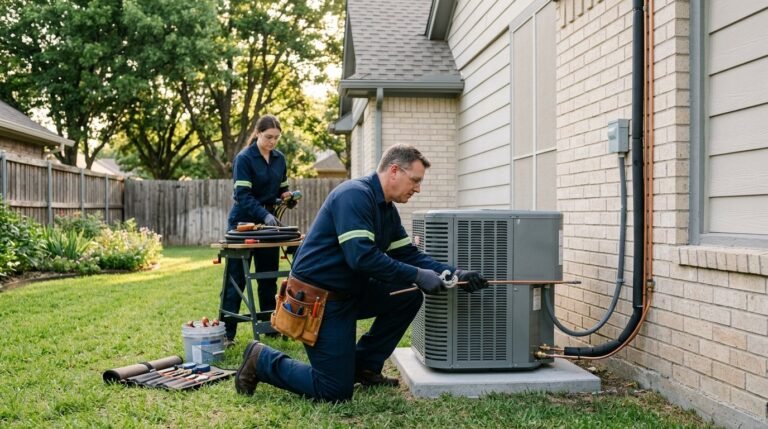
A qualified technician can diagnose common cooling problems, explain what happens during a visit, and help determine whether repair or replacement makes better financial sense. Local options for AC repair in North Richland Hills may also provide emergency support and maintenance services that reduce the risk of future breakdowns.
Signs Your Air Conditioner Needs Professional Attention
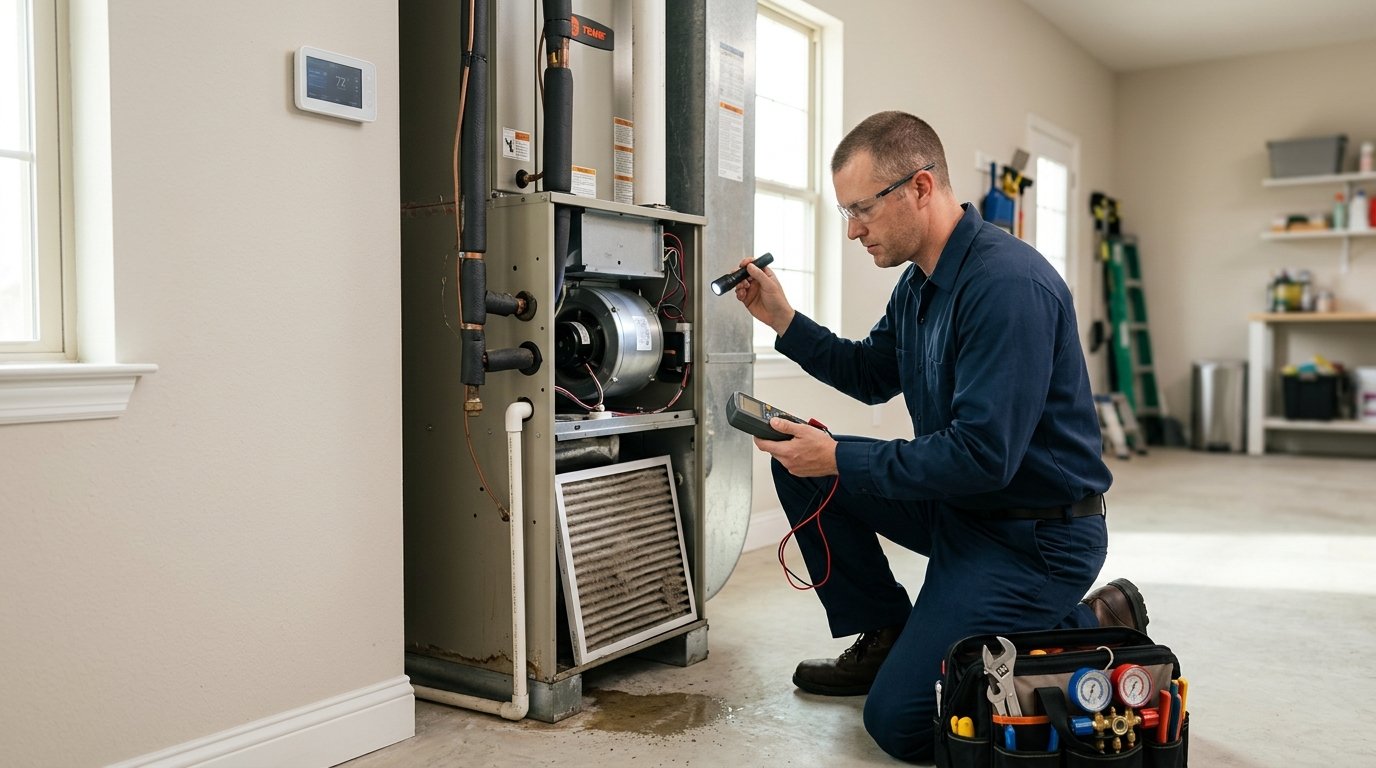
Warm supply air, restricted airflow, and unfamiliar sounds or smells often point to mechanical, electrical, drainage, or refrigerant-related problems. A qualified technician can identify the failed component before the system sustains further damage.
Warm Air From Vents
An AC should deliver noticeably cooler air within several minutes of starting a normal cooling cycle. If it blows warm or room-temperature air while the thermostat calls for cooling, the system may have a thermostat setting issue, a tripped outdoor-unit breaker, a dirty condenser coil, low refrigerant, or a compressor problem.
The resident should first confirm that the thermostat is set to Cool and that its temperature setting sits below the indoor temperature. They can also replace a visibly clogged return-air filter, since severe restriction can contribute to poor cooling performance.
If warm air continues, a professional should inspect the equipment. Refrigerant does not get “used up”; a low charge can indicate a leak that requires repair and proper testing. Common AC repair warning signs also include slow starts and water leaks, which may occur alongside reduced cooling.
Weak or Uneven Airflow
Weak airflow from multiple vents may indicate a blocked air filter, a failing blower motor, dirty evaporator coil, or a problem with the duct system. Airflow that is strong in one room but weak in another can result from leaking, disconnected, undersized, or obstructed ducts.
Residents should make sure all supply registers are fully open and clear of furniture, rugs, or curtains. Closing many registers does not reliably direct more air to other rooms and may place extra strain on the system.
A technician can measure airflow, inspect the blower assembly, and check ducts for accessible leaks or disconnections. Weak airflow and humidity problems warrant timely service because inadequate circulation can leave rooms uncomfortable and may contribute to coil freezing.
Unusual Noises or Odors
A brief click at startup can be normal, but grinding, screeching, rattling, banging, or persistent buzzing is not. Loose hardware, worn motor bearings, a damaged blower wheel, failing capacitors, or compressor-related faults can create these sounds.
A musty odor may indicate moisture or microbial growth near the evaporator coil, drain pan, or ductwork. A sharp electrical or burning smell can signal overheated wiring, a failing motor, or another electrical hazard.
They should turn the AC off and request service promptly if they notice smoke, a burning odor, repeated breaker trips, or loud metal-on-metal noise. Unusual odors, leaks, and noises require diagnosis rather than continued operation, particularly during prolonged North Richland Hills heat.
Common Cooling System Problems
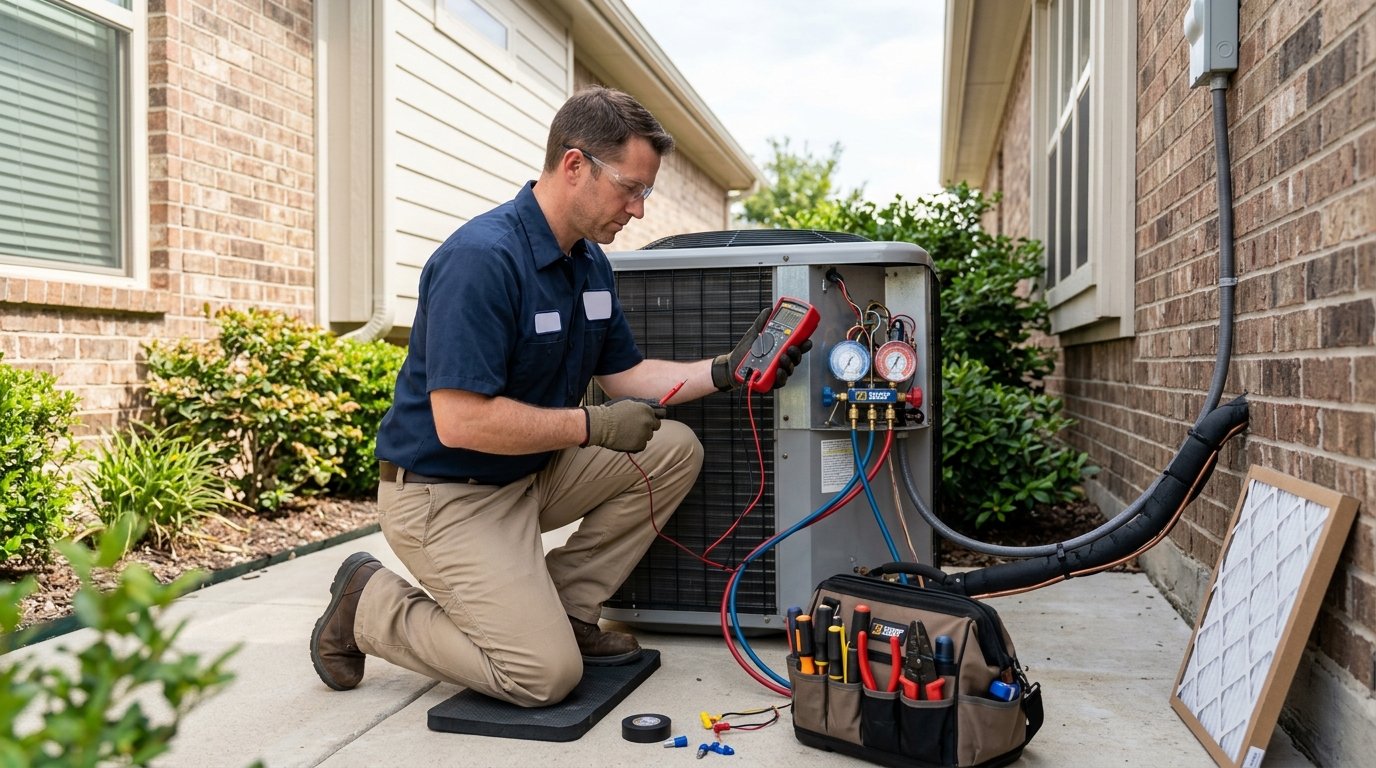
Cooling failures often start with lost refrigerant, restricted airflow across the indoor coil, or interrupted electrical control. Accurate diagnosis protects the compressor and prevents unnecessary part replacement.
Refrigerant Leaks
A refrigerant leak reduces the system’s ability to move heat out of the home. Residents may notice warm supply air, longer run times, uneven room temperatures, or ice forming on the refrigerant line near the outdoor unit.
Technicians should locate and repair the leak before adding refrigerant. Simply refilling a leaking system can provide temporary cooling, but the charge will decline again and may place added strain on the compressor.
Common leak locations include evaporator coils, condenser coils, line-set connections, service valves, and damaged copper tubing. A qualified provider performing AC repair in North Richland Hills can test system pressures, inspect components, and verify that the repaired system holds its charge.
Important: Refrigerant is not a routine consumable. A properly sealed air conditioner should not require repeated refrigerant additions.
Frozen Evaporator Coils
The evaporator coil can freeze when airflow falls too low or when the refrigerant charge does not support normal coil temperatures. Ice blocks airflow further, so the home may become warmer even while the indoor fan continues to run.
A clogged air filter, closed supply vents, dirty blower wheel, failing blower motor, or blocked return duct can restrict airflow. Low refrigerant and a dirty evaporator coil can create similar symptoms, which is why visual inspection alone cannot identify the cause.
Residents should turn the thermostat off cooling and set the fan to On if the coil has frozen, allowing warm indoor air to thaw the ice. They should not chip ice from the coil or operate the system until a technician evaluates it.
| Symptom | Possible condition |
|---|---|
| Ice on refrigerant line | Low airflow or low refrigerant |
| Weak airflow from vents | Filter, blower, or duct restriction |
| Water near indoor unit after thawing | Normal meltwater or a drainage problem |
Electrical and Thermostat Failures
Electrical failures can prevent an air conditioner from starting, keep the outdoor condenser from running, or cause intermittent cycling. Worn contactors, failed capacitors, loose wiring, tripped breakers, and damaged disconnects require professional testing because HVAC equipment uses high-voltage power.
A thermostat issue may resemble a mechanical breakdown. Incorrect mode settings, depleted batteries, loose low-voltage wiring, miscalibration, or a failed thermostat can stop a call for cooling even when the air conditioner itself remains functional.
Technicians typically confirm thermostat settings, inspect electrical connections, measure voltage, and test components under operating conditions. Homeowners can first check that the thermostat is set to Cool, the temperature setting is below the room temperature, and the circuit breaker has not tripped.
When an AC system repeatedly trips a breaker, emits a burning odor, or cycles on and off rapidly, it should remain off until a technician inspects it. Providers offering fast AC repair in North Richland Hills can identify whether the failure involves the control system, electrical components, or another cooling-system fault.
What to Expect During a Service Visit
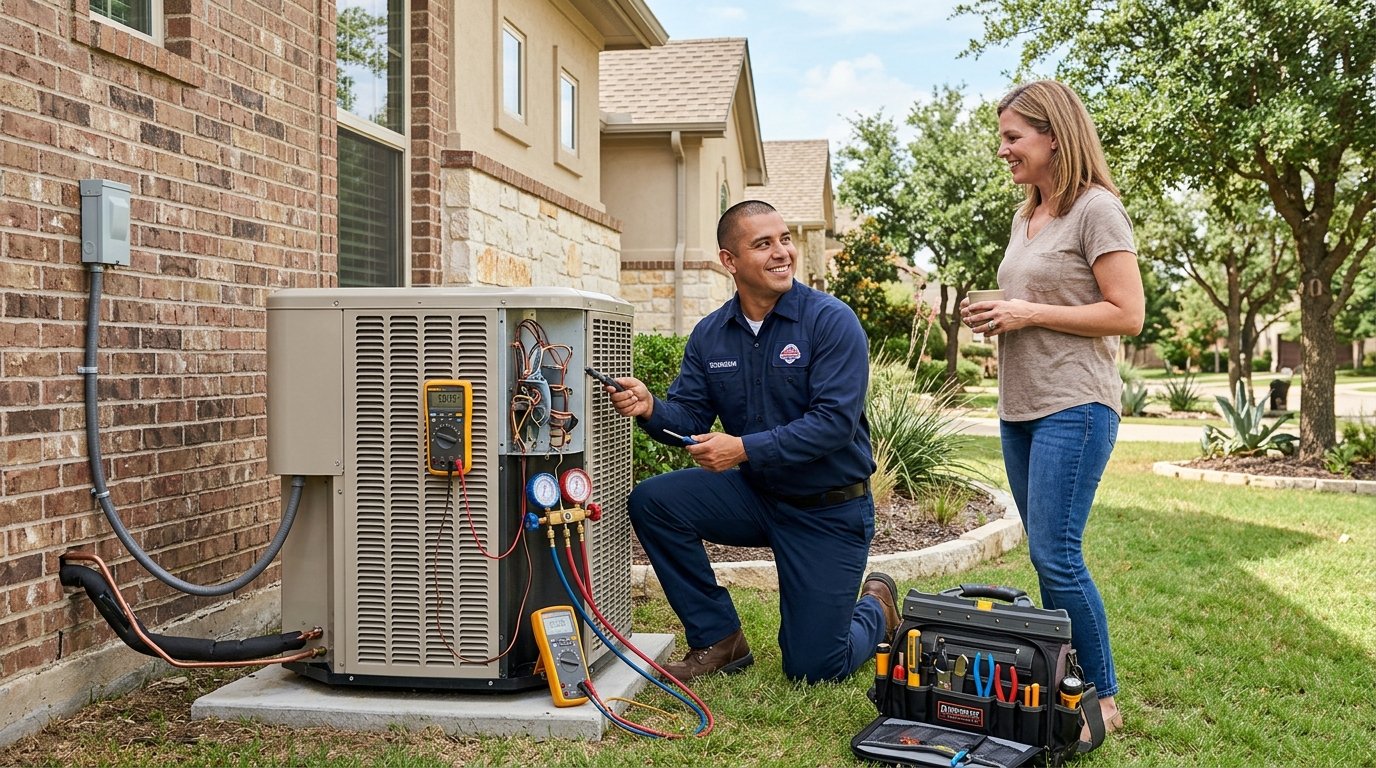
A technician identifies the cause of the cooling problem, explains practical repair options, and confirms that the system operates safely before leaving. Many providers of AC repair in North Richland Hills schedule diagnostic visits before performing non-emergency repairs.
System Inspection and Diagnostics
The technician begins by asking when the issue started and whether the unit has shown specific symptoms, such as warm airflow, short cycling, water near the indoor unit, unusual noise, or a rising electric bill. Clear details help narrow the inspection.
They typically inspect the thermostat settings, air filter, electrical disconnect, breakers, condenser, evaporator components, condensate drain, and accessible duct connections. The technician also checks whether the outdoor fan and compressor start and run correctly.
Diagnostic testing may include measuring temperature difference across the indoor coil, checking electrical readings on motors and capacitors, and inspecting refrigerant-line conditions. If the system has a refrigerant-related issue, the technician should look for the cause rather than simply adding refrigerant.
| Inspection area | What it can identify |
|---|---|
| Air filter and airflow | Restriction, weak airflow, coil freeze risk |
| Electrical components | Failed capacitor, worn contactor, motor problems |
| Drain system | Clogs, leaks, and overflow risks |
| Refrigerant circuit | Possible leak, low charge, or compressor concerns |
Clear Repair Recommendations
After diagnosing the issue, the technician explains the failed or worn component in plain terms and describes how it affects cooling. They should distinguish between a repair needed to restore operation and maintenance that can prevent a later problem.
A written estimate should list the repair work, applicable parts, labor, and any diagnostic charge or credit policy. Homeowners should know whether the quote includes testing after the repair and whether a warranty applies to parts or labor.
For larger repairs, such as a compressor, coil, or major electrical replacement, the technician may discuss the system’s age, repair cost, refrigerant type, and condition of other major components. Companies offering HVAC maintenance, repair, and replacement services in North Richland Hills may also offer replacement estimates when repair no longer makes practical financial sense.
The technician should not begin chargeable work until the customer approves the scope and price.
Testing and Performance Verification
Once repairs are complete, the technician restarts the air conditioner and verifies normal operation. This includes confirming that the thermostat calls for cooling, the indoor blower runs, and the outdoor condenser starts without abnormal delay or noise.
They should recheck key readings affected by the repair, such as voltage, amperage, temperature split, condensate drainage, or refrigerant performance. The system may need time to stabilize before final measurements provide useful results.
Before leaving, the technician should review what was repaired and identify any remaining concerns that did not require immediate work. They may also recommend specific routine care, including filter replacement intervals and keeping leaves, grass, and stored items away from the outdoor unit.
Emergency Cooling Support
Same-day service can limit indoor heat exposure and prevent further equipment damage. Residents should identify urgent symptoms, protect the system from avoidable strain, and prepare clear information for the technician.
When to Request Same-Day Help
A resident should request same-day AC help when the system runs but delivers warm air, will not start, trips the breaker repeatedly, or stops cooling during high outdoor temperatures. Fast service matters most when indoor conditions affect infants, older adults, pets, or people with heat-sensitive medical conditions.
They should also call promptly if they notice a burning odor, smoke, sparking, water near electrical components, or a loud grinding or screeching sound. They should turn the unit off before service if any of these signs occur, except where doing so would create another hazard.
A complete shutdown after basic thermostat and power checks also warrants urgent attention. Providers advertising same-day AC repair in North Richland Hills may offer emergency scheduling, but residents should confirm availability, diagnostic charges, and arrival windows before booking.
Steps to Take Before the Technician Arrives
The resident should set the thermostat to cool and lower the setting several degrees below the current indoor temperature. They should confirm that the thermostat has power, inspect the air filter, and replace a visibly clogged filter with the correct size.
They may check the HVAC breaker once if it has tripped. If it trips again, they should leave it off and report that detail; repeated resets can damage equipment or indicate an electrical problem.
Before the appointment, they should:
- Clear stored items from around the indoor air handler and outdoor condenser.
- Remove leaves, grass, and loose debris from the outdoor unit without opening its panels.
- Note when cooling stopped, unusual sounds, error codes, and recent changes in performance.
- Keep pets secured and ensure an adult can provide access.
They should not open sealed refrigerant lines or attempt refrigerant repairs. Local North Richland Hills HVAC emergency service listings indicate that repair providers may handle installation, maintenance, and emergency calls, so a clear symptom history helps the technician begin diagnostics efficiently.
Repair or Replacement Decision Factors
System age, repair history, efficiency ratings, and operating costs give homeowners practical criteria for deciding between another repair and a new system. A qualified technician should diagnose the fault before either option is approved.
System Age and Repair Frequency
Most central air-conditioning systems operate for roughly 10 to 15 years, although maintenance quality, installation conditions, and heavy North Texas summer use can shorten or extend that range. A system under 10 years old with an isolated issue, such as a failed capacitor, contactor, or blower motor, often remains a reasonable repair candidate.
Replacement becomes more worth considering when an older unit needs repeated service visits, has a major compressor or refrigerant-system failure, or uses obsolete refrigerant. Homeowners can compare the proposed repair against the system’s age and condition rather than deciding only on the immediate invoice.
| Situation | Typical direction to consider |
|---|---|
| Newer unit; first significant repair | Repair after diagnosis |
| 10+ year-old unit; repeated breakdowns | Compare repair and replacement quotes |
| Major component failure in an aging unit | Evaluate replacement carefully |
A local provider offering AC repair in North Richland Hills can inspect electrical components, airflow, refrigerant performance, and equipment condition before recommending a path.
Efficiency and Long-Term Costs
An air conditioner that runs continuously without reaching the thermostat setting may have an airflow problem, duct leakage, declining capacity, or an incorrectly sized system. Repairing the underlying defect can restore normal operation, but persistent performance issues in an aging unit may justify replacement.
Homeowners should compare repair cost, expected remaining equipment life, monthly energy use, and warranty coverage. A lower-priced repair may cost more over time if it only postpones another major failure or leaves the unit operating inefficiently.
New equipment may reduce energy use when correctly sized and installed, but high efficiency alone does not guarantee lower bills. Proper load calculations, duct condition, thermostat settings, insulation, and routine maintenance affect actual performance. Companies providing AC replacement services in North Richland Hills can assess those installation factors alongside the condition of the existing unit.
Preventing Future Breakdowns
Regular service, clean airflow, and accurate temperature control reduce strain on an air conditioner during North Richland Hills heat. Homeowners can address simple upkeep tasks while scheduling professional checks before peak cooling demand.
Seasonal Maintenance Benefits
A technician should inspect the system each spring, before long periods of daily operation begin. A professional visit can include checking refrigerant performance, electrical connections, condensate drainage, blower components, and outdoor-coil condition.
Dirty condenser coils and restricted drain lines can force longer run times or cause water-related shutdowns. Technicians can also identify worn capacitors, contactors, and fan motors before a small electrical issue prevents the system from starting.
Homeowners should keep at least 2 feet of clear space around the outdoor unit. They should remove leaves, grass clippings, and stored items without bending fins or spraying electrical components.
Scheduled AC maintenance in North Richland Hills also gives the technician a baseline for normal operation. If cooling capacity, airflow, or electrical readings change later, they can investigate the issue sooner.
Air Filter and Thermostat Care
A clogged return-air filter limits airflow across the indoor coil. That restriction can reduce cooling, increase operating time, and contribute to coil freezing.
Homeowners should check the filter every month during heavy-use periods. They should replace disposable filters when visibly loaded with dust or follow the manufacturer’s recommended interval; households with pets, construction dust, or frequent AC use may need more frequent changes.
The thermostat should remain away from direct sunlight, supply vents, lamps, and heat-producing appliances. These locations can cause incorrect temperature readings and unnecessary cycling.
| Task | Recommended action |
|---|---|
| Filter check | Inspect monthly during cooling season |
| Thermostat setting | Use a steady, practical temperature rather than frequent large changes |
| Condensate drain | Watch for water near the indoor unit or a drain backup |
| Supply vents | Keep them open and unobstructed for balanced airflow |
Choosing a Qualified Local HVAC Technician
A qualified technician should hold appropriate credentials, diagnose the specific equipment problem, and provide written pricing before work begins. Homeowners should also confirm warranty terms for both parts and labor.
Licensing and Experience
Texas homeowners should verify that an HVAC contractor holds an active Texas Air Conditioning and Refrigeration Contractor license. The license should match the company name on the estimate, invoice, and vehicle when possible.
For refrigerant work, the technician must hold EPA Section 608 certification. This matters when the repair involves refrigerant recovery, leak testing, or recharging; an unqualified worker can damage the system or handle refrigerant improperly.
Experience should match the equipment and issue, not simply the number of years the company has operated. A technician should identify the system’s make, model, age, reported symptoms, electrical readings, and airflow conditions before recommending a compressor, coil, or full replacement.
Homeowners can compare local options, including companies advertising 24/7 AC repair and heating service in North Richland Hills, but they should still confirm credentials directly. They should ask whether the technician has worked on their system type, especially heat pumps, variable-speed equipment, or older units.
Upfront Estimates and Warranties
A reliable estimate separates diagnostic fees, labor, parts, refrigerant, permits, and taxes. It should state whether the diagnostic charge applies toward the repair and whether the price may change if the technician finds additional failed components.
Before approving work, homeowners should request the failed part’s name and the reason replacement is necessary. For larger repairs, such as an evaporator coil or compressor, they should compare a repair estimate with the cost of replacement and the remaining manufacturer warranty.
Warranty language should specify these details:
- Parts warranty: manufacturer coverage and any registration requirements
- Labor warranty: the contractor’s coverage period for installation and repair work
- Exclusions: maintenance lapses, pre-existing conditions, electrical issues, or refrigerant leaks
- Claim process: who performs the warranty repair and whether service-call fees apply
A written estimate protects both parties and reduces disputes about scope, cost, and coverage. Companies offering HVAC services in North Richland Hills may provide financing or maintenance plans, but homeowners should review the terms separately from the repair warranty.
Frequently Asked Questions
Service-call fees, repair scope, equipment age, and part availability determine most AC repair decisions in North Richland Hills. A qualified technician can identify the fault, provide itemized pricing, and explain whether repair or replacement makes financial sense.
How much does an AC service call typically cost in North Richland Hills?
A standard diagnostic or service-call fee commonly ranges from $75 to $200 during regular business hours. Emergency, weekend, and after-hours visits usually cost more.
Many companies apply the diagnostic fee toward an approved repair, but policies differ. Homeowners should confirm the fee, dispatch charge, and whether the amount credits toward repairs before scheduling North Richland Hills AC service.
What is the average cost of a typical air conditioner repair?
Common minor repairs, such as replacing a capacitor, contactor, or thermostat component, often fall between $150 and $600 including labor. Repairs involving refrigerant leaks, blower motors, control boards, or compressors can range from $700 to several thousand dollars.
The final price depends on the diagnosed failure rather than the symptom. For example, low refrigerant usually indicates a leak that requires locating and repairing before the system receives a recharge, as described by AC refrigerant leak repair specialists in North Richland Hills.
How do I choose a reliable residential AC repair company?
Homeowners should select a company that holds appropriate Texas licensing and insurance, provides written estimates, and explains the diagnosis in plain language. They should also verify whether the company offers parts-and-labor warranties and emergency availability if the system fails outside normal hours.
A reliable contractor identifies the defective component before recommending replacement. Companies advertising upfront pricing and licensed AC technicians may provide useful options, but customers should still review the written scope of work before authorizing repairs.
What factors affect the cost of air conditioning repair?
The failed part, equipment type, labor time, and accessibility affect repair pricing. A simple electrical part generally costs less to replace than a sealed-system component such as a compressor or evaporator coil.
System age and refrigerant type also matter. Older equipment may use discontinued parts or refrigerants that increase material costs, while a unit in a tight attic or rooftop location can require additional labor.
After-hours dispatch, extreme-weather demand, and warranty coverage can change the total charge. Manufacturer parts warranties may reduce the cost of a covered component, but labor is not always included.
What is the $5,000 rule for repairing or replacing an AC unit?
The $5,000 rule is a general decision aid, not a manufacturer standard. It multiplies the AC unit’s age by the estimated repair cost; if the result exceeds 5,000, replacement may deserve serious consideration.
For example, a 12-year-old system needing a $500 repair produces 6,000. That result does not require replacement, but it signals that the owner should compare the repair with replacement costs, efficiency, warranty coverage, and the likelihood of future repairs.
A technician can help assess these factors during an AC repair and replacement visit in North Richland Hills. Equipment condition and repair history matter more than any single formula.
How quickly can an AC technician diagnose and repair a cooling problem?
Most technicians can complete an initial diagnosis in 30 minutes to two hours, depending on the symptom and system access. Simple issues such as a tripped breaker, failed capacitor, clogged drain, or thermostat setting may be repairable during the same appointment if parts are available.
Problems involving refrigerant leaks, special-order parts, electrical faults, or compressor failure can require additional time. Providers offering 24/7 AC repair in North Richland Hills may be able to respond outside standard business hours, though repair completion still depends on diagnosis and part availability.