Furnace Installation Fort Worth: Heat Pump Replacement Options
Fort Worth homeowners need a properly sized, professionally installed furnace to maintain safe, dependable heat during cooler weather. A new system may be appropriate when an older unit needs frequent repairs, heats rooms unevenly, or drives up energy use.
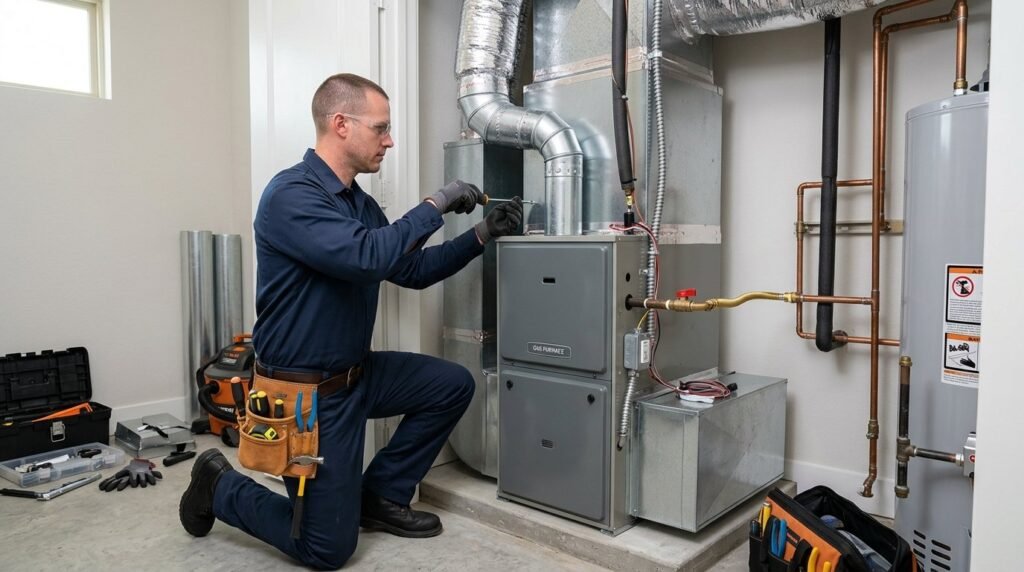
They can compare furnace types, efficiency ratings, and capacity before scheduling furnace installation in Fort Worth. Local weather, home layout, and existing ductwork all affect the right equipment choice.
A qualified HVAC contractor can assess the home, explain installation steps, outline costs and payment options, and help protect long-term heating performance through routine maintenance.
When a New Heating System Is Needed
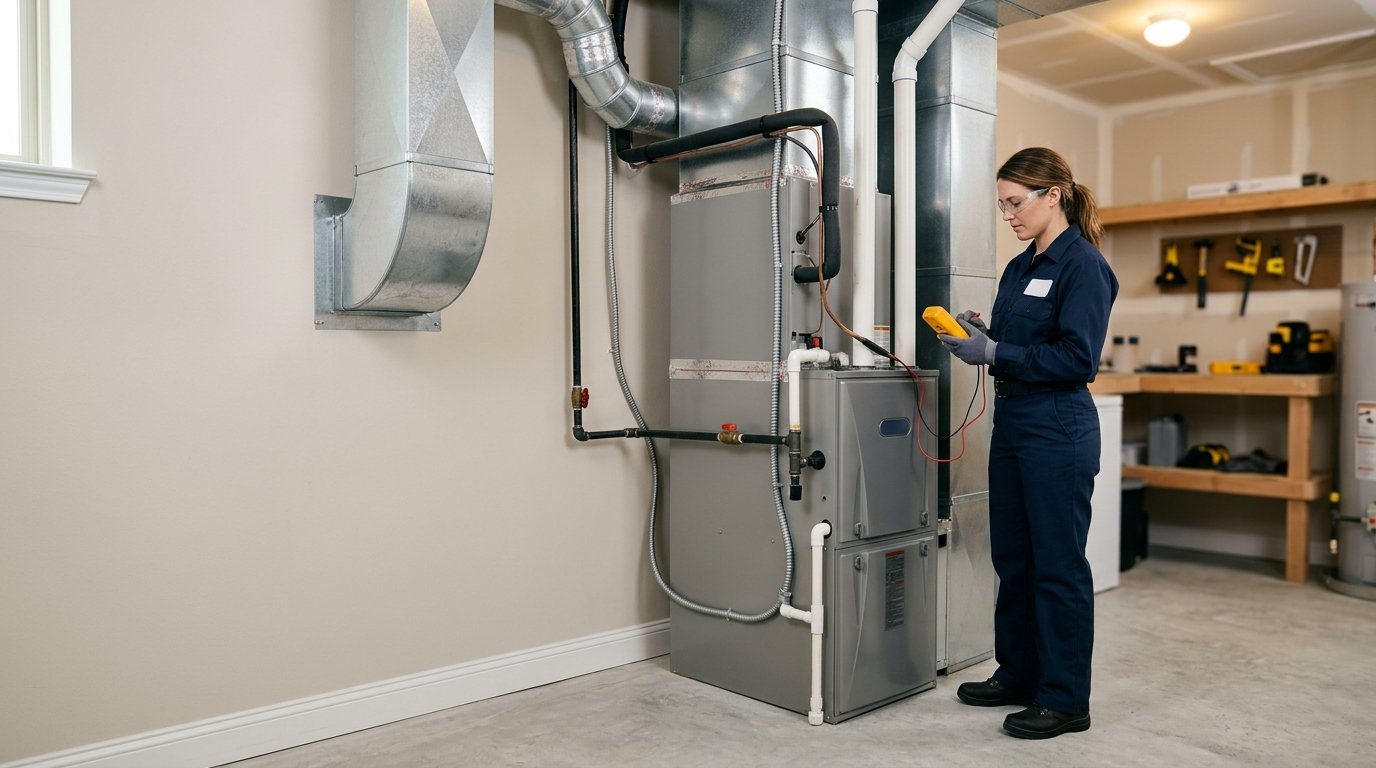
A failing furnace can create comfort, safety, and operating-cost problems before it stops completely. Homeowners should compare the unit’s condition, repair history, efficiency, and installation requirements before choosing a replacement.
Common Signs of Furnace Failure
A furnace may need replacement when it produces uneven heat, runs for unusually long cycles, or cannot maintain the thermostat setting. Cold rooms, weak airflow, and frequent cycling can also indicate problems with the blower, ductwork, heat exchanger, or controls.
Repeated repairs matter. If the system needs service several times during one heating season, the homeowner should document the repair costs and identify whether the technician is correcting isolated parts or recurring system failures.
| Sign | Why it matters |
|---|---|
| Loud banging, rattling, or screeching | May indicate failing mechanical components or loose parts |
| Yellow burner flame instead of steady blue | Requires prompt professional inspection for combustion concerns |
| Rust, cracks, or water around the unit | Can signal corrosion, drainage issues, or heat-exchanger damage |
| Carbon monoxide alarm activation | Leave the home and contact emergency services or a qualified professional |
Age alone does not determine replacement, but older equipment generally has fewer remaining serviceable years and may lack the efficiency of current systems.
Repair Versus Replacement Considerations
Repair can make sense when the furnace is relatively new, the issue is limited to a serviceable component, and the system has performed reliably. A technician should verify the diagnosis, assess combustion safety, and check whether replacement parts remain available.
Replacement deserves stronger consideration when repair costs are substantial, failures recur, or the existing furnace no longer fits the home’s heating load. Proper sizing matters: an oversized unit can short-cycle, while an undersized unit may run excessively during cold weather.
Homeowners arranging furnace installation in Fort Worth should request a written estimate that identifies the equipment model, efficiency rating, warranty terms, duct modifications, electrical work, permits, and removal of the old unit. They should also ask whether the contractor will test airflow, thermostat operation, and safe venting after installation.
Selecting the Right Furnace
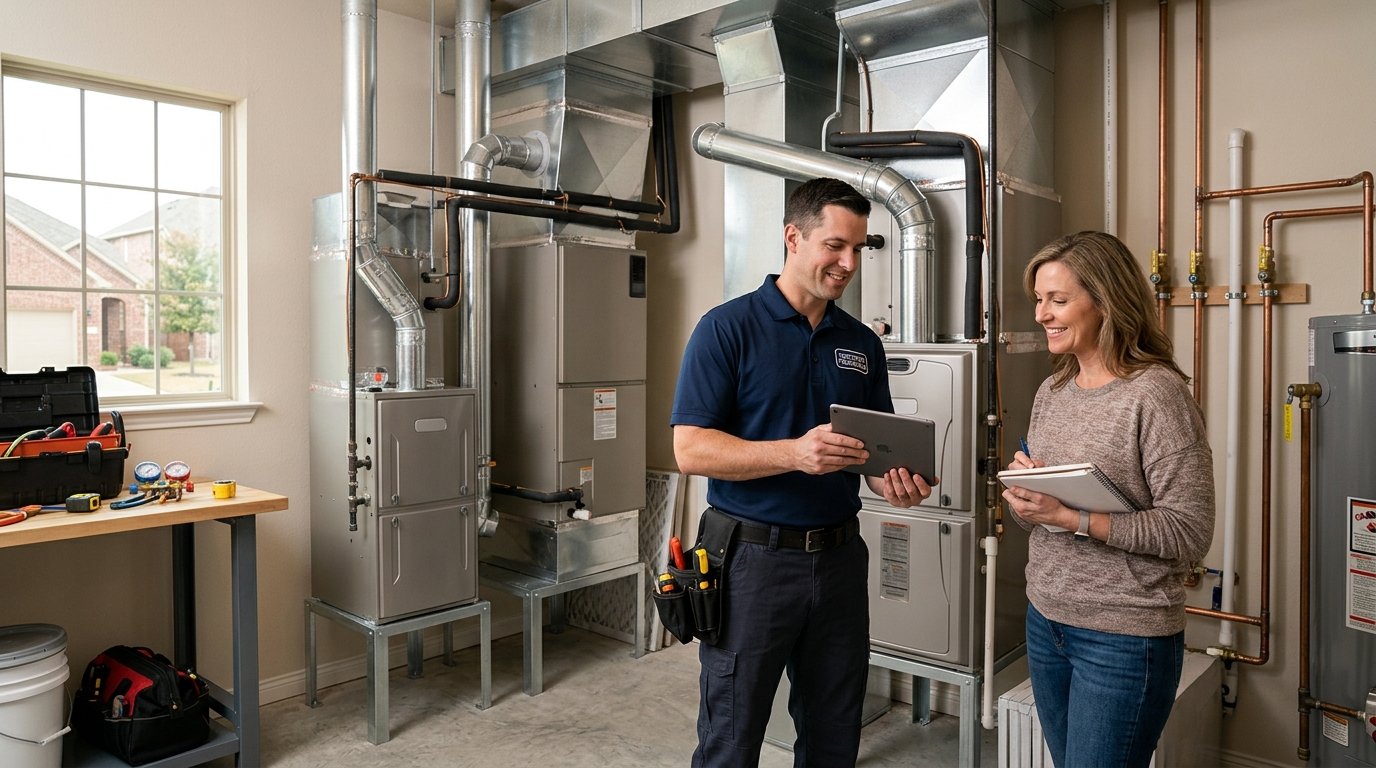
A suitable furnace matches the home’s fuel access, calculated heating load, and expected operating budget. Proper selection also supports reliable performance during Fort Worth’s short but occasionally freezing winter weather.
Fuel Type and Energy Source
Most Fort Worth homes use either natural gas or electricity for furnace heat. A household with an existing natural-gas connection can often use a gas furnace without adding fuel infrastructure, while homes without gas service may favor an electric furnace or heat pump.
Gas furnaces generally produce high supply-air temperatures and may cost less to operate when local gas prices are favorable. They require correct venting, combustion-air provisions where applicable, and a carbon monoxide detector near sleeping areas.
Electric furnaces do not burn fuel inside the home and do not need a flue pipe. However, electric resistance heat can raise winter utility costs, especially in larger homes or during extended cold spells.
An installer should verify the available energy source, electrical-panel capacity, venting route, and local code requirements before recommending equipment. Providers offering gas and electric furnace options in Fort Worth can assess these practical installation limits.
Sizing for Fort Worth Homes
Furnace capacity is measured in BTUs per hour, but a home’s square footage alone cannot determine the correct size. A qualified contractor should perform a Manual J–style load calculation that accounts for insulation, window area, ceiling height, air leakage, duct condition, orientation, and the number of occupants.
An oversized furnace heats the space too quickly and cycles on and off more often. Short cycling can create uneven room temperatures, increase equipment wear, and reduce efficiency.
An undersized furnace may run for long periods without maintaining the thermostat setting during colder weather. It can also make recovery slower after nighttime temperature setbacks.
The installer should evaluate the existing duct system alongside the new furnace. Restricted, undersized, or leaking ducts can prevent properly sized equipment from delivering its rated airflow. Fort Worth furnace replacement planning should consider home size, climate, and budget, but a measured load calculation remains more reliable than a rule-of-thumb estimate.
Efficiency Ratings and Operating Costs
A furnace’s Annual Fuel Utilization Efficiency (AFUE) rating estimates how much fuel becomes usable heat over a typical year. For example, an 80% AFUE gas furnace converts about 80% of its fuel into heat, while a 95% AFUE model converts about 95% under standardized test conditions.
Higher-AFUE furnaces can reduce gas use, but their added upfront cost may not fit every household. High-efficiency condensing models also need a suitable drainage path for condensate and use sealed PVC venting in many installations.
| Consideration | What It Affects |
|---|---|
| AFUE rating | Seasonal fuel consumption |
| Equipment price | Initial installation budget |
| Gas and electric rates | Monthly operating expense |
| Duct leakage and insulation | Actual energy use and comfort |
| Maintenance | Safe, dependable operation |
They should compare estimated annual fuel costs rather than choosing solely by the highest AFUE rating. A contractor can also explain warranty terms, available rebates, and whether the home can accommodate the venting and drainage required by a high-efficiency unit.
Preparing for the Installation
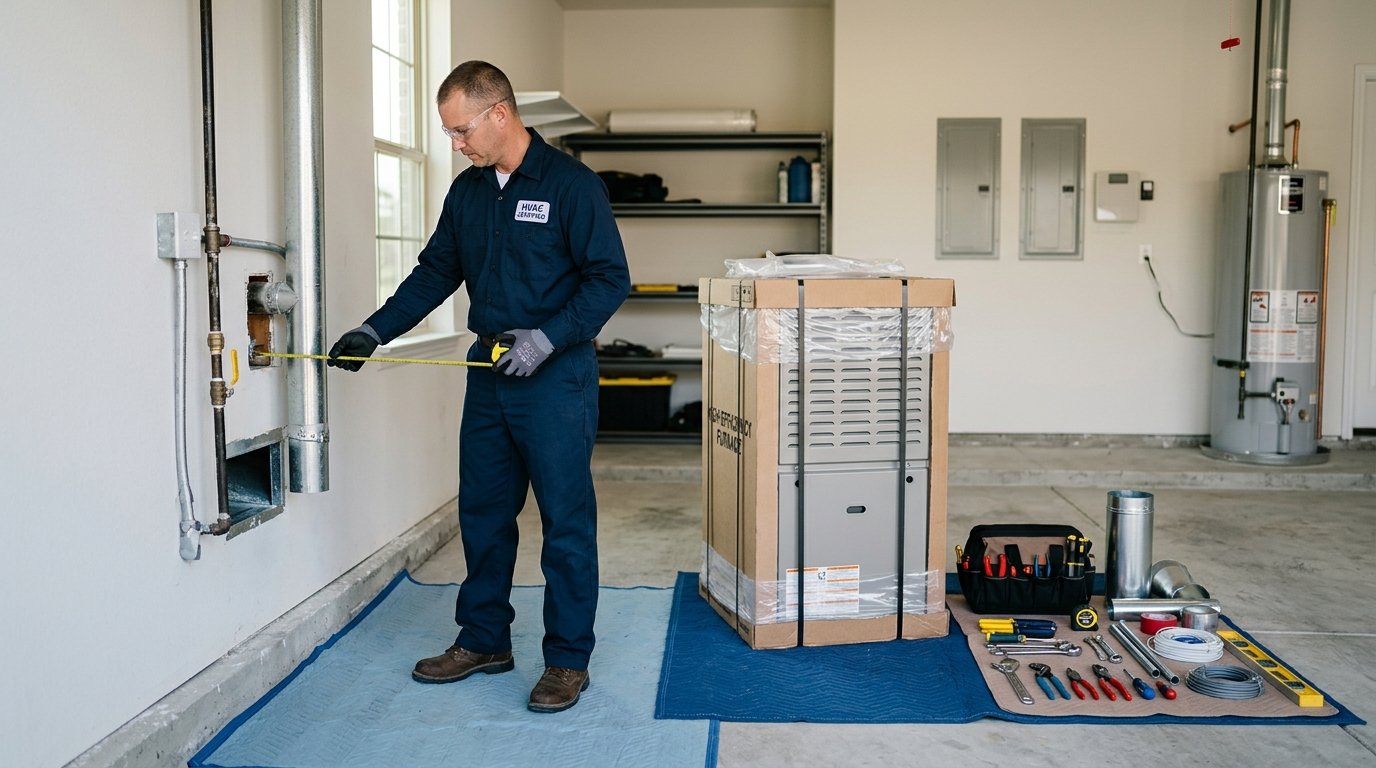
A proper installation begins with accurate equipment sizing, a review of airflow paths, and confirmation of local approval requirements. These steps help the contractor select a furnace that fits the home and install it safely.
Home Evaluation and Load Calculations
The contractor should inspect the home before recommending a furnace size. They should measure conditioned square footage and account for ceiling height, insulation levels, window area, window orientation, air leakage, and the number of occupants.
A Manual J–style load calculation estimates how much heat the home loses during cold weather. This process prevents a decision based only on the previous furnace’s capacity, which may have been oversized or undersized.
An oversized furnace can cycle on and off too frequently, while an undersized unit may run for long periods without maintaining the thermostat setting. The evaluation should also identify the fuel type, electrical capacity, thermostat compatibility, and available installation space.
Homeowners considering a professional Fort Worth furnace installation should request a written equipment recommendation that lists the proposed efficiency rating, capacity, and warranty terms.
Ductwork and Ventilation Assessment
The installer should examine supply ducts, return ducts, grilles, registers, and accessible connections for leaks, poor support, damage, or inadequate sizing. Furnace output only reaches living areas effectively when the duct system can carry and return the required airflow.
They should verify that return-air pathways remain open and that filters fit correctly. Restricted returns or dirty filters can reduce airflow, strain equipment, and contribute to uneven room temperatures.
For gas furnaces, the contractor must also inspect the venting route, combustion-air provisions, gas piping, and condensate drainage when installing a high-efficiency condensing model. Vent pipes need the correct material, slope, termination location, and clearances.
A replacement may require duct modifications rather than a direct equipment swap. Local providers offering furnace installation and replacement in Fort Worth may evaluate these system components before scheduling the work.
Permit and Code Requirements
Fort Worth-area furnace work may require permits and inspections, depending on the equipment type, scope of work, and local jurisdiction. The installing contractor should determine the requirements with the applicable city or county authority before work begins.
Permit review commonly addresses:
- Gas connections and shutoff-valve placement
- Electrical disconnects, circuit protection, and grounding
- Vent termination location and combustion-air rules
- Condensate drains for high-efficiency furnaces
- Smoke and carbon monoxide alarms where required
The homeowner should confirm who obtains the permit, schedules inspections, and corrects any deficiencies. A licensed contractor should provide documentation for the installed model, permit information when applicable, and operating instructions after the inspection process finishes.
What Happens During the Installation
Technicians remove the old unit safely, place and connect the new furnace, then verify safe operation. A professional installation also addresses permits, airflow, venting, electrical connections, and thermostat control.
Removal of Existing Equipment
Technicians first shut off electrical power and the fuel supply to the existing furnace. For gas equipment, they close the gas valve and disconnect the gas line before moving the unit.
They inspect the surrounding equipment, including the evaporator coil, duct transitions, condensate drain, vent pipe, and furnace platform. This inspection can reveal damaged ducts, corrosion, improper venting, or drainage problems that could affect the new system.
The crew then removes the old furnace and hauls it away for appropriate disposal or recycling. They protect nearby floors and walls while moving equipment, especially when the furnace sits in an attic, closet, or tight utility area.
A Fort Worth installation may require a permit and inspection to confirm that the work meets applicable safety and building requirements. Some local HVAC providers state that they manage Fort Worth furnace installation permits for the homeowner.
Equipment Placement and Connections
The technicians position the furnace so it has stable support, adequate service clearance, and proper airflow. They align it with the supply and return ductwork, then seal transitions to limit air leakage.
They connect the required systems, which may include:
- Gas piping with a shutoff valve and leak-tested fittings
- Electrical wiring with the correct disconnect and circuit protection
- Venting that routes combustion gases outdoors
- Condensate drainage for high-efficiency furnaces
- Thermostat wiring for heating controls and compatible accessories
If the new furnace has a different size or airflow capacity, the crew may modify duct connections or the return-air opening. Proper sizing matters because an oversized or undersized unit can cycle improperly, heat unevenly, and waste energy; a furnace installation guide explains why sizing and home preparation affect replacement work.
System Startup and Safety Testing
After completing the connections, technicians restore power and fuel, then start the furnace according to the manufacturer’s procedures. They confirm that the thermostat calls for heat and that the blower starts, runs, and shuts off correctly.
For a gas furnace, they test for gas leaks and verify that ignition, burner operation, flame appearance, and venting function properly. They also check safety controls, including the limit switch and pressure switch where applicable.
The technician measures temperature rise across the furnace and checks airflow to confirm that operation falls within the manufacturer’s specified range. They inspect the condensate drain on condensing models and verify that carbon monoxide detectors are present and functioning where required.
Before leaving, the installer should explain filter size, thermostat operation, routine maintenance needs, warranty registration, and the location of shutoff controls.
Local Climate Considerations
Fort Worth heating systems must handle mild winter days, abrupt cold fronts, and occasional freezing weather. Equipment sizing, duct condition, humidity control, and air filtration all affect comfort and operating costs.
Managing North Texas Temperature Swings
Fort Worth often moves quickly between warm afternoons and cold nights during winter. A furnace should deliver reliable heat during a freeze without being oversized for the home’s normal heating load.
A qualified installer should perform a Manual J load calculation rather than select equipment by square footage alone. The calculation accounts for insulation, window area, ceiling height, air leakage, duct losses, and sun exposure.
Oversized furnaces tend to run in short cycles. Those cycles can create uneven room temperatures, increase equipment wear, and reduce the time available for effective air circulation.
Homeowners replacing both heating and cooling equipment may also consider a heat pump or dual-fuel system. The best option depends on the home’s electrical capacity, gas availability, efficiency goals, and local installation requirements. Local contractors should account for Fort Worth climate and code requirements during heating installation.
Humidity and Indoor Air Quality Needs
Humidity remains an indoor comfort concern in North Texas, particularly during warmer and wetter periods. Although furnace operation can dry indoor air in winter, cooling-season humidity, duct leaks, and inadequate ventilation can still affect air quality throughout the year.
Installers should inspect supply and return ducts for leakage, poor insulation, and restricted airflow. Leaky return ducts can draw dust, attic air, and other contaminants into the system before the air reaches the filter.
A properly matched filter helps capture airborne particles without placing excessive resistance on the blower. MERV-rated filtration should match the furnace or air-handler’s airflow capability; a high-efficiency filter can cause problems if the system cannot support it.
Homes with persistent moisture issues may need targeted measures such as sealed ducts, controlled ventilation, or a whole-home dehumidifier connected to the HVAC system. These upgrades work best when the contractor evaluates the entire system instead of treating humidity as a furnace-only issue.
Costs and Financing Options
Fort Worth furnace installation prices vary mainly by equipment capacity, efficiency, fuel type, and changes needed to the home’s ductwork or gas system. Buyers should compare written, itemized proposals and review financing terms before approving work.
Factors That Affect Project Pricing
Local published estimates show a wide range. One Fort Worth estimate places a typical furnace installation at $2,460 to $7,880, while a replacement-focused estimate lists $4,320 to $8,640 for many projects.
A basic replacement using existing, compatible connections generally costs less than a conversion or a major redesign. Contractors should size the furnace with a load calculation rather than selecting capacity only by the previous unit’s rating.
Key price variables include:
- Furnace type and efficiency: Higher-AFUE gas furnaces and variable-speed blowers cost more than standard models.
- Home load and sizing: Square footage, insulation, windows, ceiling height, and air leakage affect required capacity.
- Installation changes: New duct sections, return-air improvements, venting, drain work, electrical upgrades, or gas-line modifications add labor and materials.
- Permits and code work: Fort Worth-area permit requirements and safety corrections can affect the final quote.
- Removal and access: Attic installations, tight closets, and removal of an old unit may increase labor time.
They should request the equipment model number, efficiency rating, labor scope, permit responsibility, and warranty terms in writing.
Rebates, Tax Credits, and Payment Plans
Utility rebates and manufacturer promotions can reduce the equipment cost, but eligibility often depends on the exact model, efficiency rating, installation date, and available program funding. The contractor should confirm rebate requirements before ordering equipment.
Federal energy-efficiency tax incentives have changed over time, so homeowners should verify current IRS rules and deadlines rather than treating a prior-year credit as available in 2026. They should retain the invoice, manufacturer efficiency documentation, and proof of payment for any qualifying claim.
Financing can spread the cost through monthly payments. Some local providers advertise HVAC financing options in Fort Worth for repairs and installations, but borrowers should compare:
| Financing item | What to check |
|---|---|
| Promotional offer | Expiration date and deferred-interest terms |
| APR | Rate after any introductory period |
| Term length | Total interest paid, not only monthly payment |
| Fees | Origination, late-payment, or prepayment fees |
| Cash price | Whether financing changes the installed price |
They should obtain at least two comparable quotes before using financing, especially when a proposal includes optional accessories or extensive ductwork.
Choosing a Qualified HVAC Contractor
A qualified contractor holds the required Texas credentials, carries appropriate insurance, and provides written terms before installation begins. Homeowners should compare scope, equipment details, warranty coverage, and ongoing service options—not just the initial price.
Licensing, Insurance, and Certifications
A Fort Worth homeowner should verify that the contractor holds an active Texas Air Conditioning and Refrigeration Contractor license. The license holder should appear on the proposal, and the company should identify the technician or subcontractor performing the installation.
The contractor should also carry general liability insurance and workers’ compensation coverage, or clearly explain its employee-injury coverage. These policies help protect the homeowner if property damage or a worksite injury occurs.
Manufacturer certifications can indicate that a company has training for specific furnace brands, but they do not replace licensing. The homeowner should ask whether the installer follows the manufacturer’s sizing, venting, electrical, and start-up requirements.
For local comparisons, Fort Worth HVAC contractor listings can help identify companies to research, but a listing or online review should not substitute for credential verification.
Estimates, Warranties, and Service Agreements
A written estimate should state the furnace’s brand, model number, efficiency rating, capacity, fuel type, and total installed price. It should also identify included work, such as removal of the old unit, new venting, thermostat changes, electrical modifications, permits, and system testing.
Homeowners should be cautious when a contractor recommends a furnace size without reviewing the home’s layout, insulation, ductwork, and heating load. Oversized equipment can cycle too often, while undersized equipment may struggle during cold weather.
The proposal should separate the manufacturer equipment warranty from the contractor’s labor warranty. It should specify who registers the equipment, how long labor remains covered, and whether service-call or diagnostic fees apply after installation.
A service agreement may include scheduled inspections, filter reminders, and priority appointments. Fort Worth furnace work commonly involves permitting requirements, so homeowners should confirm that the contractor will obtain and close required permits; some local installers explicitly describe handling Fort Worth furnace installation permits.
Maintaining Reliable Heating Performance
Routine filter service and documented professional maintenance help a new furnace operate efficiently and support its warranty requirements. Fort Worth homeowners should follow the equipment manual and address performance changes promptly.
Filter Changes and Seasonal Tune-Ups
A restricted air filter reduces airflow across the heat exchanger, which can cause longer heating cycles, uneven room temperatures, and unnecessary strain on the blower motor. Homeowners should inspect disposable filters monthly during the heating season and replace them when visibly loaded or according to the filter manufacturer’s interval.
Filter type affects the schedule. Standard fiberglass filters may need replacement more often than pleated filters, while high-efficiency filters can restrict airflow if the furnace is not designed to use them.
A professional tune-up before winter gives a technician time to inspect critical components, including:
- Burners and ignition components
- Heat exchanger condition
- Blower assembly and electrical connections
- Flue venting and carbon monoxide safety controls
- Thermostat operation and temperature rise
Annual Fort Worth heating maintenance can also identify minor wear before it becomes a no-heat service call during a cold front.
Protecting Manufacturer Warranty Coverage
Manufacturer warranties commonly require correct installation, approved equipment matching, and maintenance consistent with the owner’s manual. They may cover specified parts for a limited period but usually do not cover labor, service-call fees, damage from neglected maintenance, or failures caused by clogged filters.
The homeowner should register the furnace if the manufacturer requires registration for extended coverage. They should retain the installation invoice, model and serial numbers, warranty documents, and records for every maintenance visit.
A qualified technician should perform repairs using compatible parts and follow the manufacturer’s service procedures. Unauthorized modifications, improper venting changes, or incorrect replacement components can create safety issues and may affect warranty eligibility.
When scheduling service, homeowners should request an itemized record showing the inspection date, work performed, and any parts installed. These records provide useful evidence if a covered component fails during the warranty term.
Frequently Asked Questions
Fort Worth furnace installation costs depend on fuel type, efficiency, capacity, ductwork condition, and permit requirements. Homeowners should also verify contractor licensing, written scope, warranty coverage, and local permitting before authorizing work.
How much does furnace installation typically cost in Fort Worth?
A standard residential gas furnace replacement in Fort Worth commonly costs about $4,000 to $9,000 installed. High-efficiency equipment, complex venting, electrical upgrades, or substantial duct repairs can raise the total to $10,000 or more.
The installed price should identify the furnace model, labor, removal of the old unit, permit fees, startup testing, thermostat work, and any duct or vent modifications. Homeowners can compare estimates using this Fort Worth HVAC installation cost and replacement guidance.
What factors affect the cost of a new furnace installation?
Furnace capacity and efficiency rating affect equipment cost. A correctly sized unit requires a load calculation based on the home’s square footage, insulation, windows, orientation, and duct design; installing an oversized furnace can cause short cycling and uneven temperatures.
Other cost factors include the furnace fuel type, accessibility of the attic or closet, condition of the flue or vent pipe, gas-line changes, electrical work, condensate drainage, and thermostat compatibility. A detailed contractor discussion should cover equipment sizing, permits, venting, warranties, and installation scope.
Which HVAC companies are best for furnace installation in Fort Worth?
No single company is best for every home. The strongest choice is a Texas-licensed HVAC contractor that performs a load calculation, provides a written proposal, obtains required permits, explains warranty terms, and completes documented startup testing.
Homeowners should obtain at least two or three itemized estimates and compare equivalent equipment rather than only the final price. Local providers advertising furnace installation and replacement in Fort Worth may be considered alongside other licensed contractors after license, insurance, reviews, and proposal details are verified.
Can homeowners legally install their own furnace in Fort Worth?
A homeowner may be able to perform work on an owner-occupied residence, but the installation must still meet Fort Worth building, mechanical, gas, and electrical requirements. The homeowner generally must obtain the appropriate permits, schedule inspections, and ensure the furnace has safe combustion air, venting, gas connections, electrical connections, and clearances.
Gas-fired furnace work carries carbon-monoxide, fire, and gas-leak risks when completed incorrectly. Many homeowners use a licensed HVAC contractor because professional installation also helps preserve manufacturer warranty requirements and ensures code-compliant testing.
What is the $5,000 rule for deciding whether to repair or replace an HVAC system?
The $5,000 rule is an informal comparison method: multiply the system’s age by the estimated repair cost. If the result exceeds 5,000, replacement may be more financially reasonable than a major repair.
For example, a 14-year-old furnace needing a $500 repair produces 7,000, which suggests replacement deserves consideration. The rule does not account for safety defects, repair history, efficiency, parts availability, or whether the furnace has a cracked heat exchanger; those conditions may justify replacement regardless of the calculation.
Are permits required for residential furnace installation in Fort Worth?
Fort Worth generally requires permits and inspections for furnace replacement or installation because the work involves mechanical, electrical, and often gas systems. Permit requirements can differ when a project includes new ductwork, a new gas line, a new electrical circuit, or changes to venting.
A licensed installer should state in writing whether the quoted price includes permits and inspection coordination. Homeowners considering Fort Worth furnace installation services should confirm this detail before signing a contract.