How Do I Know If I Have a Heat Pump? Key Signs to Check
A home likely has a heat pump if its outdoor unit runs during both cooling and heating, often with an “Aux Heat” or “Emergency Heat” thermostat setting. The equipment moves heat rather than producing it through a furnace alone.
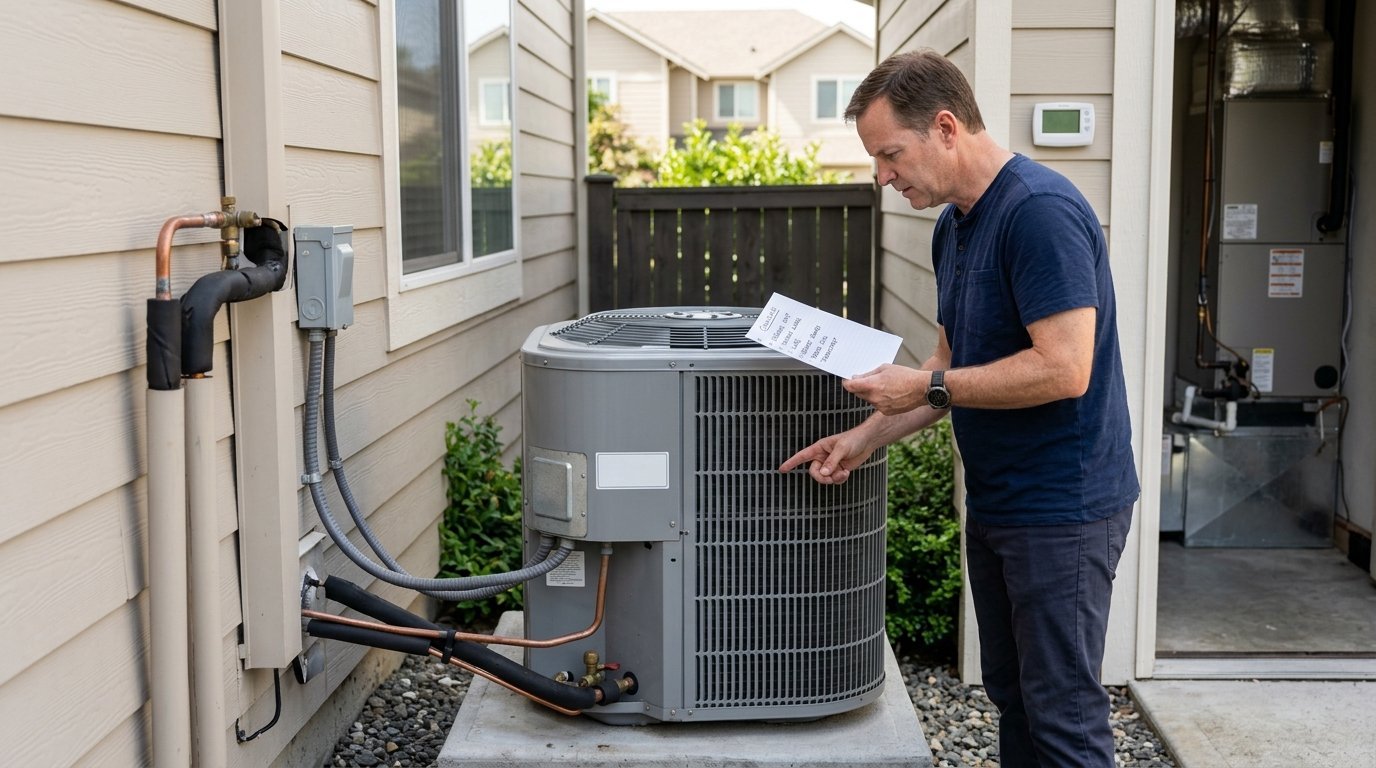
Homeowners can confirm the system type by checking the outdoor unit’s data plate for “heat pump” or model information. A heat pump identification guide can help interpret those labels and thermostat clues.
The details matter because heat pumps operate differently from conventional air conditioners in cold weather. Outdoor and indoor equipment, seasonal behavior, and a few simple checks can clarify what system the home uses.
Heat Pump Basics
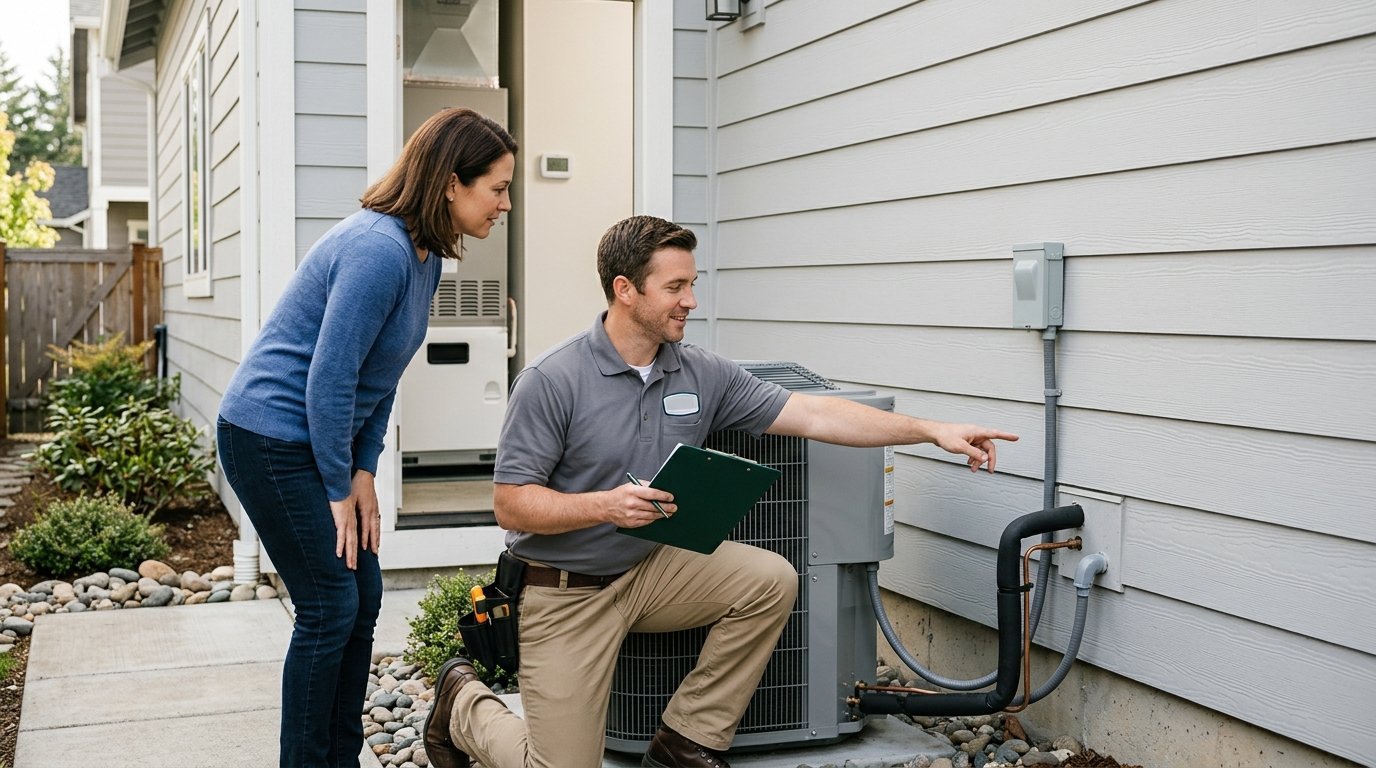
A heat pump uses electricity to move heat rather than create it through combustion. It can cool a home in summer and provide heat in colder weather by reversing the refrigeration cycle.
How Heat Pumps Transfer Heat
In cooling mode, a heat pump works much like a central air conditioner. It collects heat from indoor air, carries it through refrigerant lines, and releases it outdoors.
In heating mode, a reversing valve changes the refrigerant flow. The outdoor unit absorbs available heat from outdoor air—even when the air feels cold—and transfers it indoors. This heating and cooling refrigeration process distinguishes a heat pump from an air conditioner.
Most ducted systems include an indoor air handler and an outdoor compressor unit. When outdoor temperatures become very low, the system may activate auxiliary heat, usually electric resistance strips, to maintain the thermostat setting.
A thermostat may display Aux Heat during this operation. Emergency Heat normally bypasses the outdoor unit and relies only on backup heat, so it generally costs more to operate.
Common Types of Heat Pumps
Air-source heat pumps are the most common residential type. They use an outdoor cabinet connected to indoor ductwork and typically resemble a conventional central AC condenser.
Ductless mini-split heat pumps use one outdoor unit and one or more wall-mounted indoor heads. Each head controls the temperature in its own room or zone, which makes this design practical where ductwork is absent or limited.
| Type | Heat source | Indoor delivery |
|---|---|---|
| Air-source ducted | Outdoor air | Central ducts |
| Ductless mini-split | Outdoor air | Wall, ceiling, or floor heads |
| Ground-source | Underground soil or water | Usually central ducts |
Some homes use a dual-fuel system that pairs a heat pump with a gas furnace. The heat pump handles moderate conditions, while the furnace takes over at a selected outdoor temperature; a gas furnace and heat pump can be distinguished by their energy use and equipment.
Outdoor Unit Identification
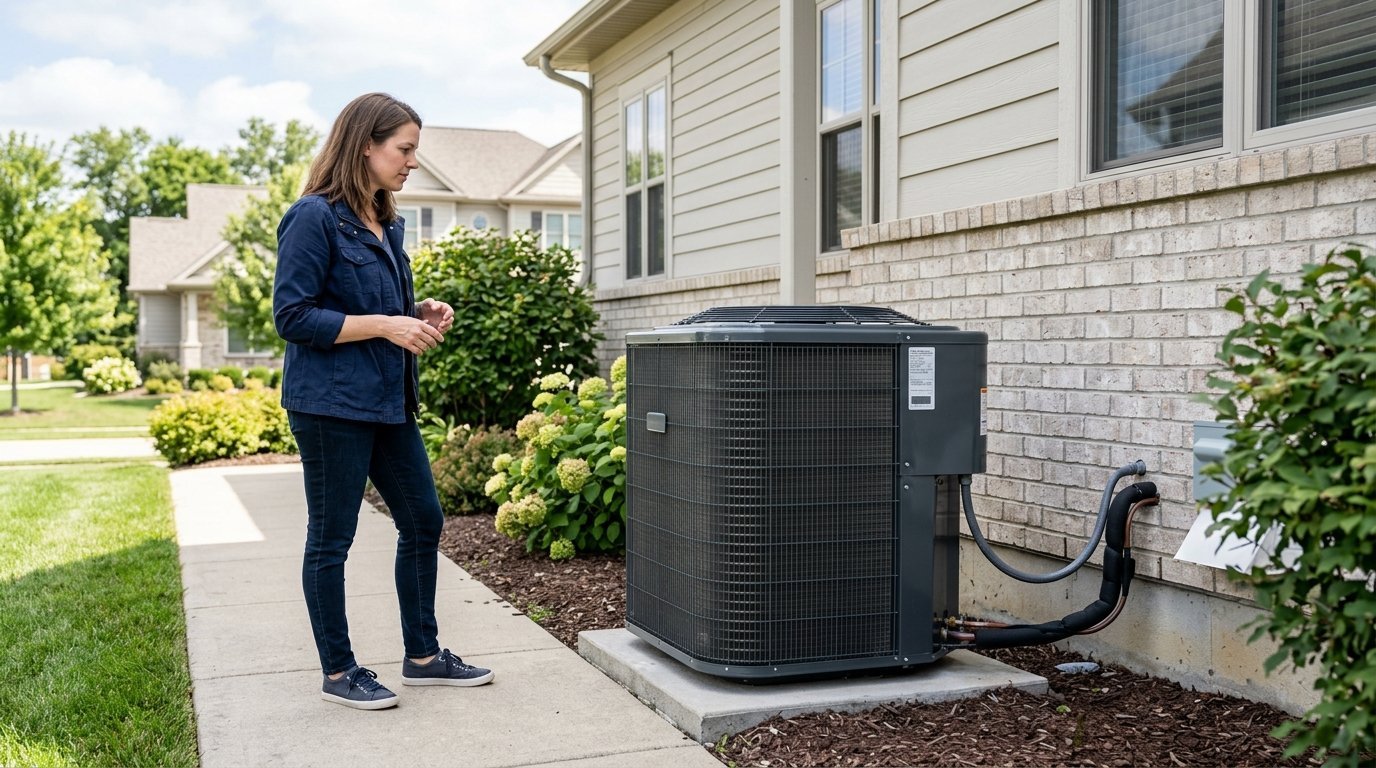
An outdoor heat pump often resembles a central air-conditioner condenser, so cabinet appearance alone does not confirm the equipment type. Fan position, refrigerant connections, and the manufacturer data plate provide more reliable identification.
Cabinet Shape and Fan Placement
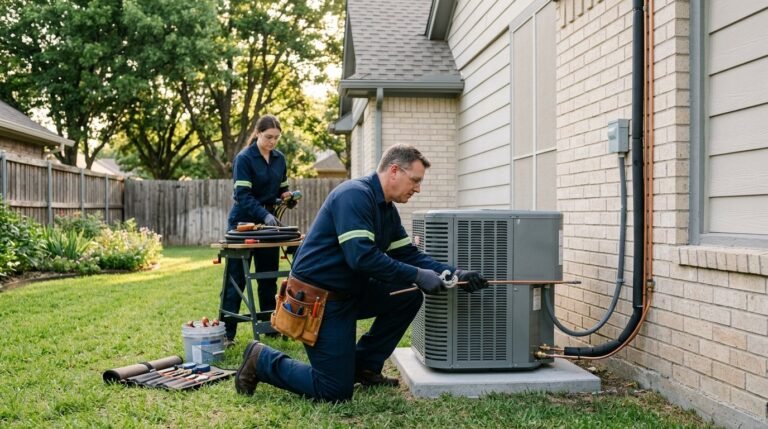
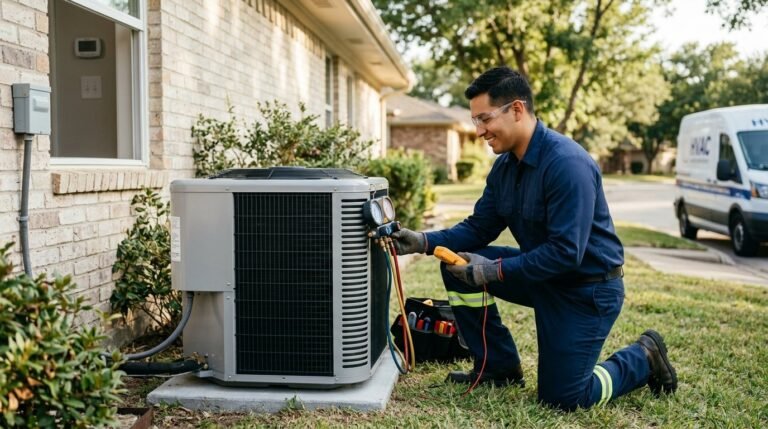
Most split-system heat pumps use a metal cabinet outside the home, typically square or rectangular, with coil fins behind louvered side panels. A large fan commonly sits on the top and exhausts air upward.
That layout also appears on many air conditioners. The key difference is that a heat pump operates during both cooling and heating seasons, while a conventional AC condenser normally runs only for cooling.
During mild weather, a homeowner can set the thermostat to Heat and listen for the outdoor unit. If it starts and the indoor system delivers warm air after several minutes, the equipment is likely a heat pump. A thermostat with Auxiliary Heat or Emergency Heat also supports that identification, as explained in Carrier’s guide to heat-pump thermostat and outdoor-unit clues.
A ductless mini-split heat pump has a smaller outdoor cabinet, often mounted on a wall bracket or ground stand. Its external appearance still cannot confirm its function without checking the label.
Heat Pump Labels and Model Numbers
The manufacturer data plate is usually attached to an exterior side panel. It lists the brand, model number, serial number, electrical ratings, refrigerant type, and sometimes an explicit equipment description such as “heat pump.”
Look for these terms:
- Heat Pump
- HP
- Heating and Cooling
- HSPF or HSPF2 ratings
- Reversing valve references
The model number may also identify the unit, but its format varies by manufacturer. The manufacturer’s website, product literature, or an HVAC contractor can decode an unclear number. Bryant also recommends using the outdoor-unit label as part of its heat pump identification process.
A visible reversing valve near the refrigerant lines is another physical indicator. This brass valve allows a heat pump to reverse refrigerant flow and produce indoor heat; a standard air conditioner does not use one.
Indoor Equipment Clues
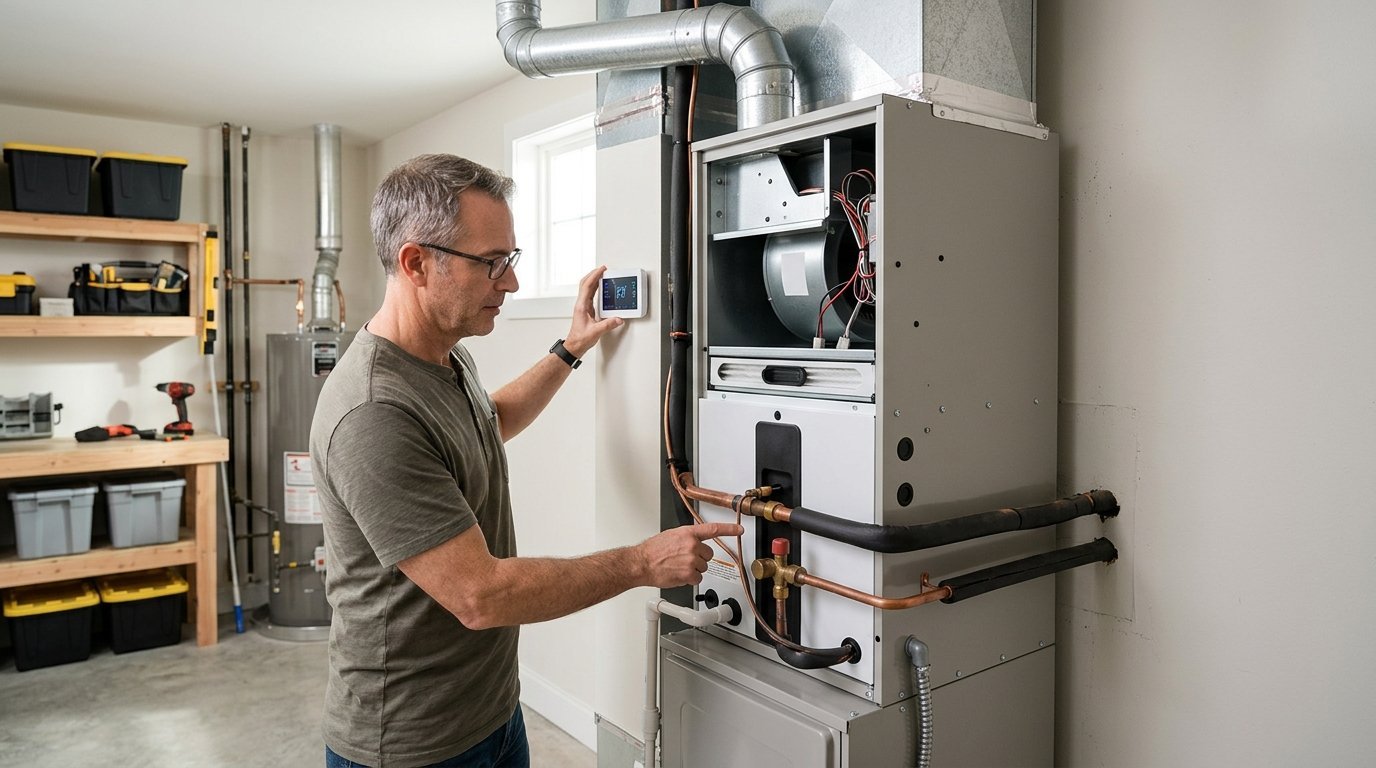
Indoor equipment can indicate whether the system moves heat in both directions. The clearest signs appear on the air handler, auxiliary-heating components, and thermostat control labels.
Air Handler Components
A heat pump commonly pairs with an air handler rather than a fuel-burning furnace. The indoor cabinet may contain an evaporator coil, blower, electrical controls, and sometimes electric resistance heat strips for backup heat.
The equipment label may identify the unit as a heat pump air handler or list compatible outdoor heat-pump models. Its model and serial number can be checked in the manufacturer documentation; Carrier’s heat-pump identification guidance notes that equipment labels can help confirm system type.
Look for these clues near the indoor unit:
- No gas line, burner compartment, or flue pipe: This often indicates an all-electric air handler, though it does not confirm a heat pump by itself.
- Electric heat-strip kit: Labels may show “heat kit,” “heater package,” or a kilowatt rating such as 5 kW or 10 kW.
- Refrigerant lines entering the cabinet: Both air conditioners and heat pumps have them, so this detail needs confirmation from the thermostat or outdoor-unit label.
A furnace can also work with a heat pump in a dual-fuel system, so the presence of a furnace does not rule one out.
Thermostat Settings and Controls
A thermostat that displays Heat, Cool, and Emergency Heat or Aux Heat strongly suggests a heat pump system. Auxiliary heat activates when outdoor temperatures are too low for efficient heat-pump operation, during rapid temperature increases, or while the system defrosts.
“Emergency Heat” usually turns off the outdoor heat pump and runs the backup heat alone. It is intended for a heat-pump malfunction or other specific need, not normal daily heating.
Common thermostat indicators include:
| Thermostat label | What it usually means |
|---|---|
| Aux Heat | Backup heating is operating with the heat pump. |
| Emergency Heat | Backup heat operates without the outdoor unit. |
| Heat Pump | The thermostat may have a dedicated equipment setting. |
| O/B | A reversing-valve control terminal used by heat pumps. |
A thermostat can be configured incorrectly, so labels alone do not provide absolute confirmation. If the outdoor unit runs while the system delivers heat, that behavior is a practical heat-pump identification clue.
Seasonal Operation Tests
Heating-mode behavior and frost removal can identify a heat pump without opening equipment panels. These checks work best when outdoor temperatures are cool and the system has been operating normally.
Checking Heating Mode
Set the thermostat to Heat and raise the setpoint about 2–3°F above the indoor temperature. The system may wait up to five minutes before starting because many units use a compressor-protection delay.
A heat pump normally runs its outdoor unit while it heats the home. Listen for the outdoor fan and compressor after the indoor blower starts. A conventional gas or oil furnace typically heats indoors without running the outdoor air-conditioning unit.
Thermostat labels can provide another clue. Settings such as “Aux Heat,” “Emergency Heat,” or “E Heat” commonly indicate heat-pump equipment, although some thermostats support those labels even when they are not used. Thermostat and outdoor-unit checks for identifying a heat pump can help confirm the result.
A dual-fuel system may operate differently. It can run the heat pump in mild weather, then turn on a gas furnace at lower outdoor temperatures; the outdoor unit may stop once the furnace takes over.
Observing the Defrost Cycle
In cold, damp weather, a heat pump’s outdoor coil can collect frost. The unit periodically enters defrost mode to melt that ice and maintain airflow across the coil.
During defrost, the outdoor fan often stops while the compressor continues operating. The homeowner may see steam rise from the outdoor unit or hear a brief change in operating sound. Water dripping beneath the unit is also normal as melted frost drains away.
The indoor system may use auxiliary electric heat during this cycle, so supply air can feel less warm for several minutes. A defrost cycle usually ends automatically within roughly 5–15 minutes.
Light frost that clears during defrost supports the presence of a working heat pump. Thick ice that remains on the coil, repeatedly returns quickly, or blocks the fan indicates a problem that requires HVAC service.
Differences From Conventional Air Conditioners
A heat pump and a central air conditioner can use similar-looking outdoor equipment, but a heat pump can reverse its refrigeration cycle to provide heat. Its outdoor unit also commonly operates during winter heating, unlike an air conditioner paired with a furnace.
Reversing Valve Function
A heat pump uses a reversing valve to change the direction of refrigerant flow. In cooling mode, it removes indoor heat and releases it outside, much like a conventional central air conditioner.
In heating mode, the valve switches the cycle so the outdoor coil absorbs heat from outdoor air and the indoor coil releases that heat inside. This two-way operation is the defining distinction between a heat pump and an AC-only condenser. Heat pumps heat and cool with the same outdoor unit.
A homeowner should not attempt to identify the valve by removing equipment panels. Instead, they can check the outdoor unit’s model number in the manufacturer’s documentation or ask an HVAC technician to confirm the system type.
The thermostat may also provide clues. Settings such as “Emergency Heat,” “Aux Heat,” or “Heat Pump” generally indicate that the system has a heat pump, though thermostat labels can vary by installation.
Winter Outdoor Unit Operation
When a home calls for heat, a heat pump’s outdoor unit normally starts and runs, even in cold weather. It extracts available heat from outside air and transfers it indoors; cold air still contains some usable heat energy.
A conventional split air conditioner does not normally run its outdoor condenser during winter heating. In a furnace-and-AC system, the furnace, boiler, or electric resistance heater supplies heat while the AC outdoor unit remains off.
During a heat pump’s defrost cycle, the outdoor fan may stop, steam may rise from the unit, and the system may briefly make different operating sounds. These actions can be normal because the unit periodically melts frost from its outdoor coil.
If the outdoor unit runs when the thermostat is set to heating, the system is likely a heat pump. Checking whether the outdoor unit operates in heat mode offers a practical identification method.
How To Confirm the System Type
Installation records and a qualified inspection can verify whether the equipment provides both heating and cooling. Model numbers, equipment labels, and system testing provide more reliable confirmation than appearance alone.
Reviewing Installation Documents
The homeowner should review the original installation contract, proposal, invoice, warranty registration, or equipment manual. These documents commonly identify the system as a heat pump, air conditioner, furnace, or dual-fuel system.
They should compare the outdoor-unit model number on the paperwork with the number on the unit’s rating plate. A manufacturer or HVAC distributor can decode the model number if the documents use abbreviations or a product code.
Useful terms to find include:
- Heat pump or split-system heat pump
- Air-source heat pump or ductless heat pump
- Reversing valve
- Auxiliary heat or electric heat strips
- Dual fuel, indicating a heat pump paired with a gas furnace
A system that lists both an outdoor heat pump and an indoor furnace may be dual fuel. The outdoor unit handles heating during milder weather, while the furnace supplies heat under conditions selected by the controls. Carrier’s heat-pump identification guidance also notes that a heat pump can provide heating as well as cooling.
Contacting an HVAC Professional
An HVAC technician can confirm the system type during a maintenance visit or service call. They can inspect the outdoor unit, indoor air handler or furnace, thermostat wiring, refrigerant lines, and control board.
The technician should verify whether the outdoor equipment has a reversing valve and whether it changes refrigerant flow between heating and cooling modes. This check distinguishes a conventional central air conditioner from a heat pump when both systems use similar-looking outdoor cabinets.
The homeowner should ask the technician to document:
| Item to confirm | Why it matters |
|---|---|
| Outdoor-unit equipment type | Identifies heat pump versus AC-only equipment |
| Backup heat type | Determines whether electric strips, a furnace, or another system assists heating |
| Thermostat configuration | Confirms whether controls are programmed for heat-pump operation |
| Model and serial numbers | Supports future maintenance, warranty, and parts requests |
A technician can also test heating operation without relying only on thermostat labels, which may be inaccurate after a thermostat replacement. Trane’s guidance on distinguishing a heat pump from central AC notes that the outdoor units can look nearly identical.
Frequently Asked Questions
A heat pump reverses its refrigerant flow to provide both cooling and heating, while a conventional central air conditioner only cools. Equipment labels, thermostat settings, winter operation, and the indoor heating equipment can confirm the system type.
How can I tell whether my HVAC system is a heat pump or a conventional air conditioner?
A heat pump’s outdoor unit operates during both cooling and heating seasons. A conventional air conditioner runs only for cooling, while a furnace, boiler, or electric resistance equipment supplies heat separately.
The equipment nameplate provides the most reliable confirmation. The outdoor unit may be labeled “heat pump,” and its model number can be checked through the manufacturer; this heat pump identification guide describes common labels and system features.
Does an outdoor unit running in winter mean I have a heat pump?
Usually, yes. When the thermostat calls for heat, a heat pump normally runs its outdoor unit to collect heat from outside air and move it indoors.
However, some homes use outdoor equipment for other purposes, such as a dual-fuel system or a unit that runs briefly during a defrost cycle. A technician can confirm the equipment type from its model number and wiring.
Can I have both a heat pump and a gas furnace?
Yes. This arrangement is called a dual-fuel or hybrid system. The heat pump handles heating in mild weather, and the gas furnace takes over when outdoor temperatures fall or when the system determines furnace heat is more efficient.
The indoor furnace cabinet supplies the blower and gas heat, while the outdoor heat-pump unit provides cooling and supplemental heating. The thermostat may display settings such as auxiliary heat, emergency heat, or dual fuel.
How can I tell if my air conditioner also provides heating?
The thermostat may have Heat, Cool, Auto, and possibly Emergency Heat modes. A system that turns on the outdoor unit after the thermostat is switched to Heat is likely a heat pump, unless it is part of a separate dual-fuel arrangement.
A homeowner can set the thermostat a few degrees above room temperature and check whether the outdoor unit starts after several minutes. They should not open electrical panels or touch refrigerant lines; an HVAC professional should inspect uncertain equipment.
What does a heat pump look like indoors and outdoors?
Outside, an air-source heat pump looks much like a central air-conditioning condenser: a metal cabinet with a fan on top or on the side. Its appearance alone does not reliably distinguish it from an AC-only condenser.
Inside, it may connect to an air handler with electric backup heat, a gas furnace in a dual-fuel system, or wall-mounted heads in a ductless mini-split system. A comparison of heat pumps and conventional air conditioners notes that labels and operating functions offer more useful evidence than cabinet shape.
Where can I find the model number to identify my heating and cooling system?
The model and serial number usually appear on a metal or printed data plate on the outdoor unit’s side panel. Indoor air handlers, furnaces, and ductless heads also have data plates, often behind an access door or on an interior cabinet panel.
They should record the manufacturer, model number, and serial number exactly as shown. The manufacturer’s product lookup or an HVAC technician can use that information to determine whether the unit is a heat pump and identify compatible replacement parts.