Heating Repair Fort Worth: Trusted Heating Services
When a Fort Worth heating system blows cool air, cycles repeatedly, makes unusual noises, or fails to start, homeowners should arrange professional service promptly.
Local conditions, system age, and the type of equipment all affect the repair process.
Homeowners can compare common furnace and heat-pump failures, recognize urgent safety concerns, and understand what a technician typically checks during a Fort Worth heating repair visit.
They can also weigh repair costs against replacement value, plan preventive maintenance, and choose a qualified local technician for their home.
Common Heating System Warning Signs
Uneven heat, abnormal sounds or odors, unexplained utility increases, and repeated starts and stops can indicate a developing heating problem.
Prompt service can help prevent a complete loss of heat during colder Fort Worth weather.
Uneven Indoor Temperatures
A heating system should maintain relatively consistent temperatures from room to room when doors, insulation, and thermostat settings are comparable.
A bedroom that remains cold while nearby rooms feel warm may indicate restricted airflow, leaking ductwork, a dirty filter, or a blower problem.
Homeowners should first check that supply vents are open and unobstructed by furniture, rugs, or curtains.
They should also replace a visibly dirty air filter, as a clogged filter can limit airflow and force the system to work harder.
Persistent cold spots need professional evaluation.
A technician can inspect duct connections, test airflow, verify thermostat operation, and determine whether the furnace is producing sufficient heat.
Signs that a furnace needs repair often include inconsistent temperatures before the unit stops operating entirely.
Unusual Noises Or Odors
Heating equipment may make a brief low hum or soft airflow noise during normal operation.
New or loud sounds—such as banging, rattling, squealing, scraping, or repeated clicking—can point to loose panels, blower motor wear, a damaged belt, or ignition-related trouble.
A burning-dust smell can occur briefly when a system runs for the first time after months of inactivity.
The odor should fade within a short period.
Persistent burning, melting-plastic, electrical, or fuel-like odors require immediate attention.
If occupants smell gas, they should avoid switches, flames, and electrical devices, leave the building, and contact the gas utility or emergency services from a safe location.
For non-emergency noises and odors, a qualified technician can identify the mechanical cause.
Common heater emergencies in Fort Worth may require faster action when safety or heat loss is involved.
Rising Energy Bills
A heating bill can increase during colder weather, but a sharp or continuing rise without a major change in thermostat settings deserves investigation.
The system may run longer because of dirty filters, duct leaks, failing components, poor combustion, or a thermostat that does not read indoor temperatures accurately.
Homeowners can compare bills from similar billing periods and note changes in daily runtime.
They should also check simple causes, including a clogged filter, blocked return vents, and thermostat schedules set higher than necessary.
Higher energy use combined with uneven heat, short cycling, or unusual noises suggests the equipment is operating inefficiently.
A heating technician can measure system performance and locate faults rather than relying on utility costs alone.
Early heating and AC repair in Fort Worth can address a specific defect before it places additional strain on the system.
Frequent System Cycling
Frequent cycling occurs when the heater starts, runs briefly, shuts off, and restarts soon afterward.
This differs from normal cycling, where the system runs long enough to bring the home to the thermostat setting before turning off.
A dirty air filter, blocked vents, overheating safety controls, incorrect thermostat placement, or an oversized heating unit can cause short cycles.
If the thermostat sits near a heat-producing appliance, direct sunlight, or a supply vent, it may register a temperature that does not reflect the rest of the home.
Repeated cycling increases wear on ignition parts, motors, and electrical controls.
Homeowners should replace the filter and verify that vents remain open, but they should schedule service if the pattern continues.
Urgent heating repair signs in DFW include operational problems that prevent the system from maintaining dependable heat.
Urgent Situations That Need Fast Service
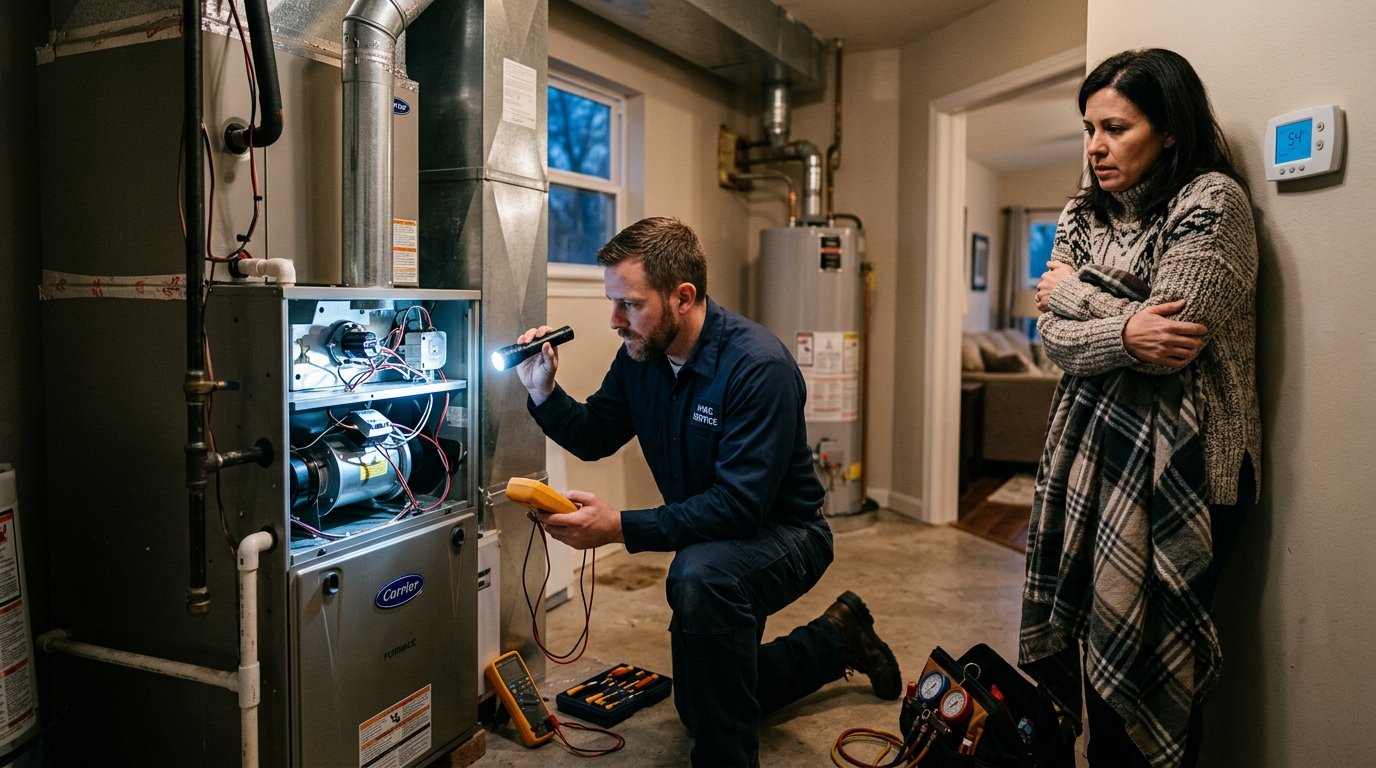
Loss of heat, suspected gas or carbon monoxide exposure, and electrical odors require different immediate actions.
Residents should protect people first, avoid unsafe troubleshooting, and arrange qualified heating repair in Fort Worth when conditions allow.
No Heat During Cold Weather
A heater that stops during cold weather needs prompt attention, especially when indoor temperatures are falling or the home includes infants, older adults, or people with medical conditions.
A 24/7 emergency heating repair provider in Fort Worth can assess furnaces, heat pumps, and related controls.
They can first check the thermostat setting, replace a clearly depleted thermostat battery, and confirm that the HVAC breaker has not tripped.
They should not repeatedly reset a breaker or remove furnace panels to investigate internal parts.
While waiting, occupants should close exterior doors, cover drafts, and use safe electric space heaters only as directed by the manufacturer.
Keep heaters at least three feet from bedding, furniture, curtains, and other combustible items, and never use an oven or gas range for heat.
Gas Or Carbon Monoxide Concerns
A sulfur-like or rotten-egg gas odor near a furnace requires immediate evacuation.
Everyone should leave the building without turning lights, appliances, switches, or vehicles on or off, then call 911 and the gas utility from a safe location.
Carbon monoxide has no color or odor, so symptoms matter.
Headache, dizziness, nausea, confusion, or unusual fatigue affecting multiple people may indicate exposure; occupants should move to fresh air and seek emergency assistance.
A working carbon monoxide alarm should trigger the same response: leave first and call emergency services from outside.
Only after responders declare the property safe should a technician inspect the heating system, venting, flue connections, and combustion components.
Electrical Burning Smells
A burning-plastic, hot-wire, or smoky odor from a furnace, air handler, thermostat, or vent can indicate overheating electrical parts.
Occupants should turn the system off at the thermostat and, if it is safe to do so, switch off the HVAC breaker.
They should not restart the equipment to see whether the odor returns.
Repeated tripping, buzzing, sparking, visible smoke, or a warm electrical panel requires an emergency electrician or fire department call, depending on the immediate hazard.
A qualified technician can examine wiring, capacitors, blower motors, control boards, and connections.
Emergency HVAC service in Fort Worth may be appropriate once there is no active fire or smoke danger.
Typical Furnace And Heat Pump Problems
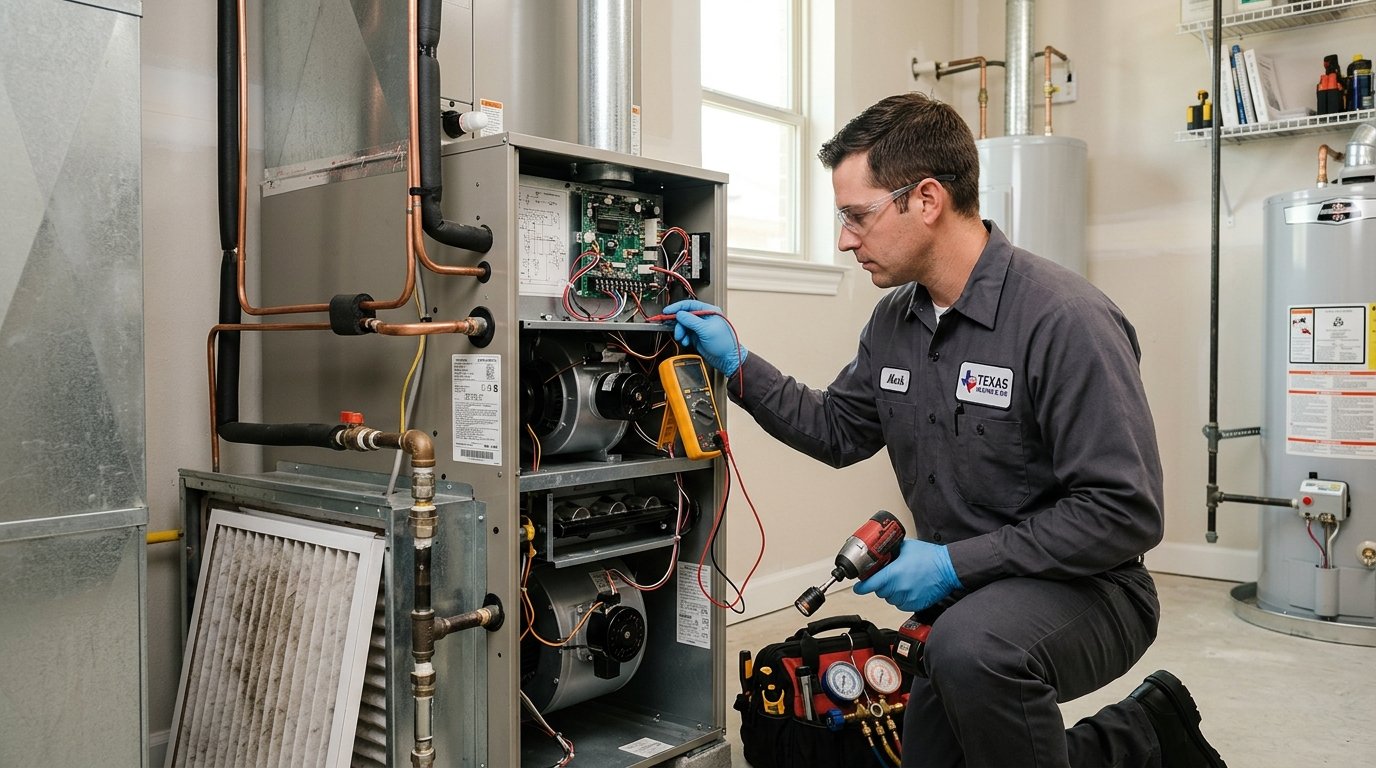
Heating systems often show warning signs before they stop working, including failed starts, weak airflow, inaccurate temperature control, ice buildup, and unusual cycling.
Technicians who provide Fort Worth heating repair for furnaces and heat pumps can identify the failed component and check for related safety or performance issues.
Ignition And Pilot Light Failures
A gas furnace may fail to start when its igniter, pilot assembly, flame sensor, gas valve, or control board malfunctions.
Modern furnaces commonly use an electronic igniter rather than a standing pilot light; a cracked or worn igniter may glow weakly or not at all.
A dirty flame sensor can also shut the burners down shortly after ignition.
The furnace control board interprets the missing flame signal as a safety risk and closes the gas valve, often causing repeated start-and-stop cycles.
Do not repeatedly reset a furnace that smells of gas or has visible burner flames outside the normal burner area.
The system should remain off until a qualified technician checks the gas supply, venting, ignition sequence, and combustion safety.
Blower Motor Issues
The blower motor moves heated air through the ductwork.
A failing motor may produce humming, squealing, grinding, or rattling sounds, while a damaged capacitor may prevent the motor from starting even though the furnace itself runs.
Restricted airflow also increases strain on the blower assembly.
Common causes include a clogged air filter, blocked return vents, a dirty evaporator coil, or ductwork restrictions.
These conditions can cause a furnace to overheat and trip its high-limit safety switch.
A technician should inspect the motor, wheel, capacitor, wiring, and control board.
Heating repair providers serving Fort Worth commonly diagnose both furnace and heat-pump airflow problems, including systems that run but distribute little warm air.
Thermostat Malfunctions
A thermostat can cause heating problems even when the furnace or heat pump has no mechanical failure.
Dead batteries, loose wiring, incorrect programming, poor placement, or a failed internal temperature sensor can prevent the system from receiving an accurate call for heat.
For example, a thermostat located near a sunny window, kitchen, supply vent, or draft may read the room incorrectly.
The system may turn off too early, run too long, or cycle frequently.
Before scheduling service, they can verify that the thermostat is set to Heat, the set point exceeds the current indoor temperature, and the fan setting is on Auto.
If the display is blank or the system ignores correct settings, a technician can test low-voltage wiring and thermostat communication.
Refrigerant And Defrost Problems
Heat pumps use refrigerant to transfer heat indoors during winter.
Low refrigerant from a leak can reduce heating output, increase operating time, and cause the outdoor coil to frost or freeze under certain conditions.
A heat pump should periodically enter a defrost cycle during cold, damp weather.
If the defrost control board, sensor, reversing valve, or outdoor fan fails, ice can accumulate and restrict airflow through the outdoor coil.
Light frost can be normal, but heavy ice covering the coil or unit cabinet is not.
They should avoid chipping ice from the coil, as the fins and refrigerant tubing can bend or rupture.
A technician needs to locate and repair any leak, verify refrigerant charge, and test the defrost controls rather than simply adding refrigerant.
What To Expect During A Professional Visit
A qualified technician inspects the equipment, identifies the specific fault, explains practical repair options, and verifies safe operation before leaving.
This process helps homeowners understand the condition of their heating system and any work performed.
System Inspection And Diagnostics
The technician begins by asking about the symptoms: uneven heat, unusual sounds, short cycling, high utility bills, or a system that will not start.
They may also ask when the issue began and whether it occurs continuously or only during certain outdoor temperatures.
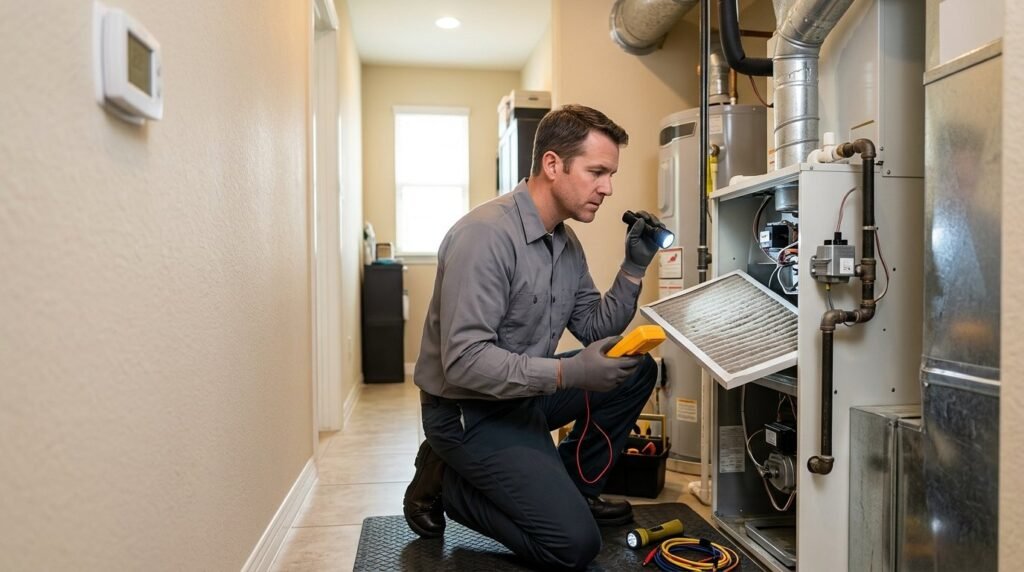
Next, they inspect accessible components, including the thermostat, air filter, blower compartment, electrical connections, condensate drain, and ductwork near the unit.
During a professional HVAC repair visit, the technician should examine the full system rather than replace a part based only on one symptom.
For a gas furnace, diagnostic work commonly includes checking:
- Ignition sequence and flame-sensor operation
- Burner condition and furnace error codes
- Gas pressure and venting connections, when applicable
- Heat exchanger condition for visible concerns
- Temperature rise across the furnace
They use readings from meters and manufacturer specifications to isolate the cause.
A failed capacitor, dirty flame sensor, blocked filter, damaged igniter, or faulty control board can produce similar no-heat symptoms, so testing matters before approving a repair.
Clear Repair Recommendations
After diagnosing the problem, the technician explains what failed, why it affects heating, and what repair will correct it. The recommendation should identify the affected component and distinguish an immediate safety or no-heat repair from maintenance that can wait.
Homeowners should receive a repair estimate before work begins, including labor, parts, applicable fees, and warranty terms. If multiple options exist, such as repairing an aging blower motor or replacing it with a manufacturer-approved part, the technician should explain the practical differences without pressuring the customer.
A clear recommendation often covers:
| Item | What the homeowner should know |
|---|---|
| Problem found | The tested condition causing the heating issue |
| Recommended work | Parts and labor needed to restore operation |
| Cost | The quoted amount before authorization |
| Timing | Whether the repair requires a return visit or ordered part |
| Warranty | Coverage for installed parts and workmanship |
For Fort Worth homeowners, heating repair services may also address issues that become apparent during colder weather, such as insufficient airflow or repeated ignition failures.
Testing And Safety Verification
Once repairs are complete, the technician restarts the system and runs a heating cycle. They confirm that the thermostat calls for heat, the furnace or heat pump starts correctly, air moves through the vents, and the unit reaches normal operating conditions.
For combustion equipment, safety checks may include inspecting vent connections, confirming proper burner flame, and testing for carbon monoxide where appropriate. They also verify that safety controls respond correctly and that panels, wiring covers, and drain connections are secured.
The technician should leave the work area clean and explain any operating steps the homeowner needs to follow. This may include replacing filters on schedule, keeping supply and return vents open, maintaining clear space around the furnace, and watching for recurring error codes or odors.
Repair Or Replacement Decision Factors
System age, the type and frequency of failures, repair cost, and operating efficiency determine whether heating repair remains practical. A qualified technician should diagnose the exact fault before comparing repair estimates with replacement options.
System Age And Condition
A heating system near the end of its expected service life deserves closer evaluation before a major repair. Many furnaces last about 15 to 20 years with proper maintenance, while heat-pump life can vary based on usage, maintenance, and outdoor conditions.
Heater replacement factors in Texas identify age, breakdowns, uneven heating, and repair cost as key decision points.
Age alone does not require replacement. A 10-year-old furnace with a failed igniter, flame sensor, capacitor, or thermostat may be a reasonable repair candidate if its heat exchanger, blower assembly, and safety controls remain sound.
Warning signs carry more weight when they occur together:
- Repeated no-heat calls during one or two heating seasons
- Uneven temperatures between rooms or short cycling
- Rust, corrosion, water damage, or visible deterioration
- A cracked heat exchanger or other safety-related defect
- Parts that are discontinued or difficult to obtain
A cracked heat exchanger typically changes the decision because it can affect combustion safety and may be expensive to address. Technicians should inspect venting, gas pressure, electrical connections, airflow, and duct condition before attributing poor performance to the equipment alone.
Cost Of Repairs Compared With Replacement
Repair estimates should include the complete scope of work: parts, labor, diagnostic charges, required safety testing, and any additional components likely to fail soon. Homeowners should compare that total with the installed cost of a properly sized replacement system, not just the price of the equipment.
| Repair situation | Decision consideration |
|---|---|
| Single minor component failure | Repair often makes sense on a younger, dependable system. |
| Major repair on an older unit | Compare the estimate against replacement cost and expected remaining life. |
| Multiple repairs in a short period | Replacement may reduce repeated service expenses and disruption. |
| Safety or unavailable-parts issue | Replacement may be necessary rather than optional. |
There is no fixed percentage that applies to every home. An expensive repair on a system approaching 15 to 20 years old warrants a replacement estimate, especially when the unit has already needed several repairs.
For Fort Worth homeowners, the decision should also account for installation requirements. A replacement quote may need to include duct modifications, venting corrections, electrical upgrades, condensate drainage, thermostat compatibility, or gas-line work.
A detailed estimate makes comparison more accurate than choosing the lowest immediate repair price.
Efficiency And Long-Term Reliability
Older heating equipment can still operate safely, but it may use more fuel or electricity than newer properly installed models. Efficiency ratings matter, yet correct sizing, airflow, duct sealing, and commissioning affect real-world comfort and operating cost just as much.
A new furnace with a higher AFUE rating may reduce fuel use, while a heat pump may offer efficient electric heating in moderate weather. Savings vary by household, utility rates, insulation levels, thermostat settings, and how often the system runs.
Reliability should focus on the system’s documented history. If it has frequent ignition failures, blower problems, refrigerant issues, or control-board faults, continued repairs can create unpredictable costs and leave the home without heat during a cold snap.
Technicians should provide repair and replacement options after checking system performance. Guidance on when a furnace repair may signal replacement can help homeowners weigh efficiency decline, repair history, and equipment condition before committing to a larger investment.
Preventive Maintenance For Reliable Comfort
Scheduled service helps a heating system operate safely, maintain steady airflow, and identify worn components before a breakdown. In Fort Worth, technicians typically prepare equipment before cooler weather and check the air-delivery controls that affect each room.
Seasonal Tune-Ups
A fall tune-up gives a technician time to inspect the furnace or heat pump before regular heating use begins. They check ignition or heat-pump start-up, safety controls, electrical connections, burners where applicable, and the condition of accessible components.
For gas furnaces, the technician should also assess combustion-related parts and look for signs of venting or fuel-delivery problems. They can test system operation through a full heating cycle rather than relying only on whether warm air reaches the vents.
Homeowners should schedule professional heating maintenance in the Dallas–Fort Worth area before the first sustained cold period when possible. They should report short cycling, unusual odors after initial start-up, loud operation, uneven heating, or a rise in utility use.
Maintenance visits commonly include:
- Checking thermostat response and heating cycles
- Inspecting accessible wiring and electrical connections
- Testing safety switches and shutdown controls
- Cleaning components when the equipment and service requirements allow
Filter Changes And Airflow Checks
A restricted filter makes the blower work harder and can reduce the amount of heated air reaching living spaces. The household should check the filter monthly during heavy use and replace it according to the filter type, manufacturer guidance, and visible buildup.
The correct filter must match the system’s specified size and airflow rating. Using an overly restrictive filter can limit airflow, while a loose or incorrectly sized filter can allow dust to bypass it.
Technicians also inspect the blower compartment, return-air openings, and supply registers for obstructions. Furniture, rugs, and closed interior doors can affect circulation, particularly in rooms farthest from the air handler.
Preventive HVAC tune-ups in Fort Worth can help identify airflow conditions that contribute to higher energy use or unnecessary equipment strain. Residents should keep return grilles clear and avoid blocking supply registers with furnishings.
Ductwork And Thermostat Care
Ductwork can lose heated air through disconnected sections, damaged insulation, or leaks at joints. A technician can inspect accessible ducts in attics, garages, and utility areas for separation, deterioration, or condensation concerns.
They may recommend sealing or insulation work when visible duct defects affect comfort or system performance. Homeowners should not cover vents or attempt repairs near electrical equipment, combustion vents, or inaccessible duct runs without qualified help.
The thermostat should sit away from direct sunlight, drafty doors, supply registers, and heat-producing appliances. Poor placement can cause inaccurate readings and frequent cycling.
A technician can verify that the thermostat calls for heat at the selected temperature and communicates properly with the equipment. For households planning a replacement, programmable or smart controls may help maintain consistent schedules when they are compatible with the existing heating system.
Choosing A Qualified Local Technician
A qualified technician combines verifiable credentials, clear pricing, and written service protections. Homeowners should compare documentation and repair terms before authorizing work on a furnace, heat pump, or other heating equipment.
Licensing And Experience
Texas HVAC work requires appropriate state licensing, so a homeowner should ask for the contractor’s license information and confirm that it is current. They should also verify insurance coverage, particularly liability insurance, before allowing work inside the home.
Experience should match the equipment and fault. A technician should be able to explain whether the issue involves ignition, airflow, a thermostat, a blower motor, a heat pump defrost cycle, or a safety control—rather than simply recommending replacement.
They should also ask whether the company regularly services their system’s make and fuel type. Some local providers advertise Fort Worth heating repair and furnace service, while others handle broader HVAC and plumbing work, such as Service Experts Fort Worth.
Useful questions include:
- Is the technician licensed to perform this HVAC work?
- Has the company repaired this model and type of heating system?
- Will it test for carbon monoxide when servicing gas-fired equipment?
- Can it provide the diagnosis in writing?
Upfront Estimates
A reliable estimate separates the diagnostic charge, labor, replacement parts, permit costs if applicable, and tax. It should identify the part being installed and state whether the price covers return visits if the same repair fails.
Homeowners should not approve a major repair based only on a verbal price. They should request a written estimate after the technician diagnoses the system, especially when the work involves a heat exchanger, compressor, control board, or gas valve.
The estimate should distinguish a repair from a recommendation to replace the unit. A company offering Fort Worth heating services for furnaces and heat pumps may evaluate either option, but the homeowner should receive the repair cost, expected limitations, and replacement rationale separately.
If the price changes after work begins, the technician should explain why and obtain approval before proceeding. Vague descriptions such as “parts and labor” do not give a homeowner enough information to compare bids.
Warranties And Customer Support
The written invoice should state the warranty period for both the installed part and the labor. Manufacturer coverage may apply only to the component, while the contractor’s labor warranty governs the cost of returning to diagnose or reinstall that component.
A homeowner should ask what voids coverage. Common exclusions can include unrelated failures, pre-existing wiring issues, improper system maintenance, or parts supplied by the customer.
Support also matters when a system fails outside regular business hours. Some providers advertise 24/7 emergency HVAC repair in Fort Worth, but homeowners should confirm emergency diagnostic fees, overtime labor rates, and response expectations before scheduling.
They should keep the estimate, invoice, model and serial numbers, and any maintenance records. These documents help resolve warranty questions and give the next technician accurate repair history.
Frequently Asked Questions
Heating repair costs depend on the failed part, equipment type, labor time, and whether service occurs after hours. Fast diagnosis, valid licensing, and a clear repair-versus-replacement assessment help property owners make informed decisions.
How much does heating repair typically cost in Fort Worth?
Costs vary widely because a thermostat adjustment, igniter replacement, blower repair, and heat-exchanger issue require different parts and labor. A company should provide a diagnosis and written estimate before beginning non-emergency repairs.
After-hours calls, specialty parts, and extensive electrical or gas-system work can increase the total. Property owners can ask whether the diagnostic fee applies toward an approved repair.
How quickly can a technician repair a broken heater?
A technician can often complete straightforward repairs during the first visit when the required part is available. Common same-day work includes thermostat issues, dirty flame sensors, failed capacitors, and certain ignition problems.
Repairs can take longer when the system needs a special-order control board, blower motor, or heat exchanger. A proper service process starts with an assessment of the equipment and reported problem, as described in these Fort Worth HVAC repair FAQs.
What are the most common signs that a furnace needs repair?
Warning signs include weak airflow, cold air from supply vents, repeated cycling, unusual banging or squealing, and rooms that do not reach the thermostat setting. A sudden rise in heating bills can also indicate reduced efficiency or a malfunctioning component.
A gas smell, a carbon monoxide alarm, visible soot, or a yellow furnace flame requires immediate attention. Occupants should leave the area if they suspect a gas leak and contact the gas utility or emergency services before arranging HVAC service.
Do HVAC companies offer emergency heating repair services?
Many HVAC companies provide emergency or after-hours service for no-heat situations, especially during cold weather. Availability, response times, and added after-hours charges differ by company.
Property owners should confirm whether a company dispatches technicians outside normal business hours and whether it services their equipment type. Local heating and AC repair information in Fort Worth can help clarify typical repair and replacement concerns.
Is it better to repair or replace an older heating system?
Repair often makes sense when the issue is isolated, the system has received regular maintenance, and replacement parts remain available. A technician should consider the equipment’s age, repair history, efficiency, safety, and the cost of the proposed repair.
Replacement may be more practical when repairs recur or major components fail. The unit’s ability to operate safely is also important.
A written comparison of repair costs, replacement options, efficiency ratings, and warranty coverage supports a clear decision.
How can I find a licensed and reliable heating repair company?
Property owners should verify that the company holds the required Texas licensing and carries insurance. They should also request written estimates.
Review recent customer feedback. Ask whether technicians work on your specific furnace, heat pump, or packaged system.
A reliable provider explains the diagnosis and identifies the affected parts. They present repair options without pressure.
For example, Fort Worth heating repair technicians licensed through TDLR service equipment such as gas furnaces, electric heating systems, heat pumps, and packaged units.