Hvac Company North Richland Hills: Trusted Local Service
A qualified HVAC company in North Richland Hills can diagnose heating and cooling problems, perform repairs and maintenance, and recommend efficient system upgrades for a home’s needs. Local providers offer services ranging from AC repair and furnace maintenance to indoor air quality options, such as heating and cooling services in North Richland Hills.
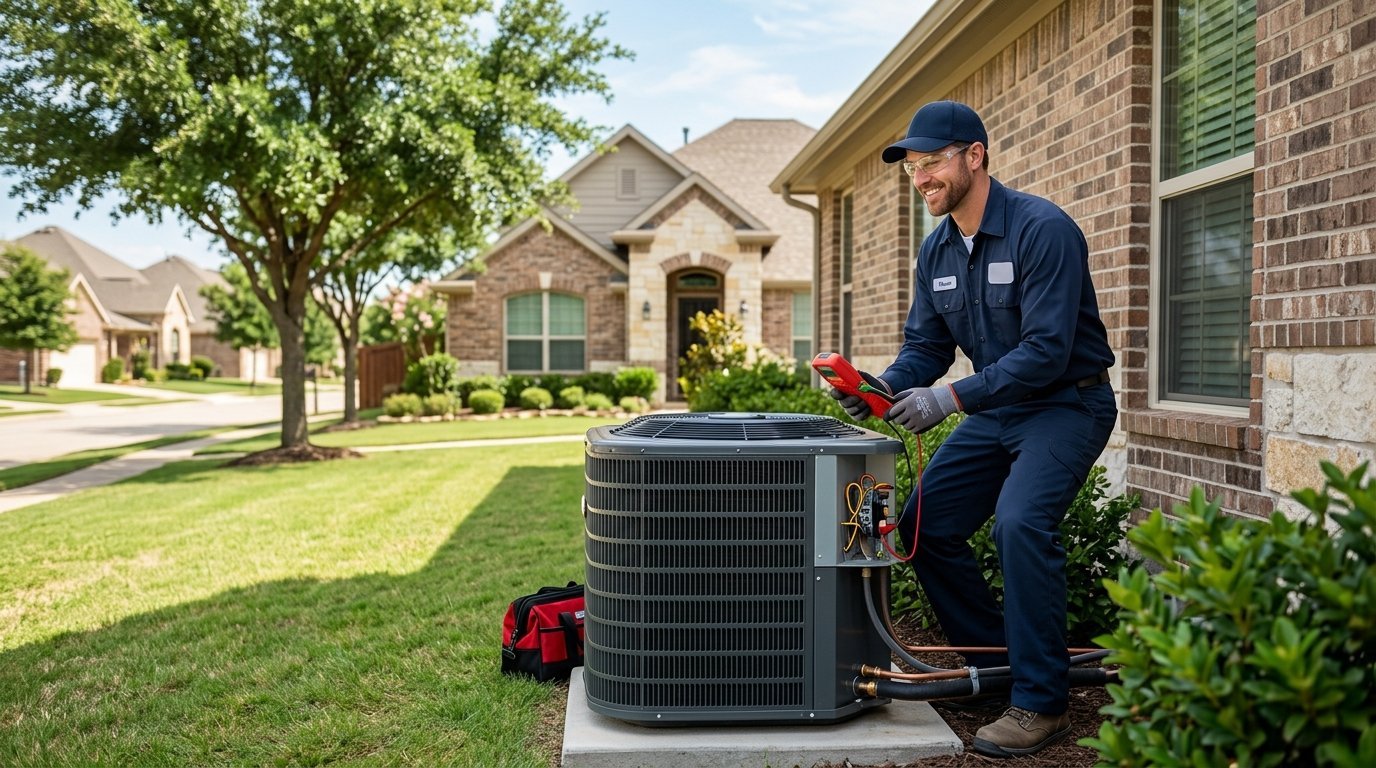
Homeowners can compare contractor qualifications, recognize warning signs before a system fails, and weigh maintenance plans against unexpected repairs. They can also learn what to expect from emergency availability, estimates, seasonal tune-ups, and energy-efficiency improvements.
Essential Heating And Cooling Services
A capable HVAC company diagnoses equipment faults, restores safe operation, and recommends systems sized for the property. In North Richland Hills, service plans should account for long cooling seasons and occasional freezing conditions.
Air Conditioning Repair
Air conditioning repair starts with testing the thermostat, electrical connections, condensate drain, refrigerant circuit, blower, and outdoor condenser. Technicians should identify the failed component rather than adding refrigerant or replacing parts without confirming the cause.
Common warning signs include warm supply air, weak airflow, ice on refrigerant lines, water near the indoor unit, unusual cycling, and a sudden increase in energy use. A clogged filter may restrict airflow, while a failed capacitor, contactor, fan motor, or compressor can prevent normal cooling.
Homeowners should request a written diagnosis that separates immediate repairs from maintenance recommendations. Companies offering AC repair services in North Richland Hills should also verify drainage and electrical safety before restarting the system.
Furnace Repair
Furnace repair requires attention to combustion safety as well as heat output. A technician should inspect the heat exchanger, burners, ignition system, flame sensor, venting, gas connections, limit switches, blower, and carbon monoxide risk where applicable.
A furnace that starts and stops repeatedly may have airflow restrictions, a dirty flame sensor, or a faulty safety control. No heat, delayed ignition, burning odors, or a yellow burner flame require prompt professional assessment; occupants should leave the property and contact emergency services if they suspect a gas leak or carbon monoxide exposure.
Regular filter changes support airflow and reduce strain on the blower. North Richland Hills HVAC providers can perform seasonal heating inspections before cold fronts place extra demand on the equipment.
System Installation
System installation begins with a load calculation that considers square footage, insulation, window exposure, duct condition, occupancy, and local climate. Selecting equipment by the size of the existing unit alone can lead to short cycling, uneven temperatures, poor humidity control, or excessive runtime.
Installers should explain the equipment efficiency rating, thermostat compatibility, electrical requirements, drain routing, and warranty terms. They should also inspect ducts for leakage, poor connections, or inadequate returns, since new equipment cannot fully compensate for distribution problems.
Before final payment, the contractor should document startup measurements and confirm proper airflow and temperature operation. Homeowners can compare HVAC installation and replacement services in North Richland Hills based on written scope, equipment model numbers, labor coverage, and permit requirements.
Choosing A Qualified Contractor
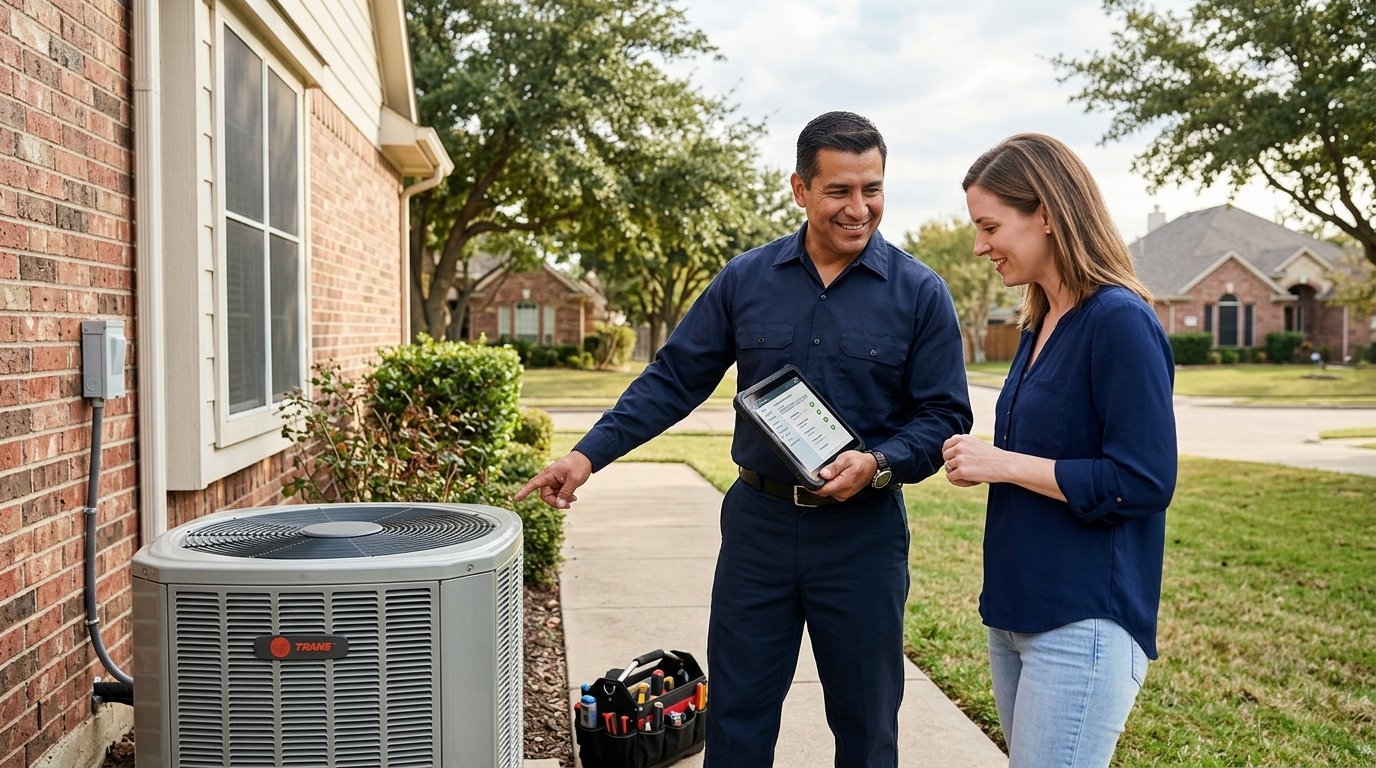
A qualified HVAC contractor holds the required Texas credentials, carries appropriate insurance, and employs technicians with relevant training. Homeowners should also confirm how the company performs after service, not just how it advertises.
Licensing And Insurance
Texas requires air conditioning and refrigeration contractors to hold a license through the Texas Department of Licensing and Regulation. A homeowner should ask for the company’s license number and verify that its status remains active before approving repair or replacement work.
The license should match the work. Class A contractors may work on systems of any size, while Class B contractors have limits on larger systems.
Insurance protects the customer if property damage or an injury occurs during the job. They should request a current certificate showing:
- General liability coverage
- Workers’ compensation coverage, if the company has employees
- The insurer’s name, policy dates, and coverage limits
A written estimate should identify the licensed company completing the work, not only a salesperson or brand name.
Technician Certifications
Technicians who handle refrigerants must hold EPA Section 608 certification. This federal credential applies when they service equipment containing regulated refrigerants, including most central air conditioners and heat pumps.
Homeowners can ask which technician will perform the work and whether that person has training for the specific equipment type. Experience with furnaces does not automatically establish expertise with variable-speed heat pumps, communicating controls, ductless systems, or commercial equipment.
Voluntary certifications can also indicate additional knowledge. For example, NATE certification tests technicians in areas such as air conditioning, heat pumps, gas heating, and system installation.
A qualified technician should inspect the system, explain the diagnosed fault, and provide repair options. They should not recommend replacement solely based on system age without considering condition, repair cost, efficiency, and sizing needs.
Customer Reviews And References
Reviews can reveal recurring patterns in communication, billing, timeliness, and follow-up service. Homeowners should read recent reviews across more than one platform and focus on detailed accounts rather than star ratings alone.
Useful reviews often describe whether the company:
- Provided a written diagnosis and itemized estimate
- Honored quoted pricing or explained approved changes
- Resolved problems after installation or repair
- Arrived within the stated service window
They should also ask for recent references for comparable work, particularly before a full system replacement. A contractor serving the area, such as those advertising North Richland Hills HVAC repair and replacement services, should be able to explain its local service process, warranty handling, and response time for post-installation issues.
Signs Your HVAC System Needs Attention
Uneven temperatures, new sounds or smells, and higher utility costs can point to an HVAC problem before the equipment stops working. A qualified technician can identify whether the issue involves airflow, controls, mechanical parts, or system efficiency.
Uneven Indoor Temperatures
A home may need HVAC attention when one room remains warm while another becomes too cool, even with the thermostat set normally. Temperature differences can result from blocked supply vents, leaking or poorly insulated ductwork, a dirty filter, or a blower that cannot move enough air.
Residents should first confirm that all vents are open and unobstructed by furniture, curtains, or rugs. They should also replace a visibly dirty filter with the size and type specified for the system.
If the problem affects multiple rooms, a technician should inspect the equipment and ducts. Uneven temperatures should not be solved by repeatedly adjusting the thermostat, since that can increase runtime without correcting the underlying cause.
Common indicators include:
- Weak airflow from one or more registers
- A system that runs continuously without reaching the set temperature
- Upstairs rooms that stay noticeably hotter during cooling season
- Areas near vents that feel comfortable while distant rooms do not
HVAC warning signs such as airflow and cycling issues can help distinguish a minor maintenance need from a more involved repair.
Unusual Noises Or Odors
HVAC equipment normally produces a low, steady operating sound. New rattling, grinding, squealing, banging, or repeated clicking deserves attention, especially if it starts during startup or shutdown.
A loose panel can cause a rattle, while a squeal may involve a belt or motor component in systems that use them. Grinding can indicate worn mechanical parts, and frequent clicking may point to an electrical control issue. They should turn the system off and request service if a loud mechanical noise persists.
Odors also require prompt evaluation. A musty smell may indicate moisture or biological growth around the drain system, evaporator coil, or ductwork. A burning odor can occur when dust burns off at the beginning of heating season, but an odor that continues beyond a short period needs professional inspection.
They should leave the building and contact the gas utility or emergency services if they smell natural gas or suspect a fuel-gas leak. They should not operate switches, appliances, or the HVAC system in that situation.
Rising Energy Bills
A utility bill can rise because of weather changes or rate adjustments, but an unexplained increase may signal declining HVAC performance. The system may run longer because of restricted airflow, refrigerant issues, duct leaks, thermostat problems, or aging components.
Homeowners should compare similar billing periods rather than one month alone. They should note whether the system runs more often, struggles to maintain temperature, or cycles on and off in short intervals.
Before scheduling a visit, they can check these basic items:
- Replace a dirty air filter
- Clear leaves and debris from around the outdoor unit
- Confirm that the thermostat schedule matches household occupancy
- Keep interior supply and return vents free of blockage
When higher bills occur alongside reduced comfort or frequent cycling, an HVAC company in North Richland Hills can test system operation and identify the cause. Common HVAC repair indicators include weak airflow, unusual odors, and inconsistent temperatures, which often occur with efficiency problems.
Energy Efficiency And System Upgrades
Efficient equipment, accurate temperature control, and sealed ductwork can reduce unnecessary energy use while improving consistent comfort. A qualified HVAC company can assess equipment condition, airflow, and home layout before recommending an upgrade.
High-Efficiency Equipment
Older air conditioners and furnaces may still operate but use more electricity or fuel than newer properly sized systems. Homeowners should compare SEER2 ratings for cooling equipment, HSPF2 for heat pumps, and AFUE for gas furnaces when evaluating replacement options.
A heat pump provides both cooling and heating, which can make it a practical option for North Richland Hills’ long cooling season and comparatively mild winter days. It should be sized through a load calculation rather than selected only by the capacity of the existing unit.
Equipment features that can improve part-load performance include:
- Variable-speed blowers that adjust airflow gradually
- Two-stage or variable-capacity compressors that avoid frequent full-output cycling
- Matched indoor and outdoor components designed to work as one system
An existing system that needs repeated repairs, cannot hold temperature, or has an inefficient older design may warrant a replacement review. A recent North Richland Hills heat-pump upgrade illustrates the type of condenser replacement local homeowners may consider, though the right equipment depends on each home’s needs.
Smart Thermostat Options
A smart thermostat allows residents to create schedules, adjust temperatures remotely, and review usage patterns through an app. They can reduce waste when a home is empty, but savings depend on sensible settings and compatible HVAC equipment.
For cooling, many households use a modest temperature increase during work hours and return to a comfortable setting before occupants arrive. Extreme setbacks can cause the system to run for extended periods later, particularly in a poorly insulated home.
Before installation, a technician should verify wiring, including whether the system has a C-wire, and confirm compatibility with single-stage, multistage, heat-pump, or variable-speed equipment. Some advanced systems require the manufacturer’s communicating thermostat to preserve full equipment functions.
Ductwork Improvements
Leaky, undersized, disconnected, or poorly insulated ducts can waste conditioned air before it reaches rooms. Duct problems often appear as uneven temperatures, weak airflow at distant vents, excessive dust, or unusually high utility bills.
Technicians can inspect accessible duct runs, return-air pathways, connections, and insulation. They may seal joints with approved mastic, reconnect loose sections, replace damaged flexible duct, or add insulation where ducts pass through unconditioned attics.
Duct changes should support the equipment’s required airflow. Simply adding vents or increasing blower speed can create noise, pressure issues, and reduced comfort if the return and supply system remains unbalanced. An HVAC evaluation can also identify insulation and air-sealing needs; North Richland Hills insulation and HVAC services may help homeowners coordinate these related improvements.
Maintenance Plans And Seasonal Tune-Ups
A maintenance plan schedules cooling and heating service before peak-demand weather arrives. Regular inspections, filter care, and cleaning help an HVAC system operate efficiently and allow technicians to address developing issues early.
Spring Cooling Preparation
Before North Texas temperatures rise, an HVAC company should inspect the air conditioner’s electrical connections, refrigerant line insulation, condensate drain, indoor coil, and outdoor condenser. The technician should verify thermostat operation, measure system performance, and confirm that the blower moves adequate air through the home.
The outdoor unit needs clear space around it. Homeowners should remove leaves, grass clippings, and stored items from the condenser area, while technicians can clean accessible coil surfaces without damaging delicate fins.
A spring visit also gives the technician an opportunity to identify worn capacitors, contactors, and drain components before sustained summer use begins. A seasonal HVAC maintenance appointment in North Richland Hills can help keep routine service on schedule before appointment availability becomes limited.
Fall Heating Preparation
Before the heating season, the technician should inspect the furnace or heat pump and test its heating cycle. For gas furnaces, this work typically includes checking burners, the ignition system, venting, safety controls, and the heat exchanger for visible concerns.
They should also test carbon monoxide detectors in occupied areas and replace batteries when required. A qualified technician must handle combustion testing, gas connections, and internal furnace components; homeowners should not attempt these tasks themselves.
For heat pumps, the visit should confirm that the system changes correctly between cooling and heating modes. Seasonal plans commonly include separate cooling and heating visits, such as an annual maintenance plan with two seasonal appointments, helping homeowners prepare equipment for each operating season.
Filter Replacement And Cleaning
A clean filter protects airflow, indoor equipment, and system efficiency. Homeowners should check the filter monthly and replace or clean it according to the manufacturer’s instructions, especially during periods of heavy cooling or heating use.
The correct filter size appears on the existing filter frame or the return grille. They should install it with the airflow arrow pointing toward the air handler or furnace, then ensure the grille or access panel closes securely.
| Filter condition | Recommended action |
|---|---|
| Visible dust buildup or restricted airflow | Replace a disposable filter |
| Washable filter | Clean, dry completely, then reinstall |
| Bent frame or poor fit | Install the correct size and type |
Technicians can also clean accessible return grilles and inspect blower-area buildup during service. HVAC tune-up services in North Richland Hills may identify airflow restrictions that a filter change alone will not correct.
Indoor Air Quality Solutions
Indoor air quality equipment can reduce airborne particles, manage excess moisture, and limit microbial growth inside HVAC components. A qualified North Richland Hills indoor air quality provider can match equipment capacity and installation methods to the home’s ductwork and HVAC system.
Air Filtration Systems
Air filters capture dust, pollen, pet dander, and other particles before conditioned air moves through the HVAC equipment and living areas. The filter’s MERV rating indicates its particle-capture efficiency; higher ratings trap smaller particles but can also restrict airflow when the system cannot support them.
Most residential systems work well with a properly fitted filter in the manufacturer’s recommended MERV range. An HVAC technician should confirm that the blower motor, return ducts, and filter cabinet can handle an upgraded filter without reducing airflow or increasing operating strain.
Homeowners should replace disposable filters on schedule, particularly during high-use cooling seasons in North Richland Hills. A filter that looks clogged, causes weak supply airflow, or makes the system run longer needs attention. Providers offering whole-home air quality services in North Richland Hills may also recommend media cabinets or electronic filtration where appropriate.
Humidity Control
Humidity affects comfort, moisture management, and the likelihood of mold growth. In cooling season, an air conditioner removes some moisture, but an oversized unit may cool the home too quickly to dehumidify it effectively.
A dedicated whole-home dehumidifier connects to the duct system and removes moisture independently of the cooling cycle. It works best when the technician sizes it for the home’s square footage, insulation, occupancy, and moisture load rather than selecting equipment by a general estimate.
Signs of excess indoor humidity include:
- Condensation on windows or supply vents
- Persistent musty odors
- Damp-feeling rooms despite normal thermostat settings
- Visible mildew around bathrooms, closets, or exterior walls
A humidifier may help during dry heating periods, but it requires controlled settings and regular cleaning. Improper humidification can add unnecessary moisture and create maintenance issues.
UV Air Purification
UV air purification systems use ultraviolet light inside HVAC equipment, commonly near the indoor coil or drain pan. The light targets microbial growth on wet surfaces, where condensation can otherwise support mold and bacteria.
These systems do not replace filtration. Filters remove particles from airflow, while UV equipment addresses organisms on exposed HVAC surfaces; both functions serve different purposes.
Technicians should install UV lamps where the light reaches the intended surface without damaging nearby materials. They should also verify electrical connections, lamp access, and safety shielding during installation. Local HVAC and air quality specialists can evaluate whether a UV system fits the equipment’s coil configuration and maintenance needs.
Most UV lamps require periodic replacement because light output declines over time even when the lamp still appears illuminated. Regular coil cleaning, drain maintenance, and filter changes remain necessary.
Emergency Repair Availability
A North Richland Hills HVAC company should offer a clear process for urgent heating and cooling failures. Some local providers advertise 24/7 emergency HVAC repair in North Richland Hills, but homeowners should confirm availability before dispatch.
Emergency calls commonly involve a stopped air conditioner during extreme heat, a furnace that will not run in cold weather, electrical odors, leaking equipment, or a system repeatedly shutting down. They should turn off the system if they smell burning, see smoke, or suspect an electrical hazard.
| Before booking | What they should confirm |
|---|---|
| Response window | Whether a technician is available that day or overnight |
| Charges | Diagnostic, after-hours, and repair costs |
| Technician credentials | Current Texas licensing and insurance |
| Repair scope | Whether the service vehicle carries common replacement parts |
Pricing can differ outside regular business hours. For example, one provider lists an $85 diagnostic fee and $250 after-hours charge for emergency HVAC service in North Richland Hills; customers should verify current rates directly because fees can change.
They should provide the unit’s make, model, symptoms, and any error code when calling. This information helps the technician prepare for the visit and determine whether the situation needs immediate service.
Scheduling Service And Requesting Estimates
Homeowners can schedule an HVAC visit by phone or online. Several local providers offer online booking, including HVAC appointment scheduling in North Richland Hills, while others list repair, installation, maintenance, and emergency options.
Before booking, they should describe the equipment, the issue, and when it began. Details such as unusual sounds, weak airflow, water near the unit, or a thermostat error can help the company assign the appropriate service call.
For an accurate estimate, they should ask for:
- A written description of the recommended work
- Separate pricing for labor, parts, permits, and equipment
- Warranty terms for repairs or replacements
- The expected appointment and completion timeline
For replacement quotes, a contractor may inspect the existing system, ductwork, insulation conditions, and home size before recommending equipment. Companies offering AC repair and HVAC installation services in North Richland Hills may also discuss maintenance plans, indoor-air-quality equipment, or financing when applicable.
They should confirm whether the diagnostic fee applies toward approved repairs. If the issue requires urgent attention, they can ask whether the provider offers after-hours service, such as the 24/7 heating and cooling service listed for North Richland Hills.
Frequently Asked Questions
Homeowners should verify contractor credentials, compare written estimates line by line, and confirm whether a company handles repairs, maintenance, replacements, and emergency calls. Local pricing changes with equipment size, repair scope, efficiency requirements, and installation conditions.
Which HVAC companies in North Richland Hills have the best customer reviews?
Review ratings change frequently, so homeowners should check recent reviews across more than one platform and read both positive and critical comments. They should look for consistent feedback about punctuality, diagnosis accuracy, pricing clarity, cleanup, and warranty support.
Several companies advertise service in the area, including Air Worth HVAC service in North Richland Hills and Moss Heating, Cooling & Plumbing in North Richland Hills. A company’s advertised service area does not, by itself, establish its current customer-review ranking.
How do I choose a reliable HVAC contractor in North Richland Hills?
Homeowners should confirm that the contractor holds the required Texas HVAC license and carries appropriate insurance. They can verify an individual or company license through the Texas Department of Licensing and Regulation before authorizing work.
They should request a written scope of work that identifies the diagnosed issue, proposed parts or equipment, labor, warranty terms, permit responsibility, and total price. For replacement work, a contractor should evaluate the home and system requirements instead of selecting equipment based only on the existing unit’s size.
Guidance on finding a trustworthy North Richland Hills HVAC company also emphasizes checking credentials, comparing quotes, and watching for unclear pricing or high-pressure sales tactics.
What services do HVAC companies in North Richland Hills typically provide?
Most local HVAC companies handle air conditioner and furnace repair, seasonal maintenance, system replacement, thermostat work, duct-related services, and indoor air-quality upgrades. Some also offer emergency service, financing, and commercial HVAC work.
For example, North Richland Hills HVAC services commonly include AC repair and installation, heating service, maintenance, and indoor air-quality options. Homeowners should confirm whether a contractor services their specific equipment type, such as heat pumps, gas furnaces, ductless mini-splits, or packaged units.
How much does HVAC repair or replacement cost in North Richland Hills?
Repair costs depend on the failed component, accessibility, service-call timing, refrigerant requirements, and equipment age. Minor electrical or drainage repairs often cost less than major compressor, coil, blower-motor, or refrigerant-leak repairs.
A full system replacement commonly costs several thousand dollars and can rise substantially for high-efficiency equipment, complex ductwork, zoning, electrical upgrades, or difficult installation access. Homeowners should obtain at least two detailed written estimates for major repairs or replacements.
A local North Richland Hills HVAC cost and service guide can help homeowners identify common cost factors, but an on-site evaluation provides the most useful price estimate.
Are there veteran-owned HVAC companies serving North Richland Hills?
The available listings do not establish which HVAC companies serving North Richland Hills are veteran-owned. Homeowners should ask the company directly about ownership and veteran status before relying on that designation.
They can also ask whether the company offers military or veteran discounts, because ownership status and discount eligibility are separate matters. Written confirmation prevents misunderstandings about qualifications or promotional pricing.
What should I look for when comparing HVAC company estimates?
Each estimate should show the equipment brand and model number, efficiency rating, system capacity, labor charges, permit fees, removal and disposal costs, and applicable taxes. For a repair, it should identify the failed part, whether the price includes diagnostics, and the warranty on parts and labor.
Homeowners should compare the scope of work, not only the final total. A lower estimate may exclude permits, duct modifications, electrical work, a new thermostat, startup testing, or warranty registration.
For replacements, they should ask whether the contractor performed load calculations and whether the quoted equipment matches the home’s heating and cooling needs. They should also confirm payment terms, expected schedule, and who will handle warranty service after installation.