Furnace Tune Up Fort Worth: Heating Safety Inspection Benefits
A furnace tune-up in Fort Worth helps a household prepare its heating system for cooler weather by checking safety controls, airflow, key components, and overall operation. Regular professional maintenance can help identify developing furnace problems before they interrupt home heating.
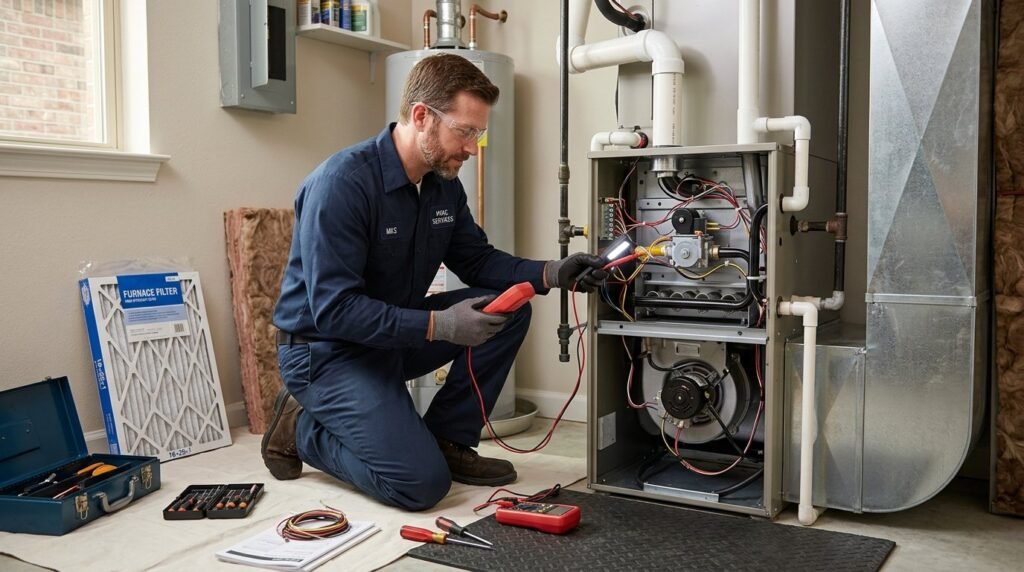
Property owners can watch for uneven warmth, unusual noises, rising utility use, or frequent cycling and schedule service before winter demand increases. A qualified technician can explain what the visit covers, recommend practical upkeep between appointments, and clarify when repair or replacement deserves consideration.
What A Seasonal Heating Check Includes
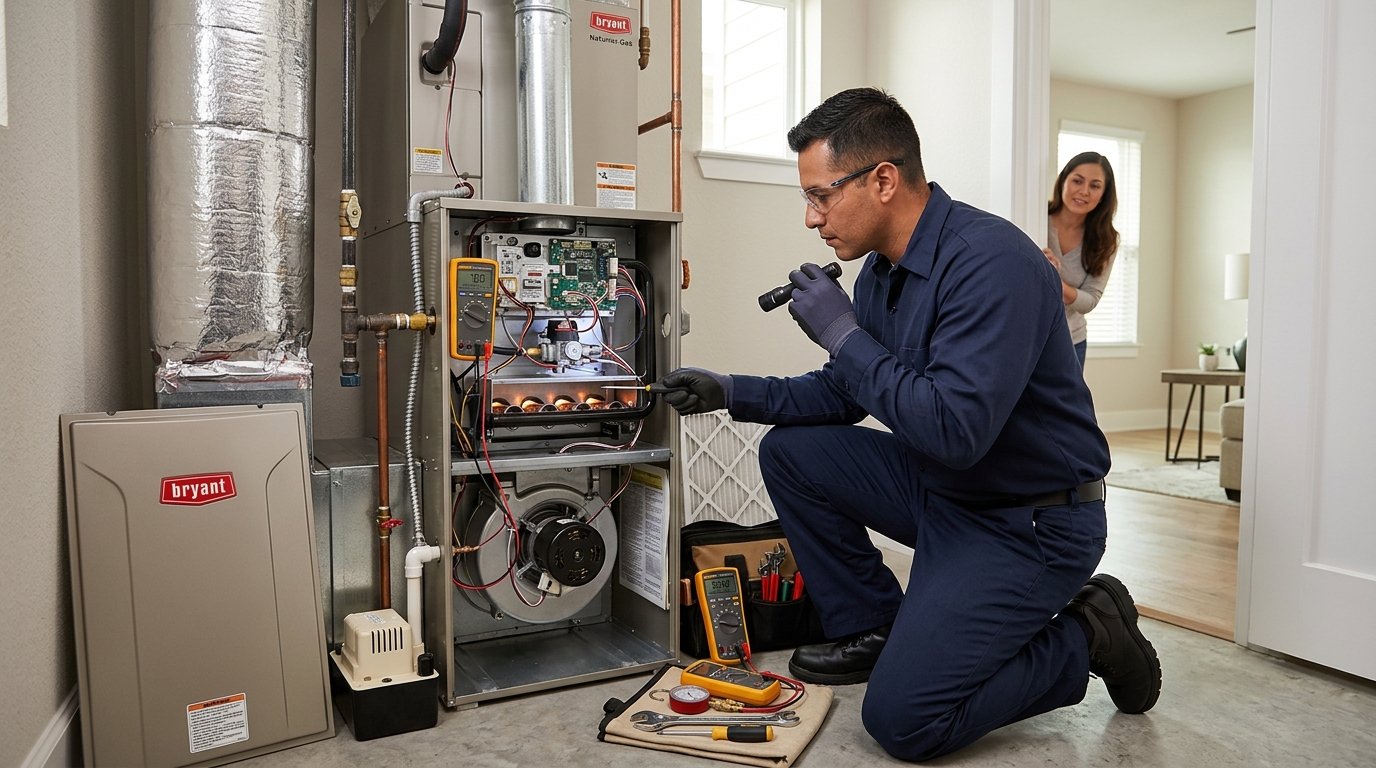
A seasonal check verifies that the furnace can start safely, produce heat correctly, and move conditioned air through the home without unnecessary restriction.
Inspection Of Safety Controls
A technician tests the furnace’s safety devices before evaluating performance. This typically includes the high-limit switch, which shuts the burners down if the heat exchanger area becomes too hot, and the flame sensor, which confirms that a flame is present after ignition.
They also inspect the furnace cabinet, wiring, door switch, vent connections, and condensate drain on high-efficiency units. A loose vent pipe, blocked drain, or damaged wire can cause shutdowns or unsafe operation.
For gas furnaces, the technician checks for signs of gas leaks, combustion venting issues, and abnormal burner flame patterns. Homeowners can schedule a Fort Worth heating maintenance visit before cooler weather to address faults while the system is not under heavy demand.
Burner And Ignition Assessment
The technician examines the burners for dust, corrosion, and misalignment that can prevent smooth ignition. They clean accessible debris when appropriate and verify that the burner flame remains stable rather than lifting, fluttering, or rolling out of the burner area.
They also check the ignition sequence:
- The thermostat calls for heat.
- The inducer motor starts, if equipped.
- The pressure switch and safety circuit confirm proper operation.
- The igniter activates and the gas valve opens.
- The flame sensor verifies burner operation.
A delayed start, repeated ignition attempts, or unusual banging sounds can point to burner contamination, ignition trouble, or gas-flow concerns. A professional furnace tune-up in Fort Worth can identify these conditions before they lead to a no-heat call.
Airflow And Filter Review
Restricted airflow forces the furnace to run hotter and may trigger the high-limit switch. The technician inspects the air filter, return grilles, supply registers, blower compartment, and visible duct connections for dirt, blockage, or damage.
They confirm that the filter fits its rack and faces the correct direction. A filter with heavy dust buildup should be replaced, while an overly restrictive filter may need review if it reduces airflow beyond what the system can handle.
The blower assembly and motor receive an inspection for accumulated debris, excessive noise, vibration, or loose electrical connections. Regular heater maintenance in Fort Worth can also help identify airflow problems such as closed registers, obstructed returns, or duct leaks that affect comfort in individual rooms.
Signs Your Heating System Needs Attention
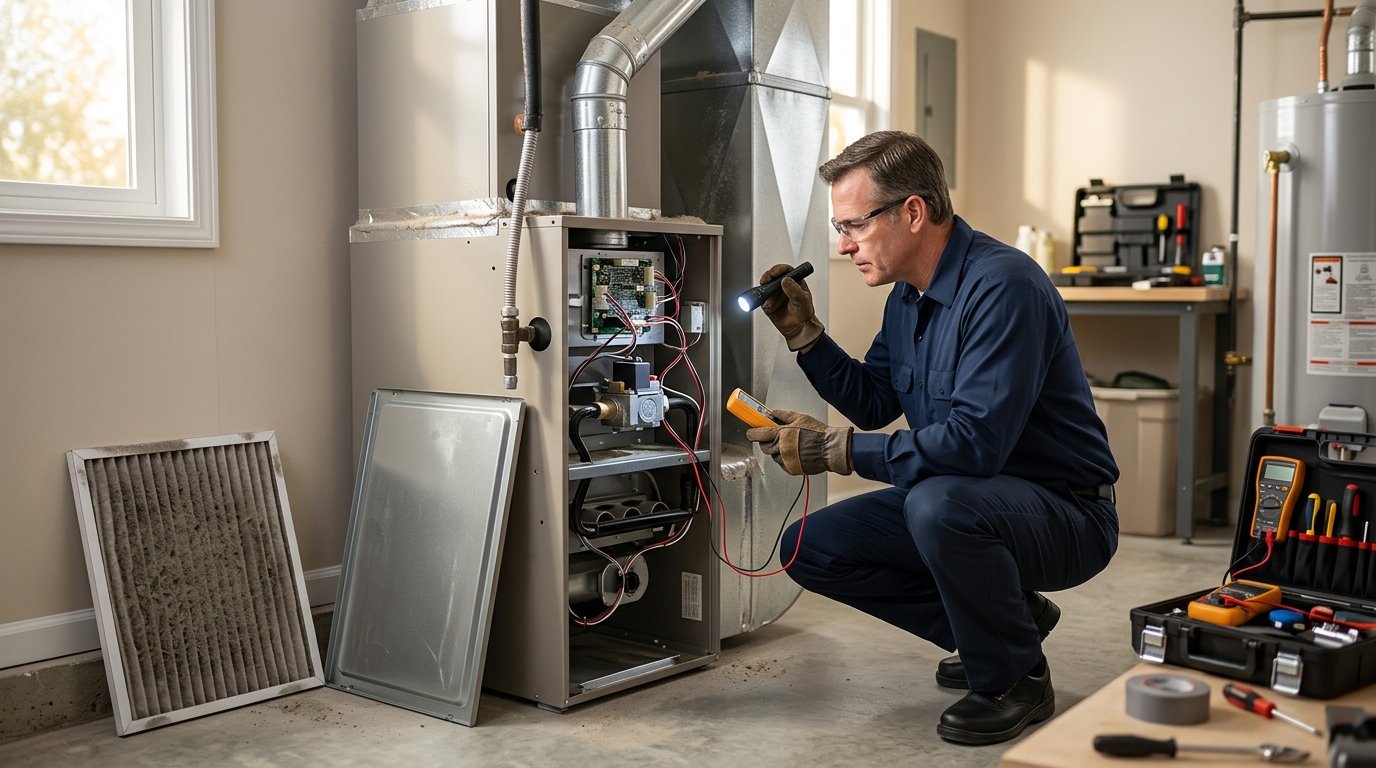
Uneven room temperatures, unfamiliar sounds or smells, and unexplained increases in heating costs often indicate declining furnace performance. A prompt inspection can identify airflow, combustion, electrical, or control issues before cold weather increases demand.
Uneven Indoor Temperatures
A furnace should maintain relatively consistent temperatures throughout the home when the thermostat setting remains unchanged. If bedrooms stay cold while nearby rooms become too warm, the problem may involve restricted airflow, duct leaks, a dirty filter, or a blower that is not moving enough air.
Homeowners should first check that supply vents are open and unobstructed by furniture or rugs. They should also replace a dirty air filter according to the manufacturer’s schedule, since a blocked filter can reduce airflow and strain the system.
Persistent uneven heating needs professional attention. A technician can inspect ductwork, blower components, thermostat calibration, and heat output during a Fort Worth furnace maintenance visit.
Unusual Noises Or Odors
A furnace may make a brief sound when it starts or stops, but repeated banging, rattling, squealing, or grinding is not normal. Loose panels, worn belts or bearings, blower problems, and ignition issues can create these noises.
Odors also need attention. A dusty smell can occur when a furnace first runs after a long warm season, but it should fade quickly. A persistent burning odor may indicate overheating electrical parts or accumulated debris.
Turn the system off and seek service promptly if occupants notice a gas odor, a burning-plastic smell, or exhaust-like fumes. A yellow pilot flame rather than a steady blue flame can also signal a combustion concern; it is one of several clear signs a furnace needs a tune-up.
Rising Utility Bills
Higher winter utility bills can result from colder outdoor conditions, but a sharp increase without a comparable change in thermostat settings or weather may point to inefficient operation. A furnace that runs longer than usual may have a clogged filter, dirty components, duct losses, thermostat issues, or worn mechanical parts.
Frequent on-and-off cycling also wastes energy and increases wear. The system may be overheating, improperly sized, or receiving incorrect temperature readings from the thermostat.
Homeowners can compare current bills with the same period from the prior year and note changes in run time. Regular annual furnace tune-up service in Fort Worth typically includes cleaning and safety checks that help identify efficiency-related problems.
Benefits Of Preventive Maintenance
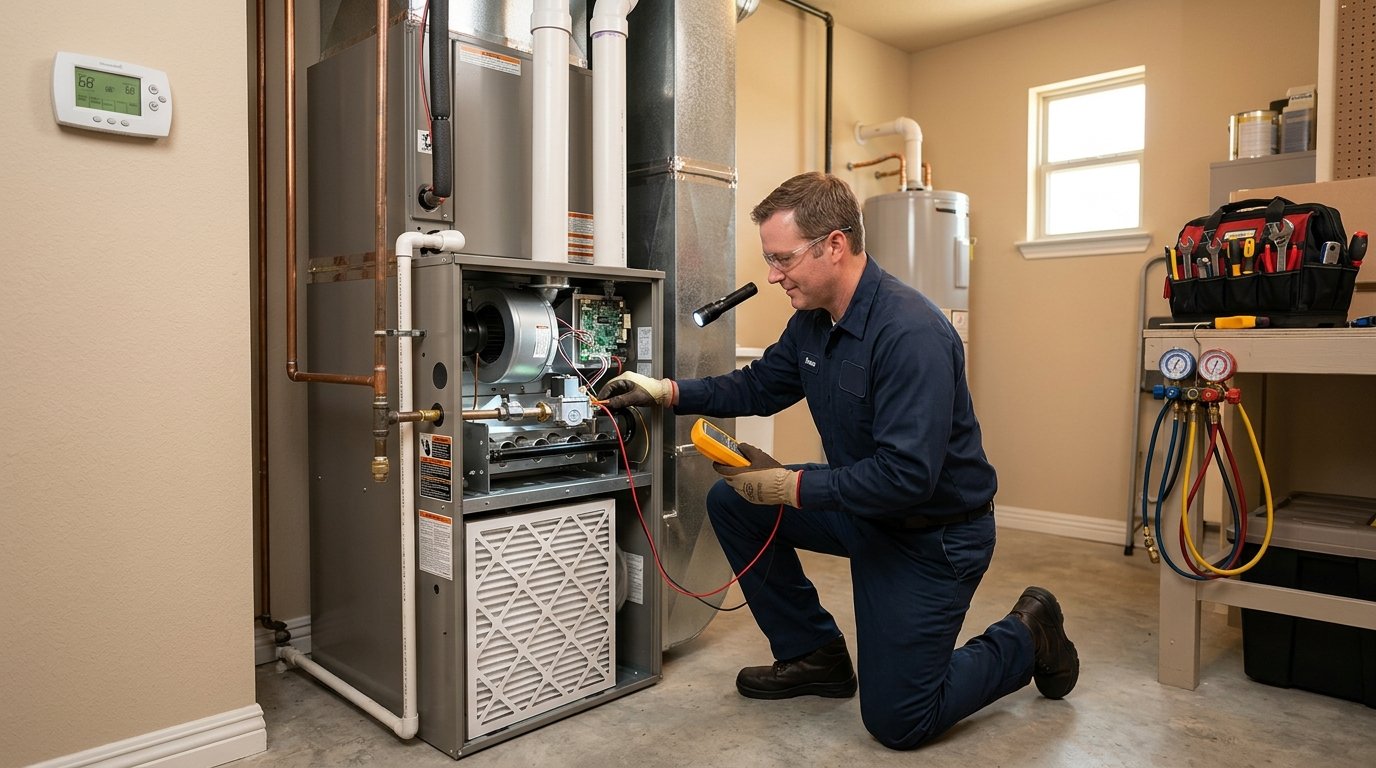
A scheduled furnace tune-up helps a Fort Worth household manage energy use, lower the chance of an untimely heating failure, and protect the equipment from avoidable wear. Technicians inspect safety controls, clean key components, and identify developing issues before consistent winter operation begins.
Improved Energy Efficiency
A furnace must work harder when dirt restricts airflow or when worn parts prevent normal operation. During a tune-up, a technician can inspect the air filter, blower assembly, burners, heat exchanger area, venting, and thermostat operation.
Cleaning and adjustment help the system move heated air with less resistance. A homeowner should replace a clogged filter between service visits, following the furnace manufacturer’s filter type and replacement guidance.
Proper airflow matters. Closed supply registers, blocked return grilles, and a dirty filter can reduce circulation and cause longer heating cycles, even when the furnace itself has no major defect.
Professional Fort Worth HVAC preventive maintenance and tune-ups can also identify thermostat settings or equipment conditions that contribute to inefficient operation. The technician should document any needed repair rather than treating a tune-up as a substitute for repairing a failed component.
Reduced Breakdown Risk
Preventive service gives technicians an opportunity to find worn ignition parts, loose electrical connections, drainage issues, or abnormal burner operation before they stop the furnace from starting. These checks matter most before cold weather increases the system’s workload.
A maintenance visit commonly includes:
- Testing safety controls that shut the furnace down during unsafe conditions
- Checking ignition and flame-sensing components for reliable startup
- Inspecting electrical connections for damage or looseness
- Looking for airflow restrictions that can contribute to overheating
- Reviewing venting and combustion-related conditions where applicable
Regular annual furnace tune-up service in Fort Worth does not guarantee that a furnace will never fail. It can, however, reveal repair needs while the homeowner has time to schedule service instead of responding to a no-heat event.
If occupants notice gas odors, repeated shutdowns, unusual noises, or a carbon monoxide alarm, they should stop using the system when appropriate and contact a qualified professional promptly.
Extended Equipment Lifespan
Furnaces experience normal wear each time the blower, ignition system, and heating components cycle. Unresolved airflow problems, overheating, dirty internal parts, and delayed repairs can add stress that shortens component life.
A technician helps limit this stress by checking the furnace’s operating condition and addressing maintenance items that affect temperature control and airflow. They can also identify when a component has begun to wear but remains serviceable, allowing the homeowner to plan for repair.
Routine furnace maintenance in Fort Worth supports consistent care throughout the equipment’s service life. Homeowners should keep service records, change filters as recommended, and avoid blocking indoor returns or outdoor combustion vents.
Maintenance cannot reverse age-related deterioration or repair a cracked heat exchanger. It does help technicians detect conditions that may require further evaluation, improving the owner’s ability to make informed repair or replacement decisions.
Best Time To Schedule Service
Fort Worth homeowners should schedule furnace service before sustained heating demand begins and repeat it once each year. Early scheduling gives a technician time to identify worn parts, safety concerns, and airflow restrictions without the pressure of a no-heat call.
Preparing Before Cold Weather
The most practical time for a furnace tune-up is early fall, before occupants rely on the system each day. A local provider also identifies early fall as the ideal period for scheduling heating maintenance, which can help homeowners avoid the busiest repair periods after cold fronts arrive.
During a pre-season visit, the technician can inspect the heat exchanger, test ignition and safety controls, check electrical connections, clean accessible components, and confirm proper airflow. For gas furnaces, the visit should also include a check for combustion-related concerns and gas leaks.
Homeowners should schedule promptly if they notice delayed ignition, unusual cycling, new rattling, weak airflow, or an unexplained increase in heating costs. They should replace or inspect the air filter before the appointment and keep the furnace area clear so the technician can access the equipment safely.
Maintaining An Annual Service Schedule
A furnace generally benefits from one professional tune-up each year, preferably during the same early-fall window. Consistent annual visits create a service record and let the technician compare current performance with prior readings, which can reveal gradual changes before they cause a breakdown.
They should not wait for a furnace to make noise or stop heating before arranging maintenance. A Fort Worth annual furnace tune-up typically includes cleaning and a safety inspection, two tasks that require more than a homeowner’s routine filter replacement.
Between appointments, occupants should replace filters according to the filter type and household conditions, keep supply and return vents open, and report changes in operation early. Homes with pets, frequent dust, renovation work, or high winter use may need filter checks more often, but those conditions do not replace the annual professional visit.
What To Expect During A Professional Visit
A technician inspects safety controls, airflow, combustion-related components, and electrical connections before cleaning key parts. They then document concerns and explain any repair options with estimated costs.
System Testing And Cleaning
During a professional furnace tune-up in Fort Worth, the technician begins by confirming that the thermostat calls for heat and that the furnace starts, runs, and shuts down normally. They check the air filter, blower operation, supply-air temperature, and accessible duct connections for restrictions that can reduce airflow.
Safety checks commonly include testing the limit switch, examining the flame sensor, inspecting the burner area, and checking visible venting connections. For gas furnaces, the technician also looks for signs of improper combustion, corrosion, or gas leaks.
Cleaning may include removing dust from the blower compartment, clearing the condensate drain on high-efficiency units, and cleaning the flame sensor when needed. The technician should also tighten accessible electrical connections and inspect the condition of belts, wiring, and insulation.
| Component | What the technician checks |
|---|---|
| Thermostat | Accurate heating call and response |
| Filter and blower | Airflow restrictions and motor operation |
| Burners and flame sensor | Clean ignition and stable flame |
| Safety controls | Proper shutdown under unsafe conditions |
Recommendations And Repair Estimates
After testing, the technician should identify findings in clear terms: normal wear, maintenance needs, safety concerns, and repairs that require prompt attention. They may note a dirty filter, a weak igniter, a worn blower capacitor, or a cracked vent connection, depending on the system’s condition.
A reliable recommendation explains why the part needs service and what may happen if the homeowner delays it. For example, a failing igniter can prevent the furnace from starting, while restricted airflow can cause overheating and repeated limit-switch shutdowns.
The estimate should separate diagnostic findings from optional improvements and list labor, parts, and applicable fees. Homeowners can ask whether the repair affects safe operation, efficiency, or reliability and whether the estimate includes warranty information.
Regular Fort Worth furnace maintenance helps technicians find smaller issues before colder weather places more demand on the heating system.
Choosing A Qualified Fort Worth HVAC Technician
A qualified technician holds the required state credentials, carries appropriate insurance, and can document experience with the home’s heating system. Homeowners should verify these details before scheduling a furnace tune-up.
Licensing And Insurance
Texas requires air-conditioning and refrigeration contractors to hold a license through the Texas Department of Licensing and Regulation. A homeowner should ask for the company’s license number, then verify that it is active and matches the business name on the estimate.
The technician should also carry general liability insurance and workers’ compensation coverage or another documented employee-injury policy. Liability coverage helps address accidental damage to the home, while injury coverage clarifies responsibility if a worker gets hurt on the property.
Before approving service, they should request:
- The contractor’s full legal business name and license number
- Proof of current insurance, if requested
- A written scope for the tune-up, including inspection and cleaning tasks
- Itemized pricing for repairs that fall outside the scheduled maintenance visit
Some Fort Worth providers describe certified HVAC service, including certified HVAC and plumbing in Fort Worth. Certification claims do not replace license verification, but they can indicate additional technician training.
Experience With Your Equipment Type
A furnace tune-up should match the equipment in the home. Technicians need practical experience with gas furnaces, electric furnaces, heat pumps, dual-fuel systems, and packaged units, because each system has different safety checks and maintenance requirements.
For a gas furnace, the technician should inspect combustion-related components, the venting path, burner operation, ignition, and the heat exchanger for visible concerns. A heat-pump visit should also address airflow, electrical connections, defrost operation, and thermostat staging.
Homeowners should provide the make, model, approximate age, and any recurring symptoms when booking. They should ask whether the company routinely services that equipment type and whether it has access to compatible replacement parts.
A contractor with Fort Worth heating and air conditioning repair, installation, and maintenance services may handle several system categories, but the homeowner should still confirm experience with the specific furnace or heat-pump configuration.
Simple Homeowner Maintenance Between Visits
Clean airflow and unobstructed vents help a heating system operate as intended between professional appointments. Homeowners should limit their work to routine checks and leave combustion, electrical, and internal repairs to a qualified technician.
Replacing Air Filters
A dirty filter restricts return airflow, which can make the furnace run longer and place extra strain on the blower. The homeowner should check the filter monthly during heating season and replace it when dust visibly covers the media or when the manufacturer’s replacement interval arrives.
They should use the filter size printed on the existing frame or listed on the return grille. Before installing it, they should turn off the thermostat or furnace and point the filter’s airflow arrow toward the furnace or air handler.
| Filter type | Typical check or replacement approach |
|---|---|
| Basic fiberglass filter | Check monthly; often replace monthly |
| Pleated filter | Check monthly; replace based on condition and label guidance |
| High-efficiency filter | Confirm the furnace can handle its airflow resistance |
An overly restrictive filter can reduce airflow if the system was not designed for it. During a Fort Worth furnace maintenance visit, a technician can confirm the correct filter rating and inspect the blower compartment.
Keeping Vents And Outdoor Areas Clear
Homeowners should keep supply registers, return grilles, and the area around the furnace unobstructed. Furniture, rugs, boxes, and closed interior doors can restrict circulation and create uneven room temperatures.
They should vacuum visible dust from return grilles and floor registers without pushing debris into ductwork. They should not close multiple supply vents in an attempt to force more heat into selected rooms, because reduced airflow can affect furnace operation.
For a gas furnace, they should inspect exterior intake and exhaust terminations periodically. Leaves, mulch, bird nests, dirt, and stored items must not block these openings.
They should also keep flammable products, paint, gasoline, and household chemicals away from the furnace area. If they notice exhaust odors, a damaged vent pipe, soot, repeated shutdowns, or a carbon monoxide alarm, they should turn off the system if safe and arrange professional service promptly.
When Repair Or Replacement May Be Necessary
Repeated breakdowns and rising fuel use can indicate that a furnace needs more than routine maintenance. A qualified technician can identify whether a targeted repair remains practical or replacement offers better long-term value.
Frequent Service Calls
A furnace that requires repairs more than once in a heating season deserves a closer evaluation. Replacing a worn igniter, flame sensor, capacitor, or thermostat component can make sense when the rest of the system operates reliably.
However, recurring failures involving the heat exchanger, blower motor, control board, or gas valve often point to broader wear. Homeowners should keep repair invoices and note problems such as short cycling, uneven room temperatures, delayed ignition, unusual sounds, or repeated safety shutoffs.
A tune-up can reveal these concerns before a complete failure. Professional Fort Worth furnace maintenance and repair services typically inspect operating controls, clean key components, and check the system for safety-related issues.
Replacement becomes a stronger option when repairs repeatedly restore operation only temporarily. A technician should provide written repair findings, explain safety concerns clearly, and compare the immediate repair cost with the condition of major furnace components.
Age And Efficiency Considerations
Most gas furnaces have an expected service life of roughly 15 to 20 years, although maintenance history, installation quality, and operating conditions affect that range. A furnace approaching or exceeding this age may still run, but its risk of component failure generally increases.
Older units may also use more fuel than newer high-efficiency models, particularly when they have airflow restrictions, duct leakage, or an incorrectly sized system. Rising winter utility bills alone do not prove that replacement is necessary, but they warrant an efficiency and combustion check.
A cracked heat exchanger requires immediate professional attention because it can affect safe furnace operation. Technicians may recommend replacement when the repair is costly, unavailable, or unsuitable for an older unit.
When considering replacement, homeowners should ask about equipment efficiency ratings, proper load sizing, warranty terms, and duct condition. Local providers offering Fort Worth heating repair and replacement can evaluate these factors rather than selecting equipment based only on the existing furnace’s capacity.
Frequently Asked Questions
Fort Worth homeowners should expect a tune-up to cover safety checks, cleaning, airflow inspection, and performance testing. Annual scheduling before cold weather, documented service, and a qualified local technician help reduce avoidable heating interruptions.
How much does a furnace tune-up typically cost in Fort Worth?
Furnace tune-up pricing in Fort Worth varies by system type, accessibility, the service checklist, and whether the company includes a maintenance-plan discount. Homeowners should request a written price before booking and ask whether diagnostic fees, filter replacement, or minor repairs cost extra.
A basic seasonal maintenance visit generally costs less than a repair appointment because it focuses on inspection and preventive adjustments. Companies advertising furnace maintenance in Fort Worth may provide booking details or current offers directly.
What services are included in a professional furnace tune-up?
A professional tune-up commonly includes cleaning accessible components, inspecting the air filter, checking airflow, testing thermostat operation, and verifying system controls. The technician should also inspect electrical connections, the blower assembly, ignition components, and visible duct connections.
For gas furnaces, the visit should include combustion-related safety checks, inspection of the heat exchanger for accessible signs of damage, and confirmation that venting appears secure. A quality heater tune-up service in Fort Worth may also identify worn parts before they cause a no-heat call.
How often should a furnace be serviced?
Most manufacturers and HVAC professionals recommend servicing a furnace once each year. Annual maintenance helps keep filters, airflow, controls, and safety components under regular review.
A household may need attention sooner if the furnace makes new noises, heats rooms unevenly, cycles repeatedly, or produces unusual odors. The system should be shut down and evaluated promptly if occupants smell gas or a carbon monoxide alarm activates.
Is a furnace tune-up worth the cost?
A tune-up can be worthwhile when it finds restricted airflow, loose electrical connections, dirty components, or control issues before they develop into a larger repair. Regular maintenance also gives homeowners a record of professional service, which may support manufacturer warranty requirements.
Maintenance does not guarantee that a furnace will not fail, and it cannot correct a cracked heat exchanger or major mechanical wear without repair. Providers of Fort Worth furnace repair and maintenance commonly emphasize cleaning, airflow checks, and early problem detection as part of routine care.
When is the best time to schedule furnace maintenance?
Early fall is usually the best time to schedule furnace maintenance in Fort Worth, before regular heating demand begins. This timing gives the technician an opportunity to address repair needs before colder weather and seasonal appointment demand increase.
Homeowners can still schedule service at other times of year, especially after moving into a home or noticing performance changes. They should avoid waiting until the furnace stops producing heat.
How do I choose a qualified furnace maintenance company in Fort Worth?
Homeowners should choose a company that holds appropriate Texas licensing, carries insurance, provides written estimates, and employs technicians trained to service their furnace type. They should also confirm what the tune-up includes and ask whether the company documents findings and recommended repairs.
Customer reviews can help identify patterns in punctuality, pricing clarity, and follow-through, but they should not replace license and insurance verification. A provider offering proactive heater maintenance in Fort Worth should be able to explain its inspection checklist, maintenance-plan terms, and any additional charges before work begins.