Ductless Mini Split AC Repair Services: Install, Repair, and Cleaning Solutions
Ductless mini-split AC repair services help restore cooling when a system stops working properly, loses efficiency, or produces unusual sounds. Because each unit combines indoor air handlers with an outdoor condenser, a qualified HVAC technician must assess the full system before recommending a repair.
A professional technician can identify the fault, explain the repair options, and determine whether repairing the system remains more practical than replacing it. Warning signs such as weak airflow, water leaks, ice buildup, inconsistent temperatures, or repeated shutdowns require prompt attention.
This guide explains how ductless systems operate, what causes common failures, how technicians diagnose problems, and which maintenance steps support reliable operation. It also covers how to select a qualified professional and prepare for a service visit.
How Ductless Cooling Systems Work
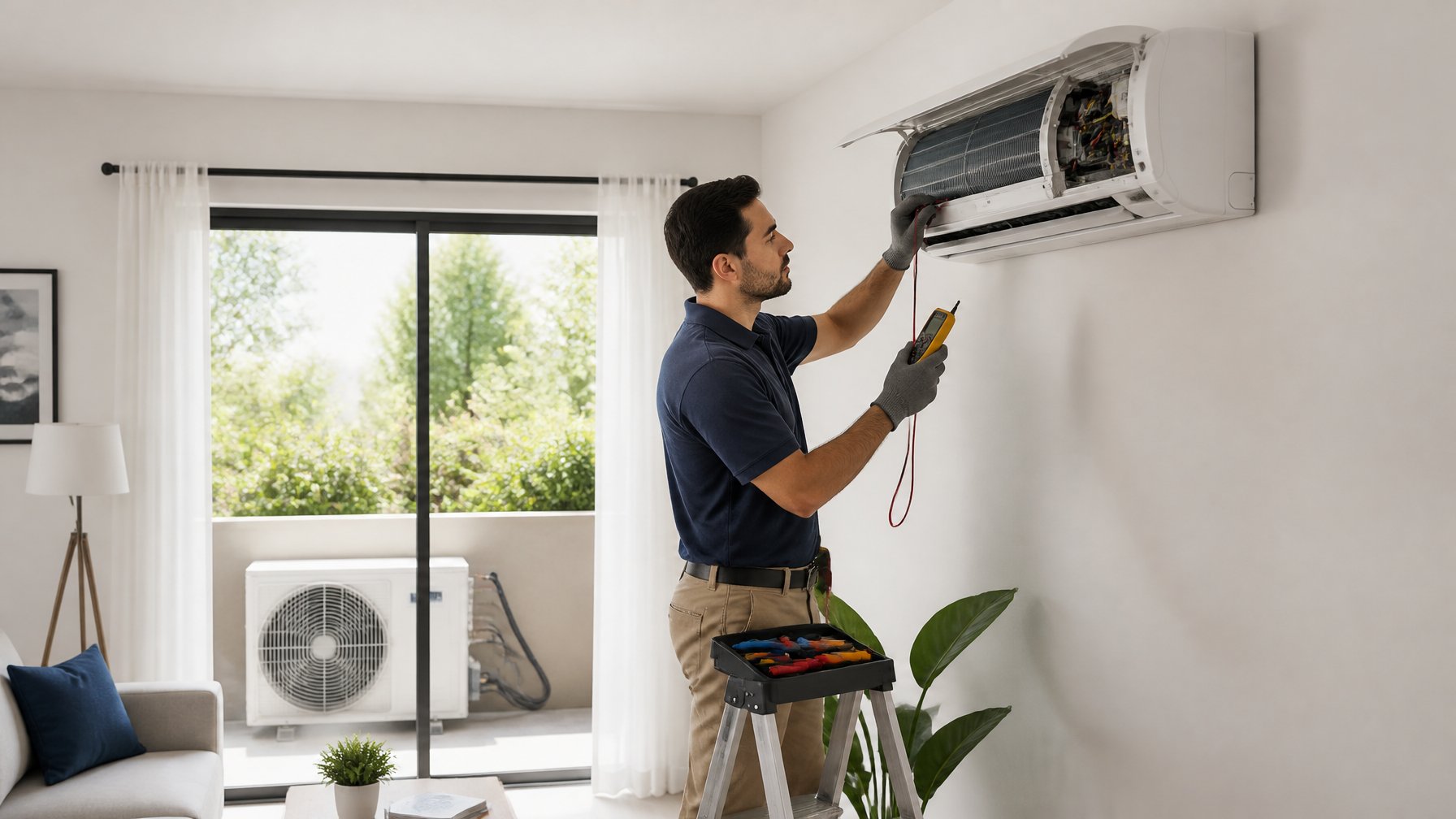
Ductless mini-split systems move heat from indoor spaces to the outdoors through refrigerant lines rather than ductwork. Their design supports targeted temperature control, while the indoor and outdoor components must work together for reliable cooling.
Core Indoor And Outdoor Components
An indoor air-handling unit mounts high on a wall or another suitable location. It draws in room air, passes it across a cold evaporator coil, and returns cooled air through a fan. A washable filter captures dust before air reaches the coil, so restricted airflow or a dirty filter can reduce performance.
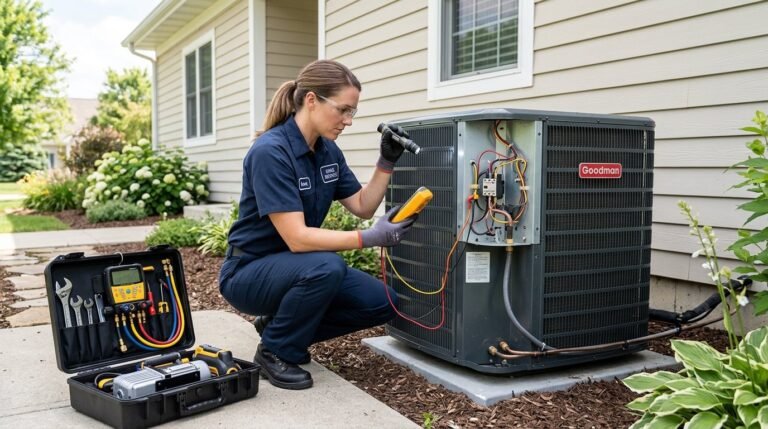
The outdoor condenser unit releases absorbed heat. Its compressor circulates refrigerant through insulated copper lines that connect the indoor and outdoor coils. A condensate drain removes moisture extracted from indoor air, while electrical wiring supplies power and enables communication between components.
Common repair symptoms include weak airflow, ice on the indoor coil, water leaks, unusual sounds, and insufficient cooling. Technicians may need to inspect filters, coils, fans, drain lines, electrical connections, refrigerant charge, and control boards. Carrier’s mini-split repair guide describes troubleshooting steps for common system problems.
Single-Zone And Multi-Zone Configurations
A single-zone system connects one indoor unit to one outdoor unit. It suits a bedroom, converted garage, home office, or addition where one area needs independent cooling. Correct sizing matters because an oversized unit may cycle too frequently, while an undersized unit may run continuously without reaching the desired temperature.
A multi-zone system connects several indoor units to one outdoor condenser. Each indoor unit can serve a separate room and typically uses its own temperature setting. This arrangement provides room-by-room control without extending central ductwork, but all connected units depend on the outdoor unit, refrigerant circuit, and control system.
Repair needs can differ by zone. One room may have a blocked filter, failed fan, or sensor problem while other zones operate normally. A technician should test each indoor unit, the shared outdoor equipment, refrigerant piping, drain lines, and communication wiring. Bryant’s ductless repair guide covers issues such as reduced airflow, abnormal noises, and control connectivity problems.
Signs Your System Needs Professional Attention
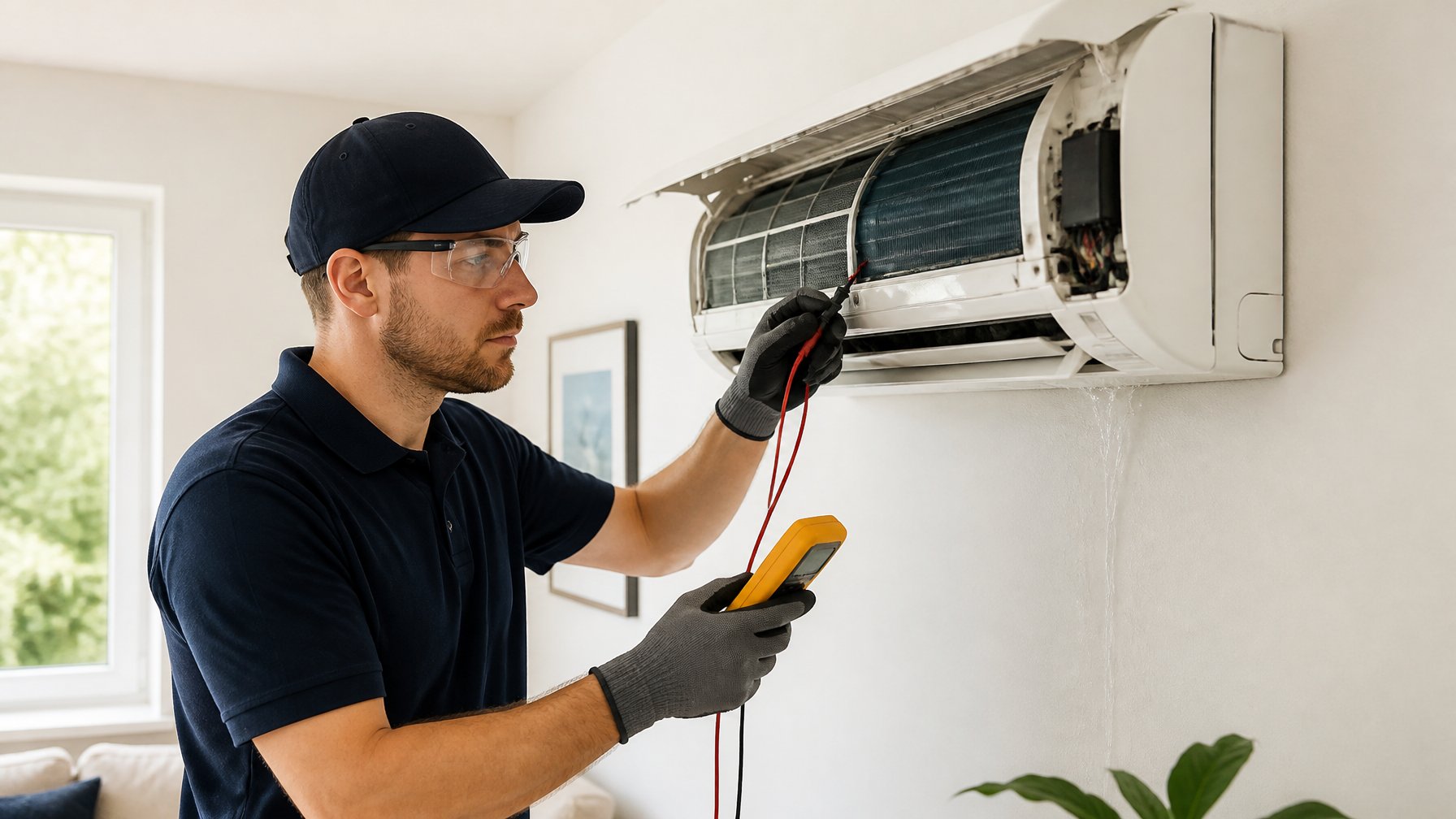
A ductless mini-split may need professional service when it cannot maintain the selected temperature, produces unfamiliar sounds or odors, leaks water, or repeatedly displays an error code. Prompt diagnosis can identify refrigerant, electrical, drainage, airflow, or control problems before they damage other components.
Insufficient Cooling Or Heating
When the indoor unit runs but the room remains too warm or cold, the system may have a dirty filter, blocked coil, faulty sensor, or low refrigerant charge. A technician can test airflow and refrigerant pressure instead of simply lowering or raising the thermostat.
Uneven temperatures between rooms can also indicate blocked outdoor airflow, an incorrectly sized system, or a problem with the indoor unit’s fan. If cleaning the filter and clearing visible obstructions does not restore performance, the system needs inspection. Reduced airflow, inconsistent temperatures, and declining efficiency commonly indicate that a ductless system needs professional service.
Higher electricity use alongside weaker heating or cooling deserves attention. Continued operation can strain the compressor, particularly when the outdoor unit cannot release heat or the system operates with insufficient refrigerant.
Unusual Sounds, Odors, Or Water Leaks
Grinding, scraping, rattling, buzzing, or repeated clicking can indicate a loose panel, failing fan motor, damaged bearing, electrical fault, or debris inside the unit. A brief startup sound may be normal, but a new or persistent noise requires a technician to locate its source safely.
Musty odors often point to moisture and microbial growth on the filter, coil, or drain pan. A burning smell requires immediate shutdown because it may indicate overheating wiring or another electrical hazard. Technicians can inspect electrical connections and clean components that household filter maintenance cannot reach.
Water dripping from the indoor unit may result from a clogged drain line, cracked drain pan, blocked condensate pump, or improper installation. Moisture around the unit can damage walls and flooring, so professional mini-split repair should not be delayed.
Repeated Error Codes And Shutdowns
An error code provides a diagnostic clue, not a complete repair instruction. The code may relate to communication between indoor and outdoor units, a temperature sensor, fan operation, refrigerant pressure, or an electrical component. The owner should record the code and consult the manufacturer’s manual, but should not bypass safety controls.
Repeated shutdowns can occur when the system detects overheating, abnormal pressure, frozen coils, or unstable voltage. Resetting the breaker may restore operation briefly while leaving the underlying fault unresolved. Frequent resets can also create additional electrical stress.
If the controls or display become unresponsive, the system may have a failed remote, wiring problem, control board, or blown fuse. A technician should test the circuit and components, since unresponsive mini-split controls can involve electrical repairs rather than a simple remote-battery replacement.
Common Problems And Their Causes
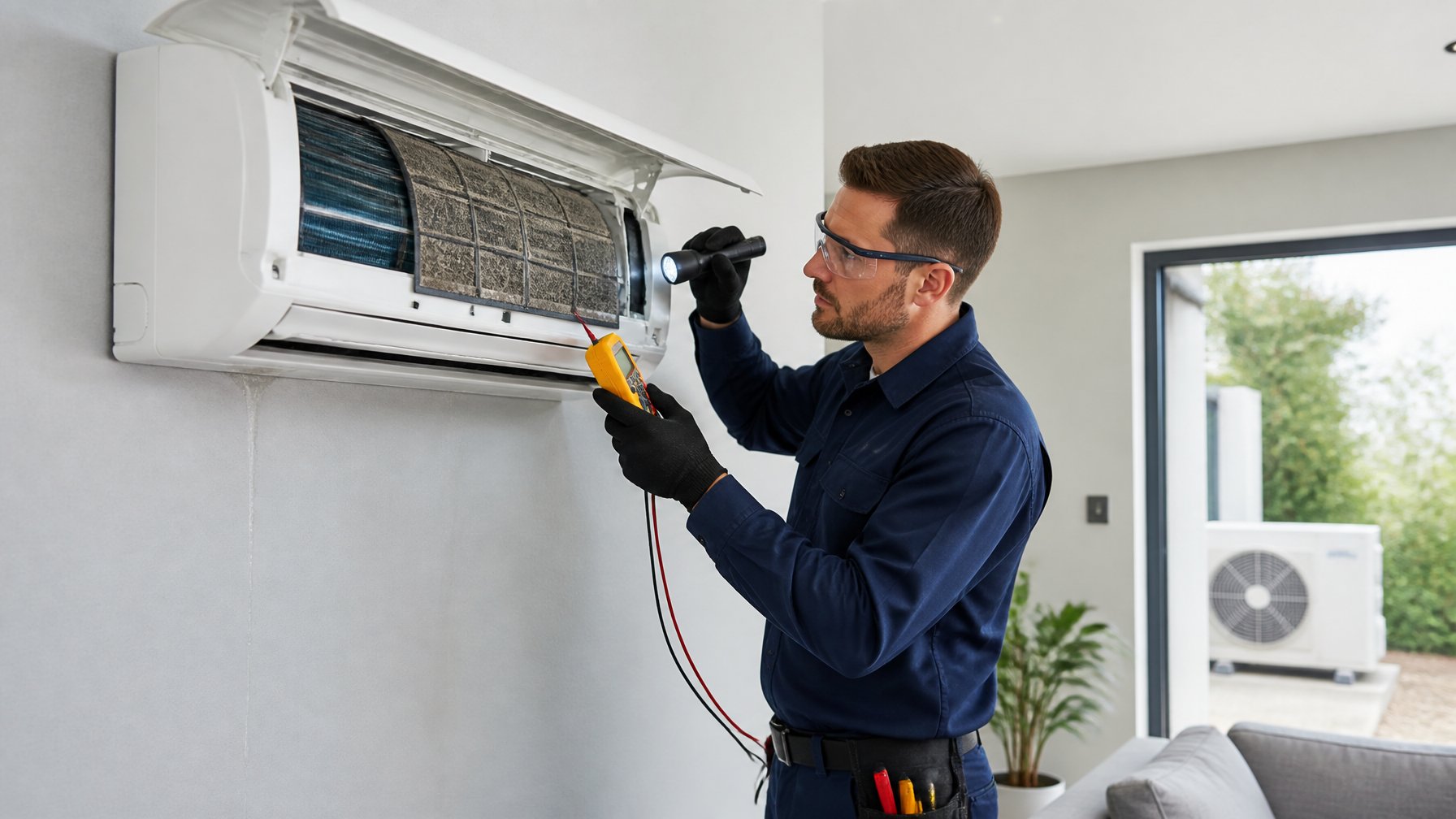
Ductless mini-split failures commonly involve refrigerant charge, electrical controls, drainage, coils, or airflow. Correct diagnosis matters because a dirty filter needs a different remedy than a refrigerant leak or failed circuit board.
Refrigerant Leaks And Low Charge
A mini-split with low refrigerant may run continuously, cool poorly, or produce ice on the indoor coil or refrigerant lines. The system may also show an error code, but symptoms vary by model. A low charge usually indicates a leak or an incorrect charge from a previous installation, not normal refrigerant consumption.
A technician should locate and repair the leak before evacuating and recharging the system. Loose flare connections, damaged tubing, and corrosion can cause leaks. The technician should not simply add refrigerant, because the system can lose efficiency and the leak will continue. Carrier’s mini-split repair guidance also distinguishes basic maintenance from repairs that require trained service.
Electrical And Control Board Failures
Power interruptions, tripped breakers, damaged wiring, and failed capacitors can prevent the indoor or outdoor unit from starting. A mini-split may also stop responding when its remote control, communication wiring, sensor, or control board develops a fault.
The technician should first verify the disconnect, breaker, supply voltage, and wiring connections. They should then test communication between the indoor and outdoor units and check diagnostic codes against the manufacturer’s service information. A failed board often causes repeated shutdowns, erratic operation, or unresponsive controls. Because the system contains high-voltage components, occupants should avoid removing electrical covers or testing live circuits.
Drainage, Coil, And Airflow Issues
Clogged drain lines, damaged drain pans, or improper indoor-unit leveling can cause water to drip from the head. Musty odors may develop when moisture and debris remain on the coil or blower wheel. Regular cleaning helps limit these conditions, while neglected maintenance can contribute to reduced performance, as noted in this mini-split troubleshooting guide.
Restricted airflow often results from dirty filters, blocked outdoor coils, closed louvers, or a clogged indoor coil. Ice formation, weak cooling, and longer run times can follow. The technician should clean accessible filters and coils, inspect the drain, and confirm fan operation. Persistent icing or poor airflow requires testing for refrigerant, sensor, motor, or installation problems.
Professional Diagnostic Process
A professional diagnosis identifies whether the fault involves airflow, electrical controls, refrigerant movement, or communication between indoor and outdoor units. Technicians document operating conditions first, then test individual components to avoid replacing parts without confirming the cause.
Initial Performance Assessment
The technician begins by recording the reported symptoms, including weak airflow, uneven room temperatures, unusual sounds, water leakage, error codes, or a system that will not start. They check the thermostat or remote settings, operating mode, temperature setpoint, fan speed, and indoor-unit filters.
They then inspect the indoor and outdoor units for blocked coils, restricted airflow, damaged wiring, loose connections, ice formation, oil residue, drain problems, and physical damage. Measurements such as room temperature, supply-air temperature, voltage, and current draw help establish how the system operates under load.
For multi-zone equipment, each indoor unit receives a separate check because one zone can fail while others continue working. The technician also reviews the manufacturer’s diagnostic codes and service specifications. This systematic ductless AC diagnostic process helps distinguish maintenance issues from component failure.
Component Testing And Fault Identification
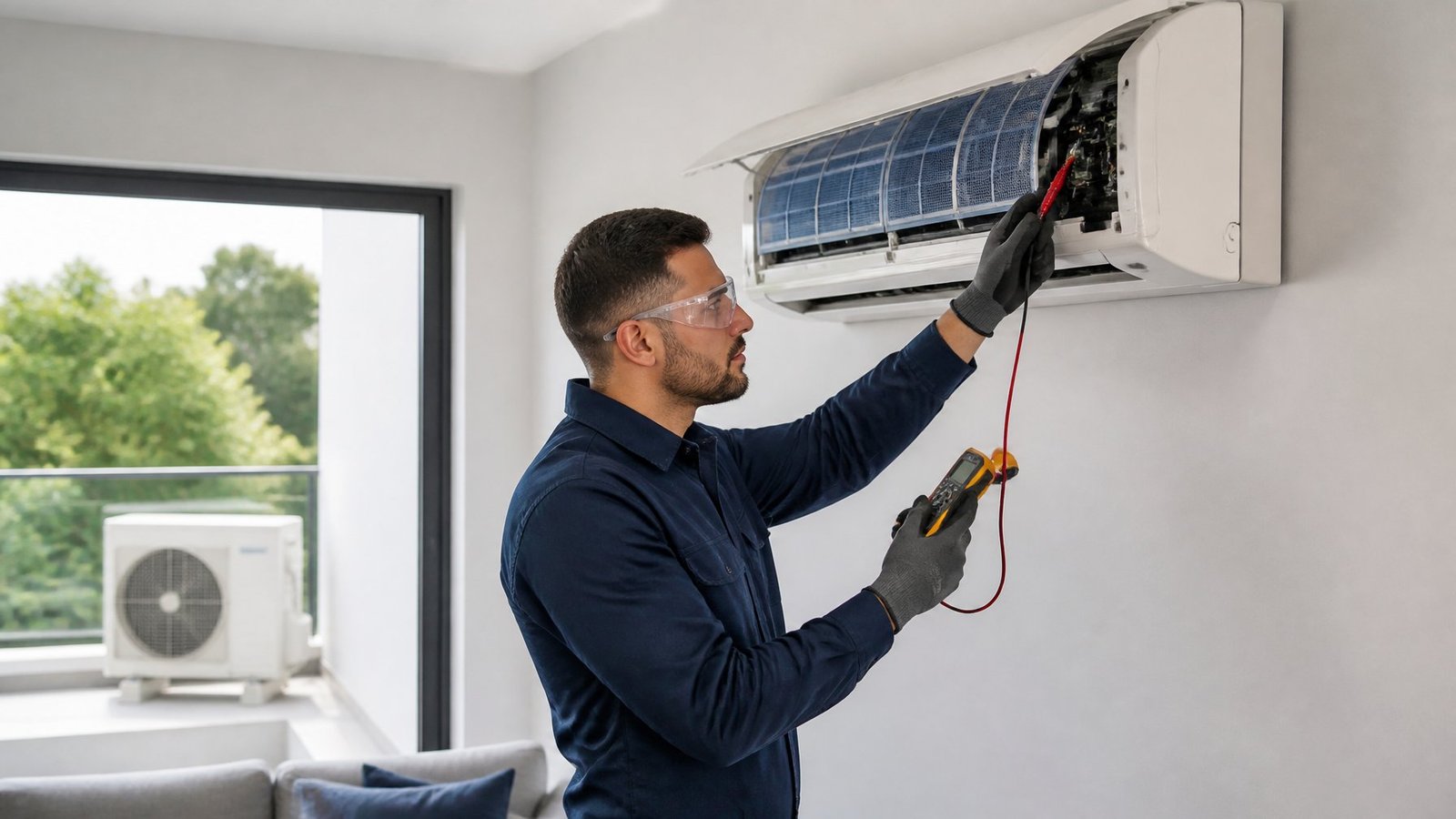
After the initial checks, the technician tests the parts most closely linked to the symptoms. Electrical testing may include supply voltage, fuses, capacitors, relays, temperature sensors, control boards, and wiring continuity. Inverter-driven systems require procedures and meters designed for variable-speed compressors and electronic controls.
The technician checks refrigerant performance by measuring operating pressures and temperatures, calculating superheat or subcooling when appropriate, and inspecting the line set for leaks or damage. Low refrigerant can indicate a leak rather than a condition that requires simple recharging. The specialized components used in mini-split systems, including electronic metering devices and inverter compressors, require accurate testing before repair decisions are made.
Technicians also verify condensate drainage, fan-motor operation, coil condition, and indoor-to-outdoor communication. They record test results, identify the failed component or confirmed restriction, and explain whether the repair involves cleaning, wiring correction, leak repair, part replacement, or further testing.
Repair Options For Key Components
Ductless mini-split repairs depend on accurate testing of electrical, mechanical, refrigerant, and drainage components. Technicians typically verify the fault first, then repair or replace only the affected part while checking system safety and performance.
Compressor And Fan Motor Repairs
The outdoor compressor requires specialized electrical and refrigerant testing. A technician may check supply voltage, wiring, capacitors, contactors, winding resistance, operating pressures, and error codes before deciding whether the compressor can be repaired or needs replacement.
A failed capacitor, damaged wire, loose terminal, or defective control board can prevent the compressor from starting. Replacing a capacitor or repairing a connection usually costs less than replacing the compressor, but the technician must use a part that matches the manufacturer’s specifications.
Outdoor and indoor fan motors can fail because of worn bearings, electrical faults, blocked airflow, or control-board problems. A technician may replace the motor, fan blade, capacitor, or board after confirming the defective component. The outdoor coil should also be checked for dirt because restricted airflow can increase operating pressure and stress the compressor.
Indoor Unit And Remote Control Repairs
Indoor-unit problems often involve the blower wheel, thermistor, louvers, control board, or air filters. A technician can clean a dirty blower wheel and filter, clear obstructions, or replace a failed sensor or motor. If the unit displays an error code, the code should be matched with the exact model’s service documentation because codes differ among manufacturers.
A remote control may stop working because of depleted batteries, damaged buttons, blocked signals, or a failed receiver. The technician can test the remote and indoor receiver, confirm the operating mode, and reprogram or replace the remote when necessary. Some systems also require a reset after a power interruption.
If the indoor unit leaks, the technician should inspect the drain pan, drain hose, insulation, and mounting angle rather than treating the leak as a simple water problem. Manufacturer repair guidance can help identify common mini-split faults and service procedures.
Refrigerant Line And Condensate Drain Repairs
Refrigerant-line repairs require a qualified technician because the sealed circuit must remain clean, leak-free, and correctly charged. Common faults include loose flare connections, damaged copper tubing, failed insulation, and refrigerant leaks. The technician may use pressure testing, electronic detection, or leak-detection solution before repairing the line and evacuating the system.
Adding refrigerant without locating the leak can leave the system undercharged again and may reduce cooling performance. After repair, the technician should verify the specified refrigerant type, operating pressures, superheat or subcooling where applicable, and temperature difference across the indoor coil.
Condensate drains can clog with dirt, algae, or debris, causing water to back up into the indoor unit. A technician may flush or vacuum the drain, clean the pan, correct the hose slope, and replace cracked tubing or damaged insulation. Ductless repair guidance also emphasizes checking drainage and refrigerant-related faults before returning the system to service.
When Repair Or Replacement Makes Sense
A targeted repair can restore reliable cooling when the system has a manageable fault and a strong maintenance history. Replacement becomes more practical when age, repeated breakdowns, poor efficiency, unavailable parts, or repair costs make continued ownership difficult to justify.
System Age And Repair Frequency
Most ductless mini-splits serve for roughly 12–20 years, depending on installation quality, climate, cleaning, and service history. A system that is relatively young, cools evenly, and needs only an occasional repair usually merits professional service. Common repairable issues include dirty filters, blocked coils, fan problems, electrical faults, and refrigerant leaks.
Frequent service calls change the calculation. Repeated breakdowns within a short period may indicate compressor wear, control-board failure, corrosion, or other aging components. A technician should assess the complete system rather than replacing one part without checking the underlying condition. Carrier’s mini-split repair guidance also emphasizes diagnosis before selecting a repair.
Replacement deserves serious consideration when the unit has reached the later part of its expected life, requires major components, or no longer meets the household’s heating and cooling needs. Parts availability also matters, especially for discontinued models.
Efficiency, Warranty, And Cost Considerations
The repair decision should include the system’s operating cost, not just the invoice for the immediate fix. Rising electricity use, longer run times, weak temperature control, or recurring refrigerant loss can signal declining performance. A newer system may also provide improved controls, quieter operation, and better seasonal efficiency, although installation costs vary by capacity, brand, and the number of indoor units.
A repair often makes sense when the fault is isolated and the equipment still performs efficiently. Replacement becomes more reasonable when the repair is expensive relative to the system’s age and condition, particularly if another major failure could follow. The repair-versus-replacement guidance for ductless systems recommends weighing the immediate repair against likely future costs.
The technician should verify warranty coverage before work begins. A valid compressor or parts warranty can substantially reduce repair expenses, while labor may remain separate. The household should also request a written estimate that identifies the failed component, labor, refrigerant charges, warranty terms, and replacement alternatives.
Preventive Maintenance For Reliable Operation
Routine filter care protects airflow, while professional inspections address coils, drains, electrical parts, and refrigerant performance. These tasks help reduce strain, identify developing faults, and keep heating and cooling operation consistent.
Filter Cleaning And Basic Owner Care
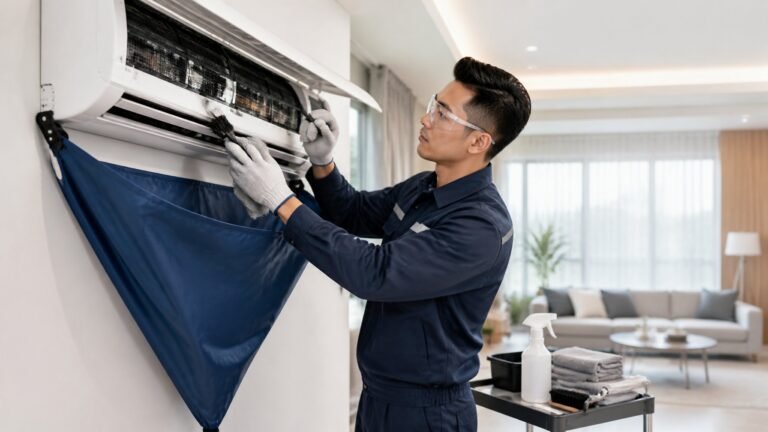
The owner should inspect each indoor unit’s filter every two to four weeks during heavy cooling or heating use. A clogged filter restricts airflow and can increase operating strain. The owner can remove the filter according to the manufacturer’s instructions, vacuum loose dust, and wash it with mild soap and warm water when the manual permits. The filter should dry completely before it returns to the unit.
The owner should also wipe the indoor cabinet and louver with a soft, slightly damp cloth. Furniture, curtains, and stored items should remain clear of the air inlet and outlet. Outside, leaves, grass, and other debris should stay at least two feet away from the condenser when possible. The owner should never bend coil fins, spray water into electrical areas, or attempt refrigerant work. Persistent odors, weak airflow, water leaks, or unusual sounds require professional mini-split service.
Seasonal Professional Tune-Ups
A qualified technician should inspect the system before the main cooling or heating season, particularly when it operates year-round. The service should include cleaning the indoor coil and blower, checking the outdoor coil, clearing and testing the condensate drain, and confirming that filters and airflow meet the manufacturer’s requirements. Technicians should also inspect wiring, terminals, controls, mounting hardware, and temperature performance.
The technician can check refrigerant pressures and examine the system for signs of leakage. Refrigerant should not be added as routine maintenance; low levels usually indicate a leak or another fault that requires diagnosis. Multi-zone systems need each indoor head tested individually because one restricted filter, drain problem, or communication fault can affect comfort in a specific room. A documented ductless maintenance checklist helps the technician record findings and identify repairs before a failure interrupts service.
Choosing A Qualified HVAC Technician
A qualified technician should understand ductless system controls, refrigerant circuits, electrical components, and manufacturer requirements. Customers should verify credentials, compare written estimates, and confirm that the technician documents testing, repairs, parts, and warranty coverage.
Licensing, Training, And Manufacturer Experience
The technician should hold any licenses or certifications required for HVAC and refrigerant work in the service area. In the United States, refrigerant handling generally requires EPA Section 608 certification; local rules may impose additional requirements. Customers should ask for proof before work begins.
Experience with the specific mini-split brand and model also matters. Mitsubishi Electric, Daikin, Fujitsu, LG, and other manufacturers use different control boards, sensors, diagnostic codes, and commissioning procedures. A technician familiar with the unit can identify faults more accurately and avoid unnecessary part replacement.
The customer should check whether the company carries liability insurance and employs trained technicians rather than relying only on general handyman experience. Reputable directories such as TrustATrader’s air conditioning service listings and Checkatrade’s HVAC hiring guidance can help customers compare local providers, reviews, and qualification details.
Estimates, Warranties, And Service Documentation
Before approving repairs, the customer should request a written estimate that identifies the diagnostic fee, labour rate, replacement parts, refrigerant charges, taxes, and any emergency call-out costs. The estimate should state whether the technician will obtain approval before exceeding the quoted amount.
The technician should explain the warranty on both parts and workmanship. Manufacturer warranties may require installation records, approved parts, or service by a qualified professional, so the customer should retain invoices and commissioning documents.
After the repair, the technician should provide a service report listing the fault found, tests performed, refrigerant measurements where relevant, electrical readings, replaced components, and operating results. A provider that offers air conditioning repair comparisons and verified reviews can give customers additional information when evaluating service quality.
Preparing For A Service Visit
Before the technician arrives, the homeowner should note the system’s model number, symptoms, and timing. Details such as weak airflow, unusual noises, water leaks, error codes, or inconsistent temperatures can help the technician diagnose the problem more efficiently.
The homeowner should also check the indoor unit’s remote control and replace its batteries if needed. They should avoid removing electrical panels, handling refrigerant lines, or attempting repairs that require specialized tools.
For safe and efficient access, the homeowner should:
- Clear furniture and stored items from around the indoor unit.
- Remove leaves, grass, and other debris from the outdoor condenser.
- Keep the electrical disconnect and service area accessible.
- Secure pets away from the work area.
- Gather records of previous repairs or maintenance.
If the system shows an error code, the homeowner should photograph it before resetting the unit. The technician may need that information even if the system resumes operation.
The homeowner should ask whether the appointment includes inspection of the filters, coils, drain line, electrical connections, airflow, and refrigerant circuit. Carrier’s mini-split repair guidance explains that service needs can range from basic cleaning to professional refrigerant-leak repairs.
Frequently Asked Questions
Repair decisions depend on the unit’s age, failure type, parts availability, and repair estimate. Regular cleaning and professional servicing can improve performance, while refrigerant leaks, electrical faults, and compressor problems may require specialized diagnosis.
Are ductless mini splits worth repairing?
A ductless mini split is often worth repairing when it is relatively new, has a minor airflow or control problem, or needs a replaceable component such as a capacitor, sensor, fan motor, or circuit board. Repair usually makes more financial sense when the expected service life remains longer than the time needed to recover the repair cost.
Replacement may be more practical when the system has repeated breakdowns, extensive corrosion, a failed compressor, or an obsolete model with difficult-to-find parts. A technician should compare the repair estimate with the cost, efficiency, and warranty coverage of a new system.
How much does ductless mini split repair typically cost?
Repair costs vary by location, diagnostic time, system capacity, accessibility, and the failed component. Filter cleaning costs less than electrical troubleshooting, refrigerant-leak detection, coil repair, or compressor replacement.
A written estimate should identify the diagnostic fee, labor, parts, refrigerant, and any permit or disposal charges. The technician should also explain whether the repair includes leak testing, pressure testing, or a performance check.
What are the most common ductless mini split problems?
Common problems include:
- Clogged filters or indoor coils that restrict airflow
- Dirty outdoor coils that reduce heat transfer
- Refrigerant leaks that cause weak cooling or icing
- Drain blockages that produce water leaks
- Faulty capacitors, sensors, fan motors, or control boards
- Remote-control, thermostat, or Wi-Fi connection problems
- Electrical faults that prevent startup
- Compressor failure in older or heavily used systems
A homeowner should switch off the system and request service if it repeatedly trips a breaker, produces a burning smell, leaks water near electrical components, or develops severe ice buildup.
How long does a ductless mini split system typically last?
A properly maintained ductless mini split commonly operates for about 15 to 20 years, although climate, installation quality, usage, maintenance, and brand affect its service life. Regular ductless AC servicing can support a lifespan of around 20 years.
Frequent short cycling, blocked airflow, outdoor exposure, and neglected filters can accelerate wear. A system that needs repeated repairs near the end of its expected life may deliver better value when replaced with a newer, efficient model.
How often should a ductless mini split be serviced?
The indoor filters should be checked every month during heavy heating or cooling use and cleaned according to the manufacturer’s instructions. A professional should inspect and service the system at least once a year, with additional attention for systems used throughout the year.
Service typically includes coil and filter inspection, drain testing, electrical checks, fan and outdoor-coil inspection, refrigerant assessment, and temperature measurements. Homes with pets, dust, renovation activity, or multiple indoor heads may need more frequent cleaning.
How do I find a qualified ductless mini split repair technician near me?
The property owner should look for a technician who is licensed or certified as required by the local jurisdiction and experienced with the system’s brand and refrigerant type. The company should provide clear pricing, proof of insurance, written findings, and a workmanship or parts warranty.
Customer reviews can help evaluate response times and repair quality, but they should not replace credential checks. In Greater Montreal, ductless mini split repair services may be relevant for homeowners seeking local service, while Carrier’s repair guidance can help identify basic symptoms before a technician arrives.