Why Is My Heat Not Working? Troubleshooting Guide
A heating system can stop working because of thermostat settings, power loss, airflow restrictions, fuel or ignition problems, or equipment failure. Most heating problems start with a safe check of the thermostat, electrical power, air filter, and system controls before they require professional repair.
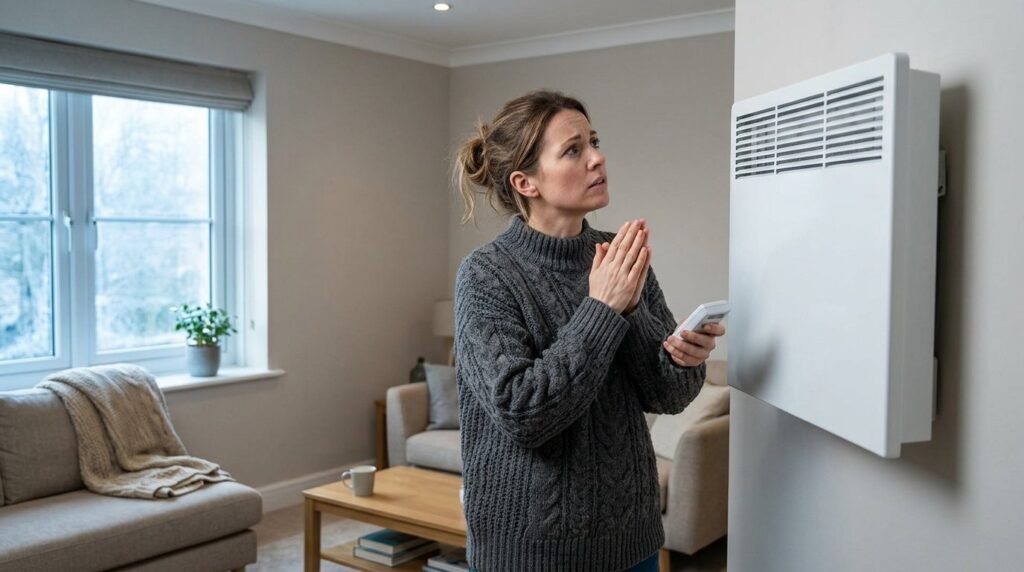
They can verify that the thermostat is set to Heat, has power, and calls for a higher temperature. They should also check breakers, replace a clogged filter, and look for blocked vents, as these common heating troubleshooting steps can prevent warm air from moving through the home.
If those checks do not restore heat, the issue may involve the furnace, heat pump, boiler, or ductwork. Safety concerns, unusual odors, repeated breaker trips, and ignition failures need prompt professional attention.
Safety Checks Before Troubleshooting
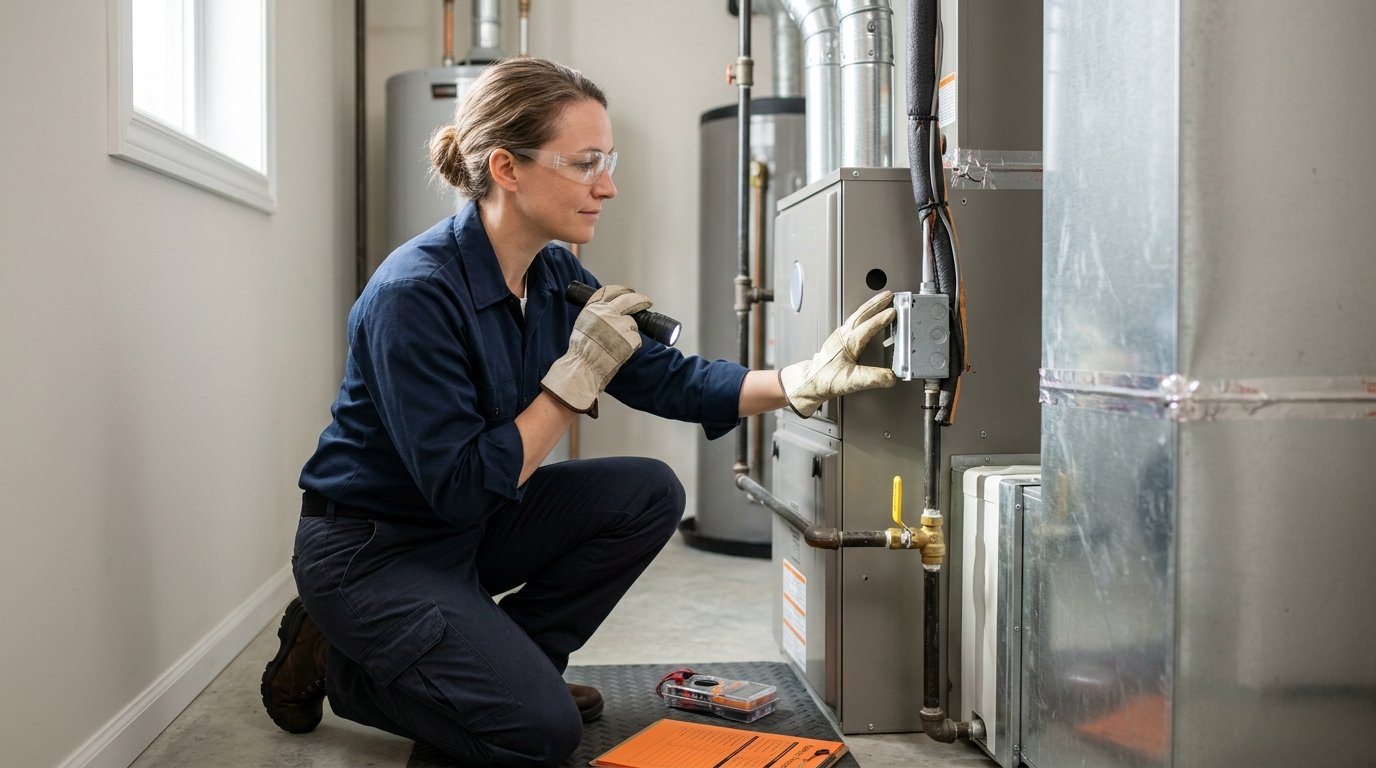
A gas leak, carbon monoxide exposure, electrical damage, or an overheating system requires immediate action rather than routine troubleshooting. Occupants should leave the area, avoid ignition sources, and contact emergency or qualified service personnel when warning signs appear.
Gas Smell Or Carbon Monoxide Warning Signs
A rotten-egg or sulfur-like odor near a furnace, boiler, gas meter, or gas line may indicate a natural-gas leak. Occupants should not operate light switches, thermostats, phones, appliances, or vehicles near the building because a spark can ignite gas.
They should leave the building immediately, move to a safe distance, and call the gas utility or emergency services from outside. They should not re-enter until the utility or emergency personnel say it is safe.
Carbon monoxide (CO) has no color or smell. A sounding CO alarm, headache, dizziness, nausea, confusion, chest pain, or unusual fatigue in multiple people can signal exposure, especially when symptoms improve outdoors.
Occupants should go outside and call emergency services. A furnace with a suspected damaged heat exchanger must remain off; a cracked heat exchanger can allow carbon monoxide into living areas.
When To Shut Off Power Or Fuel
Occupants should turn off the heating system at its service switch or thermostat if they notice burning odors, smoke, sparks, hot electrical panels, repeated breaker trips, or water leaking onto electrical components. They should then leave the breaker off and arrange service from a qualified HVAC technician or electrician.
They should not repeatedly reset a tripped breaker. Repeated trips can indicate a short circuit, damaged wiring, a failing motor, or another electrical fault.
For gas-fired equipment, occupants should shut off the appliance’s gas valve only if they can do so safely and without entering an area with a gas odor. If gas is present, leaving the building and contacting the utility takes priority over trying to operate the valve.
| Condition | Action |
|---|---|
| Smoke, sparks, or burning smell | Turn off electrical power if safe; call emergency or repair personnel |
| Gas odor | Leave immediately; call the gas utility or emergency services outside |
| CO alarm or illness consistent with CO exposure | Move everyone outdoors; call emergency services |
| Water near furnace wiring or controls | Shut off power at the breaker if safely accessible; request service |
Confirm Thermostat Settings And Power
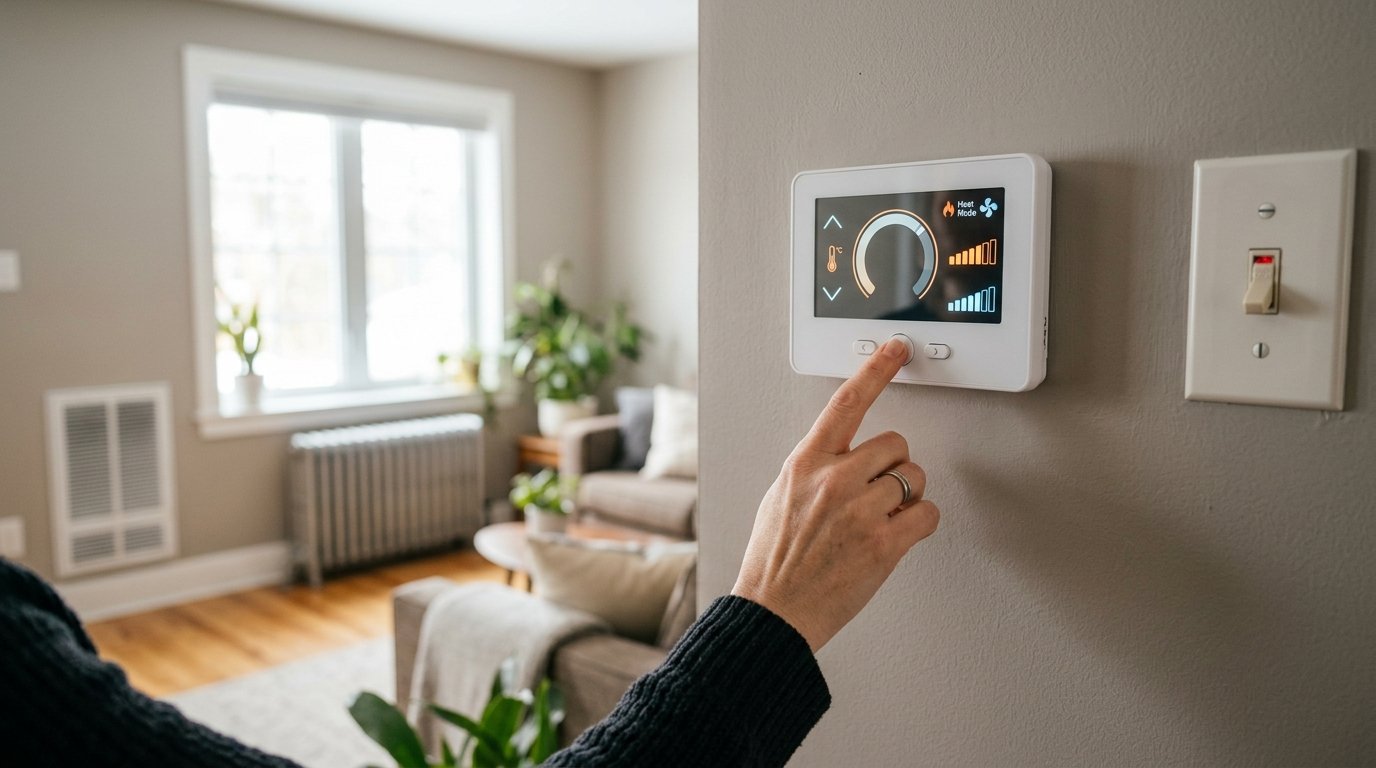
A heating system cannot start unless the thermostat calls for heat and its controls have power. Check the thermostat, electrical panel, and furnace service switch before assuming a mechanical fault.
Thermostat Mode And Temperature Setpoint
Set the thermostat to Heat, not Cool, Off, or Auto with an inappropriate schedule. The selected temperature must sit at least 2–3°F above the displayed room temperature; otherwise, the system has no reason to turn on.
For programmable models, they should check whether a schedule, vacation setting, or energy-saving mode has lowered the target temperature. Temporarily select Hold or Manual and set a higher temperature to test whether the heating equipment responds.
If the thermostat has a fan setting, leave it on Auto. On runs the blower continuously but does not confirm that the furnace or boiler produces heat.
Thermostats near exterior doors, sunny windows, kitchens, fireplaces, or air vents can read the room inaccurately. Common thermostat setting and connection problems can also prevent a boiler from receiving the heating demand.
Dead Batteries And Display Issues
Battery-powered thermostats may lose control of the heating system before the display goes completely blank. Replace all batteries with new matching alkaline batteries, following the polarity markings inside the unit.
A blank, dim, flickering, or unresponsive display can also indicate a power problem rather than failed batteries. They should confirm that the thermostat is firmly attached to its wall plate and that no wires appear loose, damaged, or corroded.
After replacing batteries, set the thermostat to Heat and raise the setpoint again. Wireless models may require re-pairing with their receiver if the thermostat displays a connection warning or the receiver does not show a call for heat.
If the display works but heating still does not start, thermostat troubleshooting guidance identifies power, settings, and sensor issues as common areas to check. They should not remove covers or handle wiring unless they can safely isolate electrical power.
Tripped Breakers And Furnace Switches
Many gas furnaces still require household electricity for the thermostat, ignition system, control board, and blower. At the electrical panel, they should look for a breaker labeled furnace, heating, air handler, or HVAC that sits between On and Off.
To reset a tripped breaker, move it fully to Off, then firmly back to On once. If it trips again, leave it off and arrange professional service; repeated resets can damage equipment or indicate an electrical fault.
They should also check the furnace service switch, often mounted on a nearby wall or ceiling and resembling a light switch. It must be on, particularly after maintenance, storage work, or someone accidentally switched it off.
For boiler systems, confirm that the boiler’s electrical isolator and control panel have power. Basic heating checks also include checking power and resetting controls, but they should stop if they smell gas, see burning marks, or notice water near electrical components.
Check Airflow And Filter Restrictions
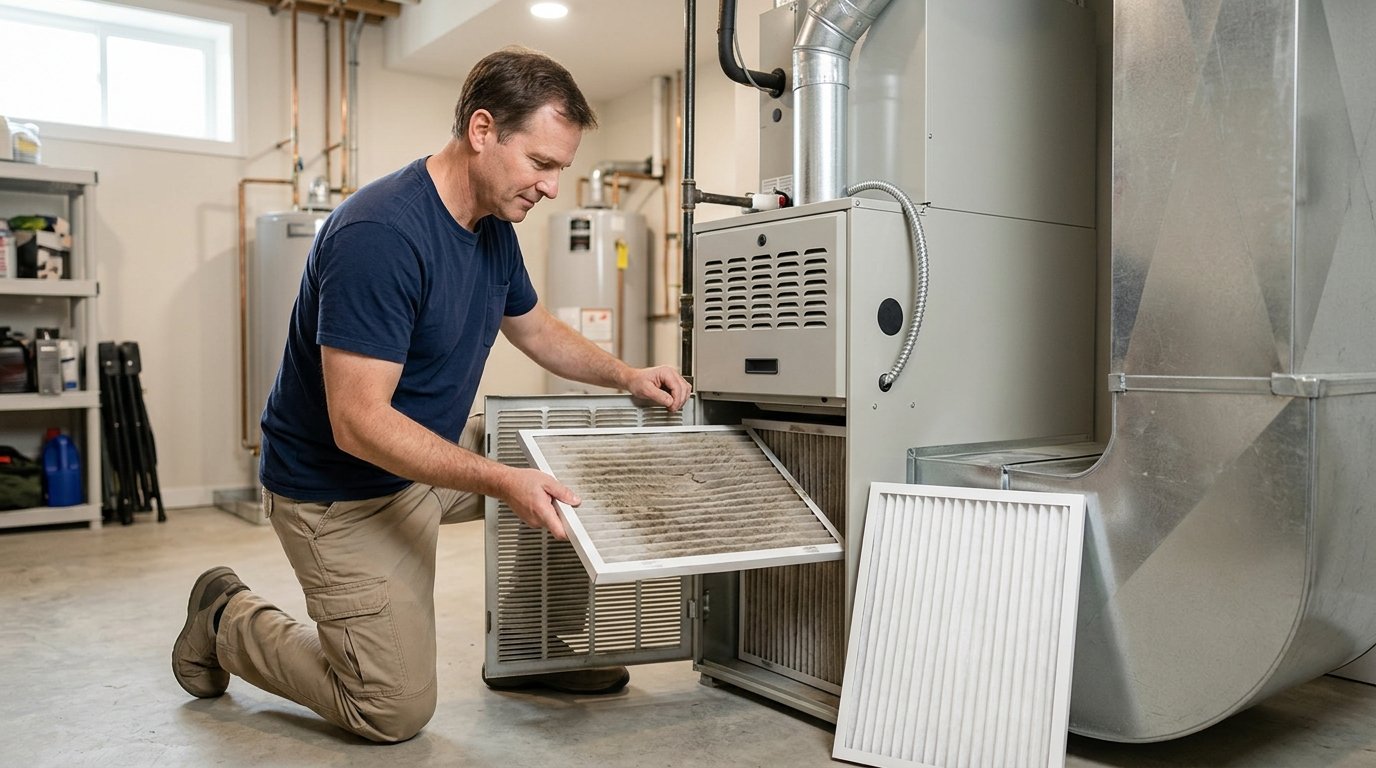
A heating system needs unobstructed return and supply airflow to distribute warm air and protect its components. A clogged filter, blocked register, or failing blower can cause weak heat, uneven room temperatures, or a furnace shutdown.
Dirty Or Clogged Air Filters
A dirty filter restricts the air entering the furnace. The blower then moves less air across the heat exchanger, which can make rooms heat slowly and may trigger an overheat limit switch that stops the burners temporarily.
They should turn the thermostat off before removing the filter. Check the arrow printed on its frame; it must point toward the furnace or air handler, in the direction of airflow.
Replace a disposable filter if it looks gray with dust, has visible debris, or has exceeded its recommended replacement interval. During heavy heating use, many homes need a filter check every month. Furnace filter airflow restrictions can also result from a filter with an overly high MERV rating for the equipment.
Use the filter size listed on the existing frame or filter cabinet. A filter that does not fit tightly lets unfiltered air bypass it and collect on the blower and indoor coil.
Blocked Vents And Closed Registers
Open all supply registers and return grilles before diagnosing a heating problem. Closing registers in unused rooms rarely saves energy and can increase duct pressure, reduce airflow through the furnace, and worsen temperature differences elsewhere.
Furniture, rugs, curtains, and stored items can block vents. They should leave several inches of clear space around supply registers and ensure return grilles have no obstruction, since returns provide the air the system recirculates.
Compare airflow at several supply vents while the system runs. A single weak room may have a closed damper, damaged flex duct, disconnected duct, or blockage in that branch. Common HVAC airflow problems and fixes include duct leaks that allow heated air to escape before it reaches the room.
Blower Motor And Fan Problems
The blower should begin moving air shortly after the furnace burners ignite and may continue briefly after they turn off. Little or no airflow with a running furnace can indicate a failed blower motor, weak capacitor, damaged control board, loose belt on older belt-driven units, or a dirty blower wheel.
They should first check the furnace power switch, circuit breaker, and blower compartment door. An improperly seated door panel can keep the safety switch open and prevent the blower from operating.
Do not bypass the door switch or repeatedly reset a tripped breaker. A humming motor, burning smell, grinding sound, or breaker that trips again requires service from a qualified HVAC technician. Furnace airflow diagnosis often involves checking blower performance and duct static pressure, which requires specialized tools.
Inspect the Heating System
Ignition components, fuel delivery, and heat-pump operation can stop heating even when the thermostat has power. The homeowner should check only accessible controls and stop immediately if they smell gas, see damaged wiring, or find severe ice buildup.
Pilot Light And Ignition Failures
Older gas furnaces may use a standing pilot light. If it is out, the homeowner should follow the furnace label and manufacturer instructions exactly; they should never keep trying to relight it or use an open flame to check for gas.
Modern furnaces use an electronic igniter and flame sensor instead. A system may start its inducer fan, click or glow, then shut down without producing warm air when the igniter fails or the flame sensor cannot confirm a stable flame.
A dirty flame sensor can sometimes cause this short-cycling pattern, but furnace disassembly requires care. A qualified HVAC technician should test the igniter, sensor, control board, venting, and safety switches rather than bypassing any safety device.
A furnace and heat pump inspection checklist can help identify visible warning signs before arranging service.
Fuel Supply And Gas Valve Issues
For a gas furnace, the homeowner can confirm that the manual gas shutoff valve is open. The handle generally runs parallel to the pipe when open and perpendicular when closed, but they should not force a stuck valve.
They should also check whether other gas appliances work. If a gas stove, water heater, and furnace all fail, the issue may involve utility service, an empty propane tank, a regulator, or a closed exterior valve.
Leave the building and contact the gas utility or emergency services if anyone smells rotten eggs, hears hissing near a gas line, or develops symptoms such as dizziness or nausea. They should not operate electrical switches, light matches, or start vehicles nearby.
The furnace gas valve itself is not a homeowner repair. A technician can verify inlet pressure, valve operation, burner condition, and combustion safety after basic no-heat checks such as thermostat, filter, breaker, and gas supply.
Heat Pump Defrost And Outdoor Unit Problems
A heat pump extracts heat from outdoor air, so its outdoor coil can develop a light frost layer during cold, damp weather. The unit should periodically enter defrost mode, briefly reversing operation to melt that frost; steam and water beneath the unit can be normal during this cycle.
Heavy ice that covers the coil, fan, or cabinet is not normal. It can result from a failed defrost control, sensor problem, blocked airflow, refrigerant issue, or drainage problem, and it reduces heating capacity.
The homeowner can clear leaves, snow, and loose debris from around the outdoor unit while keeping hands away from the fan and electrical components. They should not chip ice with tools or pour hot water on the coil, as either action can damage fins or components.
If the outdoor fan does not run, the unit makes repeated clicking sounds, or ice returns after defrosting, they should switch to approved auxiliary heat if available and request service. Heat-pump outdoor-unit ice concerns require diagnosis rather than repeated resets.
Address Common Ductwork And Distribution Issues
Damaged ducts can lose heated air before it reaches living spaces, while poor air distribution can leave some rooms cold despite normal furnace operation. Inspection should focus on accessible ducts, vent obstructions, and return-air pathways.
Leaking Or Disconnected Ducts
Leaks and separated joints allow conditioned air to escape into attics, crawlspaces, garages, or wall cavities. A room may receive weak airflow, while the furnace runs longer because the thermostat cannot reach its set temperature.
Signs include dust streaks around duct joints, loose insulation, rattling metal ducts, and noticeably colder areas near supply runs. Flexible duct can also sag or kink, restricting airflow even when it remains connected.
A homeowner can check accessible ducts for disconnected sections and secure them with approved mechanical fasteners. They should seal small gaps with mastic duct sealant or UL-listed foil tape; standard cloth duct tape usually fails with heat and age.
Duct problems closest to the air handler often have the largest effect because those areas experience higher pressure. Guidance on locating and correcting problematic ductwork also emphasizes the importance of supply and return connections near the equipment. A technician should repair ducts inside sealed walls, tight crawlspaces, or areas with damaged insulation.
Uneven Heating Between Rooms
Uneven temperatures often result from restricted supply airflow, inadequate return airflow, or duct runs that do not deliver enough heated air to distant rooms. Bedrooms at the end of a long duct branch commonly receive less airflow than rooms near the furnace.
First, occupants should confirm that supply registers are fully open and not blocked by furniture, rugs, or curtains. They should also replace a dirty HVAC filter, since a clogged filter can reduce airflow throughout the system.
| Condition | Likely issue | Practical action |
|---|---|---|
| One room stays cold with weak airflow | Closed, blocked, kinked, or undersized duct | Clear the register; have the duct inspected |
| Room warms only when its door is open | Limited return-air path | Keep the door open or install an appropriate return-air transfer path |
| Several rooms heat poorly | Dirty filter, blower issue, or duct leakage | Replace the filter and arrange HVAC service if the issue continues |
Closing registers in warm rooms rarely fixes a cold room and can increase duct pressure. Common causes of heat not reaching vents include blocked vents, dirty filters, and leaky ductwork. A technician can measure airflow, check blower performance, and determine whether balancing dampers or duct modifications are necessary.
Know When Professional Repair Is Needed
A technician should inspect persistent error codes, shutdowns, fuel odors, and electrical problems rather than having a homeowner reset the system repeatedly. Scheduled maintenance also helps identify unsafe wear and clarifies whether repair or replacement makes financial sense.
Error Codes And Repeated System Shutdowns
A furnace or heat pump control board may display an error code through a screen or a sequence of blinking lights. The homeowner should record the exact code, model number, and conditions when it appears before contacting a licensed HVAC technician. The unit’s manual can identify the code category, but diagnosis often requires electrical testing and combustion checks.
Repeated shutdowns can indicate problems such as a failed flame sensor, pressure-switch fault, blocked condensate drain, overheating limit switch, ignition failure, or restricted venting. A system that starts, runs briefly, and stops is not operating normally; repeatedly cycling power can mask the fault without correcting it.
They should stop using a gas furnace and seek prompt service if they notice gas odor, soot, burning smells, a yellow burner flame, a carbon-monoxide alarm, or visible exhaust-vent damage. Common heater troubleshooting guidance also identifies electrical and thermostat faults as frequent causes, but a professional should handle internal wiring, gas components, and sealed combustion parts.
Annual Maintenance And Replacement Considerations
A qualified technician should service central heating equipment annually, ideally before the heating season. Service typically includes checking electrical connections, safety controls, airflow, filters, ignition components, venting, refrigerant operation for heat pumps, and combustion performance for fuel-burning equipment.
Maintenance does not guarantee that every failure can be avoided, but it can catch worn parts before they cause a no-heat call. Homeowners should replace or clean filters on the schedule specified by the manufacturer, keep outdoor heat-pump units clear of debris, and ensure supply and return vents remain open.
Replacement deserves consideration when repairs recur, a major component fails, utility costs rise without another explanation, or the equipment no longer heats rooms evenly. A technician can compare the repair cost, system age, condition of the heat exchanger or compressor, available warranty coverage, and expected efficiency of a replacement. Signs that a heater may need repair include inconsistent temperatures and unexplained increases in energy bills.
Frequently Asked Questions
Heating failures often involve thermostat settings, electrical power, airflow restrictions, ignition components, or building-level equipment. The symptoms help distinguish a simple control issue from a problem that requires a qualified HVAC technician or landlord.
Why is my thermostat on but the heat is not coming on?
The thermostat may have power but still fail to call for heat. It should be set to Heat, with the target temperature several degrees above the current room temperature; weak batteries, incorrect programming, loose wiring, or a failed thermostat can also prevent operation.
A tripped circuit breaker, furnace service switch set to off, or clogged filter may stop the system from starting. Thermostat, breaker, and filter checks are appropriate first steps before arranging service.
Why is my heater running but not producing warm air?
A furnace blower can run even when the burners do not ignite. Common causes include a dirty flame sensor, a failed igniter, a gas-supply problem, or a safety switch that has shut down the burners.
Restricted airflow from a clogged filter can also cause overheating and limit heat output. A dirty flame sensor or blocked filter can contribute to intermittent heating and shutdowns.
Why does my air conditioning work but my central heating does not?
Cooling and heating use some shared electrical components, but the heating side has separate controls and safety parts. An air conditioner may operate normally while the furnace has an ignition failure, a gas-valve issue, a faulty limit switch, or a thermostat problem affecting only heat mode.
For a heat pump, the reversing valve or defrost controls may malfunction while cooling remains available. A technician should inspect fuel-burning equipment rather than having occupants attempt internal repairs.
What causes a furnace or heater to stop turning on automatically?
A faulty thermostat, damaged thermostat wire, failed control board, or blocked condensate drain can interrupt the automatic call for heat. A clogged filter may also trigger an overheating limit switch, causing the furnace to shut down and restart repeatedly.
This repeated starting and stopping is called short cycling. Common short-cycling causes include dirty filters, thermostat faults, flame-sensor problems, and improperly sized equipment.
How do I reset my home heating system?
First, set the thermostat to Off and wait several minutes. Check that the furnace switch and circuit breaker are on, replace a dirty filter, then restore power and set the thermostat to Heat at a temperature above room temperature.
Many furnaces reset when power is cycled once, but repeated resets can hide a fault. If the unit locks out again, smells of gas, shows a diagnostic error code, or will not ignite, it needs professional service.
Why is the heat not working in my apartment?
An apartment may have an in-unit furnace, a shared boiler, electric baseboard heat, or a building-managed heat pump. The resident can check the thermostat setting, accessible breaker, and filter if applicable, but a central boiler or building-wide system requires management to investigate.
They should report the outage promptly, including whether all rooms lack heat, whether neighbors are affected, and whether the unit has hot water. Building staff may need to address a shared equipment failure, fuel interruption, or a maintenance issue outside the apartment.